Red Sea Global (RSG), the developer behind regenerative tourism destinations The Red Sea and AMAALA, has achieved a series of milestones in sustainable design and operations, with multiple assets earning LEED certifications.
This
includes Red Sea International Airport (RSI) becoming the first airport in
Saudi Arabia, and only the fifth worldwide, to achieve LEED Platinum
certification.
As well
as this, Turtle Bay International School (TBIS) achieved LEED Platinum
certification, with the highest score ever recorded under the LEED v4 Building
Design and Construction (BD+C): Schools rating system. Meanwhile, RSG’s Central
Distribution Center (CDC) earned LEED Gold certification, becoming one of the
most sustainable warehouse facilities in the region. Finally, AMAALA Triple Bay
and Staff Village masterplans achieved LEED Platinum for Communities.
“These
certifications are more than technical milestones. They’re proof that
sustainability is embedded in everything we do. From 100% renewable energy
generation and advanced water reuse systems to low-carbon mobility solutions, we
integrate sustainability and regeneration into every aspect of our operations. Each
certified asset demonstrates our commitment to creating positive impact,
environmentally, socially, and economically,” said Raed Albasseet, Group Chief
Environment and Sustainability Officer at RSG.
Saudi
Arabia’s first LEED Platinum airport
RSI has
been awarded LEED Platinum certification by the Green Business Certification
Inc. (GBCI). This establishes RSI as the first airport in Saudi Arabia and
among only five airports globally to receive this distinction.
The
certification recognises RSI’s pioneering sustainability framework, which
integrates 100% renewable energy operations, advanced energy efficiency
systems, and the use of Sustainable Aviation Fuel (SAF) for seaplane flights.
It marks the culmination of several years of cross-functional collaboration,
reflecting RSG’s comprehensive approach to developing infrastructure that
delivers lasting environmental, social, and economic value.
Highest-scoring
LEED-certified school in the world
TBIS has
been awarded LEED Platinum certification, achieving an unprecedented 92 points
— the highest score ever recorded under the LEED v4 BD+C: Schools rating
system.
Globally,
only 15 schools have achieved this level of certification. TBIS now stands as
the first school in Saudi Arabia to do so, setting a new benchmark for
sustainable education, architectural design, and regenerative learning
environments.
One of
the region’s most sustainable warehouse facilities
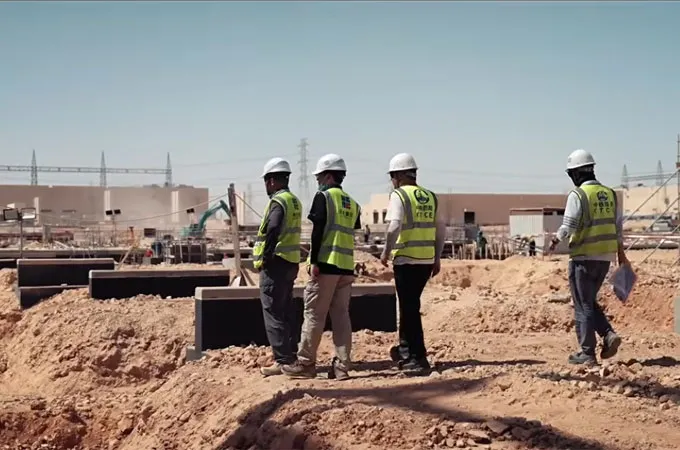
RSG’s CDC
also achieved LEED Gold certification with an impressive 73 points, positioning
it among the most sustainable warehouse facilities in the Middle East. From
intelligent energy management and material optimisation to resource-efficient
operations, this 55,000m2 facility reflects RSG’s drive to redefine industrial
design through environmental innovation and smart logistics.
AMAALA’s
first LEED certification
LEED for
Communities (Plan and Design) is a globally recognised framework for
sustainable urban planning and large-scale development. It addresses not only
environmental performance, but also equity, economic development, resilience,
governance, and quality of life.
AMAALA
becomes the 45th project globally to achieve the certification and joins an
exclusive club of just 16 projects that have achieved Platinum, including The
Red Sea Phase One. Marking AMAALA’s first LEED certification, it sets a solid
foundation for positioning AMAALA as a global benchmark for responsible development.
The Red
Sea destination, a cornerstone of Saudi Arabia's Vision 2030, now counts nine
luxury hotels that are open and welcoming guests. Last year Shura Island, the
heart of The Red Sea, began opening the first of its 11 resorts. RSG recently
announced the upcoming opening of AMAALA, its ultra-luxury, wellness
destination.
Both destinations are committed to going beyond sustainability, aiming for a 30% net conservation benefit to local ecosystems by 2040 through enhancing biologically diverse habitats. The destinations have been carefully designed to accommodate up to 1.5 million visitors annually to preserve the pristine environment. Both destinations are being powered by 100% renewable energy, eliminating up to 1 million tCO2eq annually – the equivalent of removing 2 million cars from the road for one year. -TradeArabia News Service