Dubai’s Roads and Transport Authority (RTA) has announced that it has awarded the contract for Phase I of Dubai Walk Master Plan in Al Ras.
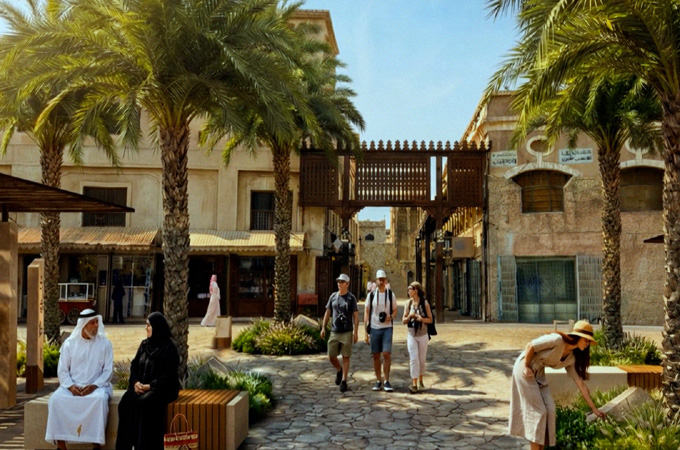
The phase covers the development of the Historic Al Ras Walkway, comprising 12 km of walkways and 5 km of cycling tracks, alongside the rehabilitation of 10 artistic spaces in coordination with Dubai Culture and Arts Authority, with the participation of Emirati and local artists.
The Dubai Walk Pedestrian Master Plan includes the development of a comprehensive structural framework for an integrated, accessible walkway network that meets safety standards and provides a comfortable pedestrian environment, said RTA in a statement.
The plan covers the rollout of a walkway network across 160 areas, including the delivery and enhancement of 6,000 km of walkways across the emirate by 2040.
It also provides for the construction of 110 pedestrian bridges and underpasses to strengthen connectivity between districts, with the aim of increasing the share of walking and soft mobility trips from 16% in 2025 to 25% by 2040.
The Historic Al Ras Walkway project will see the integration of walkways with 11 metro, public bus and marine transport stations to enhance first- and last-mile connectivity.
According to RTA, the project covers the enhancement of internal walkways and the waterfront walkway through simplified urban design solutions that preserve the historic character of the area.
The scope includes widening pedestrian pavements, introducing shading structures, providing seating areas, expanding green spaces, and implementing wayfinding systems designed in harmony with the district’s heritage context.
Mattar Al Tayer, Director General, Chairman of the Board of Executive Directors of RTA, said: "The Pedestrian Master Plan plays a key role in strengthening Dubai’s global competitiveness in walkway infrastructure and soft mobility. It also advances a key objective of the Dubai Urban Plan 2040 - the 20-minute city - by providing the infrastructure required to enable residents to access more than 80% of essential services within a 20-minute journey."
"The plan supports Dubai’s Quality of Life Strategy 2033 and contributes to enhancing community wellbeing by transforming Dubai into a pedestrian-friendly city, elevating pedestrian safety standards, and strengthening connectivity between various districts and the existing walkway network," he stated.
On the Pedestrian Master Plan, RTA said it includes the development and enhancement of more than 6,000 km of walkways, forming a seamless and interconnected network across the emirate.
The first phase of implementation is scheduled between 2025 and 2027, with subsequent phases to be delivered progressively from 2027 through to 2040, said RTA in a statement.
The plan also provides for the construction of 110 pedestrian bridges and underpasses to strengthen urban connectivity. Key components include a pedestrian bridge on Al Ittihad Street linking Al Nahda and Al Mamzar, a bridge on Tripoli Street connecting Al Warqa’a and Mirdif, a bridge on Al Khawaneej Street linking Mushrif and Al Khawaneej, and a bridge on Dubai–Al Ain Road connecting Dubai Silicon Oasis and Dubailand, it added.-TradeArabia News Service