As artificial intelligence (AI) applications are increasingly used across the travel sector, IBTM World 2025 is emphasising how business events create real-life experiences and boost the global economy with a refreshed brand identity that is being debuted this week.
The event, which runs from November 18-20, is welcoming nearly
2,500
exhibitors to
its Barcelona show floor, including more than 200 from the Middle East and
North Africa.
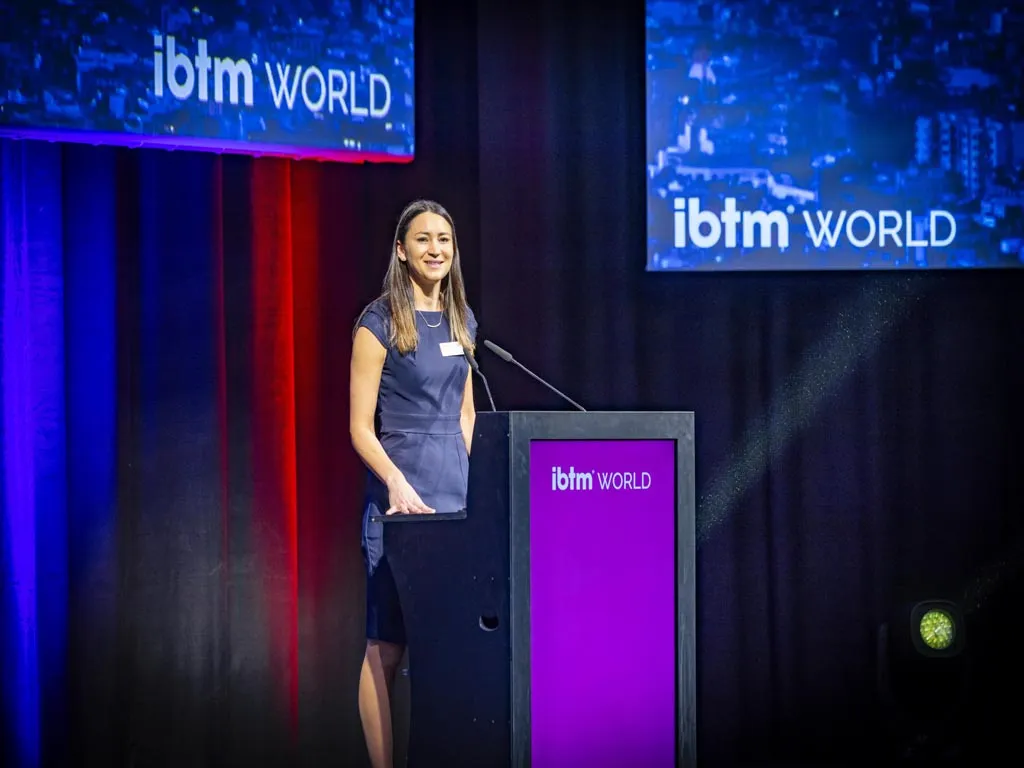
Claudia Hall, IBTM World Exhibition Director, describes the
new identity as a renewed commitment to driving meaningful experiences and
innovation in the events industry. “But it’s just the beginning – it sets the
stage for new experiences, content, and partnerships that will shape the future
of business events,” she told TTN Middle East on the sidelines of IBTM
World 2025.
As meetings and events have diversified the GCC’s tourism
product mix – from business networking magnets such as Gitex Global and Adipec
in the UAE to the annual Formula One races in Bahrain and elsewhere across the
Gulf – IBTM World has seen a corresponding uptick in exhibitors from the
region. “The Middle East’s business events landscape is evolving at a
remarkable pace and our exhibitor line-up certainly reflects that exciting
growth,” Hall says.
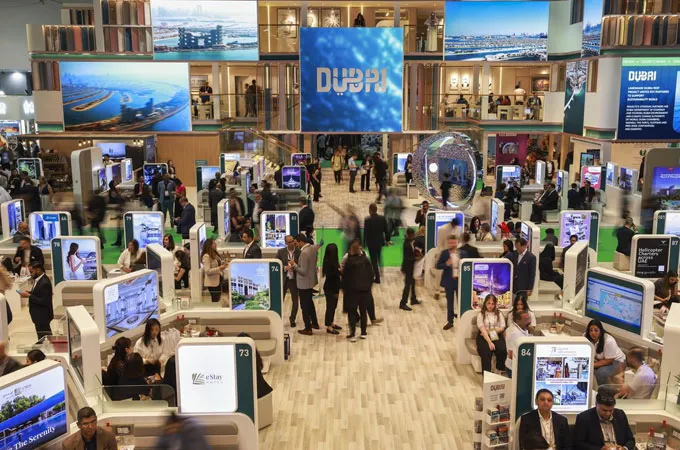
Dubai Business Events returns with its largest stand to
date, while Ajman, the UAE’s fifth biggest city, has comeback following an
impressive debut in 2024. Regional suppliers at the event include Abu Dhabi’s
ADNEC Centre, home to six onsite hotels, home to six onsite hotels; tour
operators Corsini Travel Egypt and adventure-focused Authentique Tunisie, and Q
Moments, the Qatari destination management company dedicated to MICE and
luxury.
The MENA region outpaces the global average in international
meetings growth, an IBTM World report using data from the International
Congress and Convention Association revealed earlier this year. With a growth
rate of 5.1%, the region is well ahead of the global average of 3.7%.
Those numbers are only set to grow. The UAE’s MICE market is
expected to increase more than 50 per cent to $9.26 billion by 2030, from an
estimated estimated at $6.03 billion this year, according to Mordor
Intelligence. Meanwhile, Saudi Arabia could see a corresponding rise from $3.22
billion at present to $5.33 billion by the end of the decade.
Meanwhile, at IBTM, show attendees are experiencing the
brand refresh in dynamic new activations onsite, from projection-mapped visuals
animating the entrance walkway, to a new immersive showcase called Meet the
World, where exhibitors can tell their story through an immersive,
multi-sensory showcase. An emphasis on the real-life component means a greater
number of ways to network, including in a new lounge aimed at facilitating
informal connections between exhibitors and buyers.
Also new this year is IBTM Ignite, a platform for start-ups
to connect with advisors and investors, with a dedicated showcases area and
“lightning short” talks and a dedicated showcase area. Over a hundred new
start-ups covering sub-sectors ranging from event technology and sustainability
to new concepts and inclusive talent sourcing will take part in the programme.
“These changes reflect our commitment to helping the global
events industry connect, evolve and truly meet the moment,” Hall says.
The human touch is more important than ever as AI
revolutionises the way we plan, deliver and measure events, she adds. Although
the technology can help analyse vast data sets, drive matchmaking, personalise
experience and improve networking outcomes, she says personal relationships
remain the bedrock of every great event, and something AI simply can’t
replicate. “The sweet spot lies in partnership: humans and AI working together.
By combining data-driven insights with the power of human connection, event professionals
can deliver events which are more engaging, more impactful and even more
beneficial for attendees,” she says.
On-site AI tools provided real-time translation into more
than 60 languages and automated session summaries, allowing international
attendees to engage fully without language barriers or manual notetaking.
Returning this year is the IBTM World Forum for Advocacy,
with attendees hammering out new strategies to shape the global event economy
at the Hotel Miramar Barcelona November 17. Hall described this year’s
discussions as a “bold conversation,” that focused on how the sector can
amplify its impact through international cooperation, policy innovation and
effective political advocacy that delivers measurable results. Attendees included corporate
leaders across the globe, alongside seven key industry organisations, including
ICCA, PCMA, IAPCO, the Events Industry Council, the Joint Meetings Industry
Council, City DNA and SANCBE.
“These questions are
crucial when you consider the business events industry generates an estimated
$662.6 billion in direct gross domestic product worldwide – yet there remains a lack of
understanding from governments about its transformative power and potential,”
she says. “The Forum for Advocacy aims to change that – bringing our MICE
community together as one united, purpose-driven and powerful voice to raise
the profile of business events around the globe and the vital role they play in
shaping economies and societies.
“As a leading exhibition brand in the business events space, we see it as our responsibility to champion the industry and advocate for a stronger, more connected global events sector,” she adds. -TradeArabia News Service