Senegal’s state-owned midstream company Reseau Gazier du Sénegal is set to begin construction of a domestic gas pipeline network before the end of 2025, according to Birame Soulèye Diop, Minister of Energy, Petroleum & Mines of Senegal.
Minister Diop made the announcement during
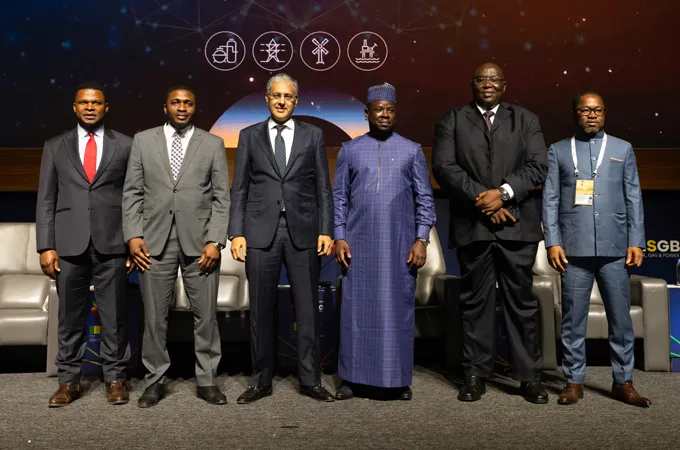
the ministerial panel at MSGBC Oil, Gas & Power 2025, which brought
together energy ministers and senior officials from Senegal, Mauritania,
Guinea-Bissau, Guinea-Conakry and The Gambia to discuss regional cooperation
and sustainable energy development.
“We are leveraging domestic gas as a
transitional energy source, providing access to energy and clean cooking. RGS
is leading this initiative and we hope to lay the first stone of the pipeline
network before the end of 2025,” Minister Diop stated. Minister Diop outlined
the country’s integrated strategy for gas, emphasizing multiple uses beyond
export. “The integrated strategy sees the sector as a whole, from gas-to-power
to gas-to-industry, but also applications in transport and agriculture,”
Minister Diop explained.
Lamin Camara, Permanent Secretary, Ministry
of Petroleum and Energy, The Gambia echoed Minister Diop’s comments on regional
integration and collaboration. “Regional cooperation is at the heart of our
policy. We are in discussions with Mauritania and Senegal to be part of the gas
pipeline network and benefit from its resources,” Camara said. On developing The Gambia’s hydrocarbon
potential, he noted, “We have completed three negotiations and hope to sign
agreements with major and mid-size companies before year-end.”
Mohamed Ould Khaled, Minister of Petroleum
and Energy of Mauritania, emphasized cross-border collaboration. “The Greater
Tortue Ahmeyim gas project shared with Senegal is a successful example of
regional cooperation, providing gas to multiple partners. We aim to develop our
countries and industries together, working closely with neighboring states to
maximize opportunities,” noted Minister Khaled.
Bachir Camara, Deputy Minister of
Guinea-Conakry, highlighted collaboration with other West African national oil
companies. “We are upgrading governance and cooperating with Senegal’s Petrosen
and Ivory Coast’s Petroci to strengthen regional collaboration and improve
exploration outcomes,” Minister Camara stressed.
Meanwhile, Celedónio Plácido Vieira,
Minister of Natural Resources of Guinea-Bissau, also spoke on leveraging
regional potential. “We started reforming our petroleum code in 2014 to attract
investment, and now we want to engage with the NOCs of neighboring countries.
Cooperation is key to making the MSGBC basin more attractive,” Vieira said.
Minister Diop concluded, “Senegal shares oil resources with Guinea-Bissau at
the border and it is crucial to work together considering the potential of
their blocks.” -TradeArabia News Service