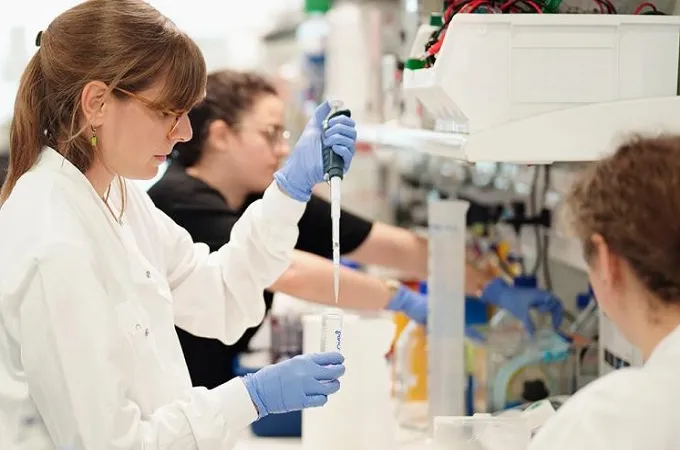
Researchers at the Francis Crick Institute, a biomedical research centre based in London, and AlveoliX, a leading Swiss biotechnology centre, have developed the first human 'lung-on-chip' model using genetically identical cells derived from stem cells taken from a single donor.
The device, designed to mimic the motion of breathing and replicate early stages of lung disease, could help scientists test treatments for infections such as tuberculosis (TB) and advance the development of personalised medicine, said a study published in the journal Science Advances.
Air sacs in the lungs, called alveoli, are the essential site of gas exchange and also an important barrier against inhaled viruses and bacteria that cause respiratory diseases, such as the flu or TB.
Scientists have sought to recreate these processes using 'organ-on-chip' technologies - small units of human tissue grown on plastic chips containing microscopic channels and compartments, it stated.
Until now, lung-on-chip systems have typically relied on a mix of patient-derived and commercially available cells, limiting their ability to fully reproduce lung function and disease progression in a single individual.
The team at the Crick developed a new lung-on-chip model that contains only genetically identical cells derived from stem cells from a single donor, it stated.
They produced type I and II alveolar epithelial cells and vascular endothelial cells from human-induced pluripotent stem cells, cells that can virtually become any cell in the body.
These epithelial and endothelial cells are separately grown on the top and bottom of a very thin membrane in a device manufactured by biotechnology company AlveoliX to recreate an air sac barrier, it added.
To further simulate the human lung, AlveoliX has designed specialised machines to impose rhythmic three-dimensional stretching forces on the recreated air sac barrier, mimicking the motion of breathing. This stimulates the formation of microvilli, a key feature of alveolar epithelial cells that increases the surface area for lung function, said the study.
The team then added immune cells called macrophages into the chip, again produced from the stem cells of the same donor, before adding TB bacteria to simulate the early stages of the disease, it stated.
In the chips infected with TB, the team reported large macrophage clusters containing 'necrotic cores', a group of dead macrophages in the centre, surrounded by live macrophages. Eventually, five days after infection, the endothelial and epithelial cell barriers collapsed, showing that the air sac function had broken down.
Max Gutierrez, Principal Group Leader of the Host-Pathogen Interactions in Tuberculosis Laboratory at the Crick and senior author, said, "Given the increasing need for non-animal technologies, organ-on-chip approaches are becoming ever more important to recreate human systems, avoiding differences in lung anatomy, makeup of immune cells and disease development between animals and humans.
"Composed of entirely genetically identical cells, the chips could be built from stem cells from people with particular genetic mutations, noted Gutierrez. This would allow us to understand how infections like TB will impact an individual and test the effectiveness of treatments like antibiotics," he added.-TradeArabia News Service