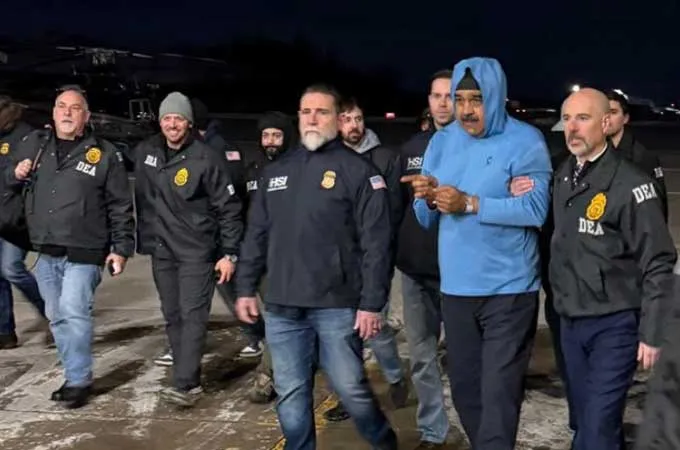
Deposed Venezuelan leader Nicolás Maduro arrived in the US to face criminal charges after being captured in an audacious nighttime military operation that President Donald Trump said would set the US up to ‘run’ the South American country and tap its vast oil reserves to sell to other nations.
Venezuela announced a state of national emergency and denounced the "military aggression", with the country's vice president saying Maduro is its only leader.
Maduro landed Saturday evening at a small airport in New York following the middle-of-the-night operation that extracted him and his wife, Cilia Flores, from their home in a military base in the capital city of Caracas - an act that Maduro’s government called ‘imperialist.’
The couple faces US charges of participating in a narco-terrorism conspiracy, reported the Associated Press.
The dramatic action capped an intensive Trump administration pressure campaign on Venezuela’s autocratic leader and months of secret planning, resulting in the most assertive American action to achieve regime change since the 2003 invasion of Iraq.
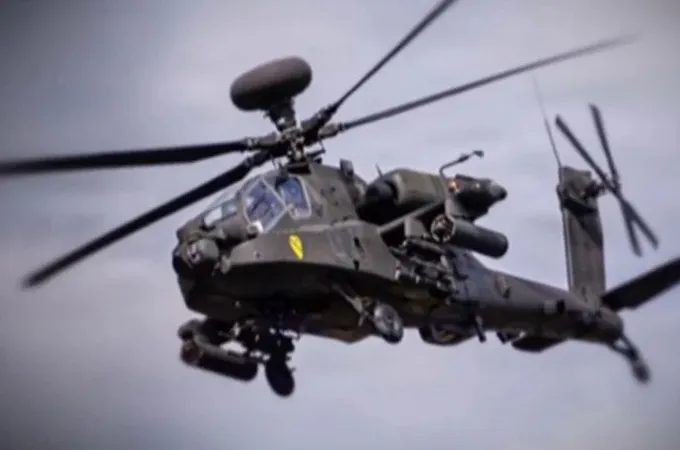
Maduro and Flores were flown out of the capital, Caracas, on a US helicopter in the early hours of Saturday morning and taken aboard the USS Iwo Jima at an unknown location in the Caribbean Sea.
They were later flown to the Guantanamo Bay US Naval Base in Cuba before being transferred to another plane to head to New York state, and then flown by helicopter into New York City's Metropolitan Detention Center in Brooklyn.
US Attorney General Pam Bondi said Maduro and Flores had been indicted in the Southern District of New York.
The pair have been charged with conspiracy to commit narco-terrorism and import cocaine, possession of machine guns and destructive devices, and conspiracy to possess machine guns and destructive devices against the US, reported BBC.
"They will soon face the full wrath of American justice on American soil in American courts," Bondi wrote on X.
Legal experts, however, raised questions about the lawfulness of the operation, which was done without congressional approval.
Venezuela’s vice president, Delcy Rodriguez, meanwhile, demanded that the US free Maduro and called him the country’s rightful leader as her nation’s high court named her interim president.
Some Venezuelan civilians and members of the military were killed, said Rodríguez, who didn’t give a number. Trump said some US forces were injured, but none were killed.
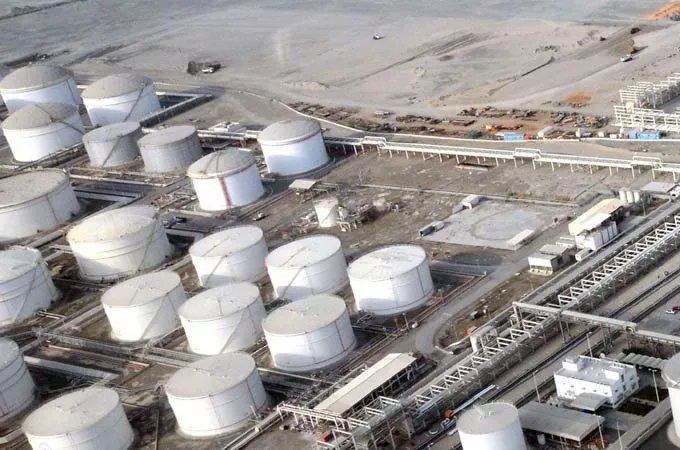
Speaking to reporters hours after Maduro’s capture, Trump revealed his plans to exploit the leadership void to “fix” the country’s oil infrastructure and sell “large amounts” of oil to other countries.
The Trump administration promoted the ouster as a step toward reducing the flow of dangerous drugs into the US. The president touted what he saw as other potential benefits, including a leadership stake in the country and greater control of oil.
Trump claimed the US government would help lead the country and was already doing so, though there were no immediate visible signs of that. Venezuelan state TV aired pro-Maduro propaganda and broadcast live images of supporters taking to the streets in Caracas in protest.
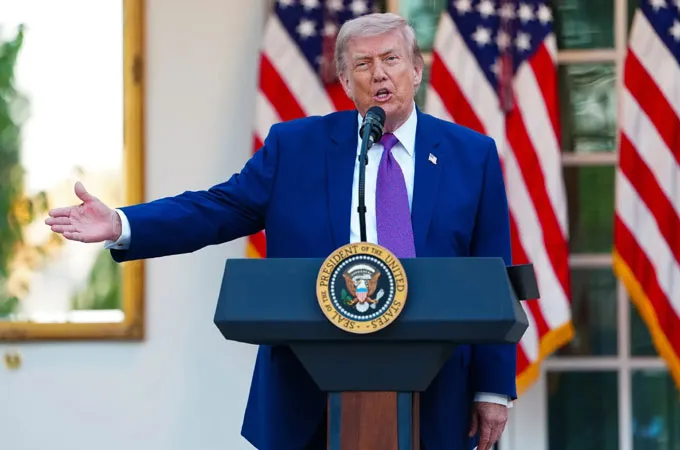
“We’re going to run the country until such time as we can do a safe, proper and judicious transition,” Trump said at a Mar-a-Lago news conference.
He boasted that this “extremely successful operation should serve as warning to anyone who would threaten American sovereignty or endanger American lives.”
Maduro and other Venezuelan officials were indicted in 2020 on narco-terrorism conspiracy charges, and the Justice Department released a new indictment Saturday of Maduro and his wife that painted his administration as a “corrupt, illegitimate government” fueled by a drug-trafficking operation that flooded the U.S with cocaine. The US government does not recognize Maduro as the country’s leader.
The Trump administration spent months building up American forces in the region and carrying out attacks on boats in the Caribbean Sea and eastern Pacific Ocean for allegedly ferrying drugs.
Last week, the CIA was behind a drone strike at a docking area believed to have been used by Venezuelan drug cartels - the first known direct operation on Venezuelan soil since the U.S. campaign began in September.
Leaders around the world have responded with a mix of condemnation and support to the US capture of Maduro. In an initial response, UK Prime Minister Keir Starmer said his government would "shed no tears" for the end of Maduro's regime.
Neighbouring Latin American countries condemned the actions, as did Venezuela's long-term allies, Russia and China. China said it was "deeply shocked and strongly condemns" the use of force against a sovereign country and its president.
Russia accused the US of committing "an act of armed aggression".
Iran, which is locked in its own dispute with Trump over his promise of intervention in its country, called the strikes a "flagrant violation of the country's national sovereignty".
Many Latin American leaders condemned the US actions.
Brazil's President Luiz Inacio Lula Da Silva wrote on X that the actions "cross an unacceptable line", adding that "attacking countries in flagrant violation of international law is the first step toward a world of violence, chaos, and instability".
Colombian President Gustavo Petro called the strikes an "assault on the sovereignty" of Latin America, while Chile's President Gabriel Boric expressed "concern and condemnation" and called for "a peaceful solution to the serious crisis affecting the country".
Cuban President Miguel Diaz-Cane accused the US of a "criminal attack", while Uruguay said in an official statement that it was monitoring developments "with attention and serious concern" and "rejects, as it always has, military intervention".
Early morning attack
Taking place 36 years to the day after the 1990 surrender and seizure of Panama leader Manuel Antonio Noriega following a US invasion, the Venezuela operation unfolded under the cover of darkness early Saturday. Trump said the US turned off “almost all of the lights” in Caracas while forces moved in to extract Maduro and his wife.
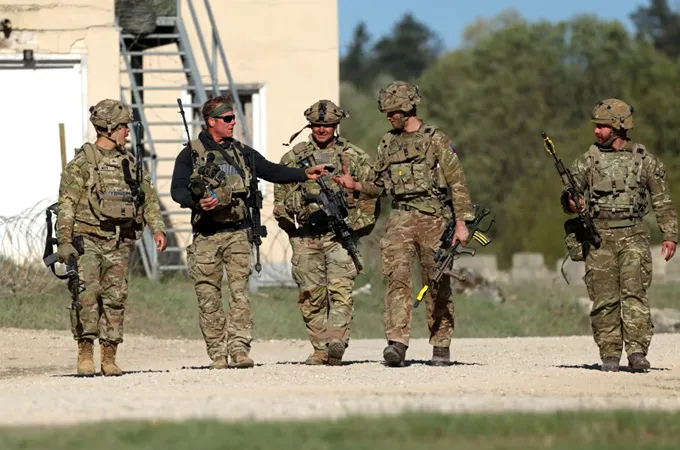
Gen. Dan Caine, chairman of the Joint Chiefs of Staff, said U.S. forces had rehearsed their maneuvers for months, learning everything about Maduro — where he was and what he ate, as well as details of his pets and his clothes.
“We think, we develop, we train, we rehearse, we debrief, we rehearse again and again,” Caine said. “Not to get it right, but to ensure we cannot get it wrong.”
Multiple explosions rang out that morning, and low-flying aircraft swept through Caracas. Maduro’s government accused the United States of hitting civilian and military installations, calling it an “imperialist attack” and urging citizens to take to the streets. The explosions — at least seven blasts — sent people rushing into the streets, while others took to social media to report what they saw and heard.
Under Venezuelan law, Rodríguez would take over from Maduro. Rodríguez, however, stressed during a Saturday appearance on state television that she did not plan to assume power, before Venezuela’s high court ordered that she become interim president.
“There is only one president in Venezuela,” Rodriguez said, “and his name is Nicolás Maduro Moros.”