Gulf investors are playing an increasing central role in sustaining AI and private market deal flow, not as speculative entrants, but as strategic financiers of foundational technology infrastructure, a Standard Chartered report said.
Standard Chartered Wealth Solutions Chief Investment Office's (CIO) Global Market Outlook for 2026 outlines its investment strategy and key themes for navigating global markets in the year ahead.
The Bank’s CIO highlights that while there are concerns around an equity market bubble led by the boom in Artificial Intelligence (AI), current market conditions do not suggest a level of embedded leverage comparable to that seen in the lead-up to the 2008 Global Financial Crisis.
According to the Outlook, the closer comparison is the dot.com bubble in the late 1990s; however key differences remain, including the magnitude of investments being made and the profitability of those making the investments.
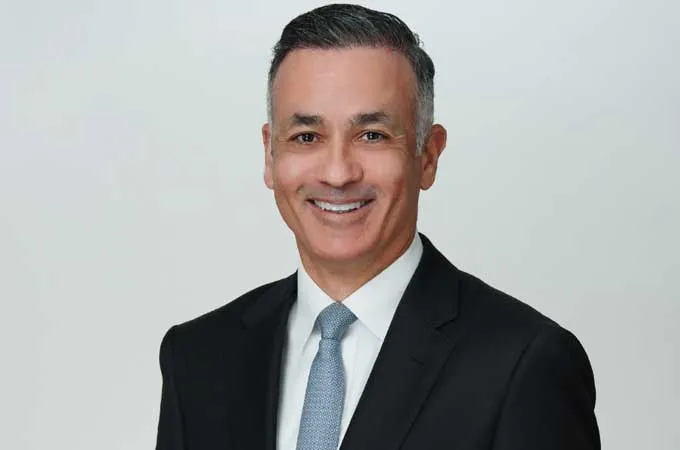
"While we believe there are key distinctions between the tech bubble of the late 1990s and today’s AI-led rally, elevated valuations reinforce the importance of diversification. For investors, the case for including alternative assets in a portfolio is twofold. First, there are structural benefits of adding them to portfolios to increase risk-adjusted returns. Second, there are cyclical reasons why this is even more important today," said Ayesha Abbas, Managing Director and Head of Affluent and Wealth Solutions, Europe, Middle East and Africa, and UAE at Standard Chartered.
She added that this approach is already well understood among Gulf sovereign wealth funds, where sustained capital flows into private markets and the AI ecosystem continue to support valuations and deal activity. She stated: “Gulf sovereign wealth funds are emerging as a defining force in the next phase of artificial intelligence investment, providing the long-term capital required to build infrastructure at scale.”
Globally, the Bank’s CIO expects risky assets to perform well in 2026 as major asset classes continue to inflate. Inflating gains are expected to be accompanied by greater dispersion, resulting in the CIO’s preference to diversify across a wider range of asset classes centred around three key themes:
* Theme 1 – Equities: With inflating markets, the CIO expects strong earnings growth to dominate elevated valuations in 2026, with market gains led by the US and Asia ex-Japan. It is also important to manage risks through regional diversification or sector picks.
* Theme 2 – Income: Emerging Market (EM) bonds are expected to outperform Developed Market (DM) bonds. EM (USD and local currency) bonds offer attractive credit quality, higher yields and diversification from a Fed-centric outlook alone.
* Theme 3 – Diversifiers: The CIO expects gold to extend gains in 2026, but demand for alternative strategies and currencies like JPY and CNH remain high amid a range of uncertainties and are key to diversifying well.
In terms of risks, four key risks would hold the potential to alter investment outlook:
(i) A negative shock or disappointment relative to high expectations in the AI theme poses a risk to equity markets.
(ii) A credit event that leads investors to worry that default risk is systemic, rather than idiosyncratic, poses a risk to both equities and credit, across private and public markets.
(iii) Any data or event that limits the Fed’s ability to cut rates poses the risk of disappointing markets and triggering a reassessment of valuations.
(iv) An unexpectedly hawkish Bank of Japan that pushes Japanese yields and the JPY sharply higher would pose a risk to equities and corporate bonds. - TradeArabia News Service