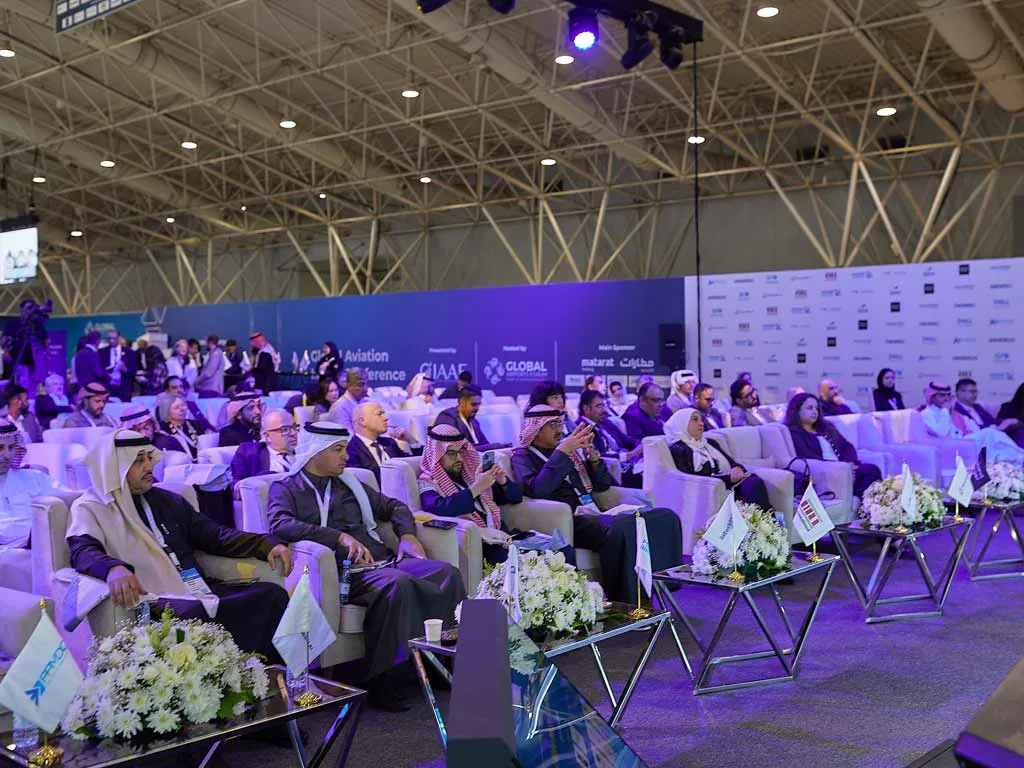
Sustainability Forum Middle East launched its fourth edition today (January 27) in Bahrain drawing more than 500 senior government and business leaders as well as regional and global sustainability experts who will address the issue of accelerating climate action and focus on a low carbon future during the two-day event.
The Forum, being held at the Four Seasons Hotel Bahrain Bay, puts spotlight on 'Advancing Alignment, Innovation and Implementation for Energy and Climate Transformation.'
It was inaugurated by Dr. Mohamed bin Mubarak Bin Daina, Minister of Oil and Environment, Special Envoy for Climate Affairs of the Kingdom of Bahrain in the presence of ministers, dignitaries and business leaders and with the support of the Supreme Council for Environment.
Jasem Mohamed Al Budaiwi, Secretary-General of the Gulf Cooperation Council, delivered a special address which was followed by a welcome address from Amna Hamad Al Rumaihi, the Chief Executive of the Supreme Council for Environment, Kingdom of Bahrain, and then an opening keynote delivered by Dr Mahmoud Mohieldin, UN Special Envoy on Financing Sustainable Development.
The first panel of the opening day focused on National Vision that will highlight sustainability strategies for competitiveness and growth.
It featured high-profile speakers including Dr. Sh. Abdullah bin Ahmed Al Khalifa, Minister of Transportation and Telecommunications, Kingdom of Bahrain, Abdulla bin Adel Fakhro, Minister of Industry and Commerce, Kingdom of Bahrain, and Sh. Khalifa Alkhalifa, CEO, Bahrain Bourse.
A key highlight of the Forum is a world-class programme featuring more than 50 expert speakers from Mena, Europe, UK, US, who will be sharing insights, strategies and solutions and engaging audiences in important discussions on accelerating the net-zero transition, said the organisers.
Sessions will convene diplomats, senior government officials, business leaders, financiers and technology innovators to address climate-aligned business transformation, diplomacy and policy alignment, transition finance, the expanding role of carbon and biodiversity markets, energy transition and industrial decarbonisation, AI and next-generation technologies, and human capital development and capacity building.
Among the Forum’s top speakers are senior representatives from Aramco and Aramco Ventures, BBK, AcwaPower, UNDP, International Finance Corporation, Kering Group, Alshaya Group, SAFA, Bank ABC, Standard Chartered Bank, Aluminium Bahrain, Gulf International Bank, Boston Consulting Group, National Bank of Bahrain, Egyptian Exchange, Central Bank of Bahrain, Environment Authority, Sultanate of Oman, Directorate of Climate Change of Türkiye, Hamad Bin Khalifa University, Bahrain’s Supreme Council for Environment, KPMG, and others.
The Forum’s second day (January 28) will focus on hands-on learning, with workshops hosted by KPMG Bahrain, UNDP, and Anthesis Group, stated the organisers.
These sessions will cover future-proofing business through climate action and responsible sourcing for the GCC, navigating carbon markets across the Arab states for public and private sector stakeholders, and delivering measurable value through sustainability, reputation, and growth.
They will provide participants with the tools and expertise needed to develop effective sustainability strategies, enhance climate-related financial disclosures, and advance decarbonisation initiatives.
Laila Danesh, the Managing Director at FinMark Communications and Founder and Organizer of Sustainability Forum Middle East, said: "As Sustainability Forum Middle East enters its fourth edition, the focus is firmly on moving from ambition to execution. The region has made significant commitments on energy transition and climate action; the priority now is alignment across policy, finance, and industry, and the practical implementation needed to deliver real economic and environmental outcomes."
"SFME has become a convening platform where decision-makers, capital providers, and solution leaders come together to translate strategy into action—supporting competitiveness, resilience, and long-term value creation as the region accelerates its transition to a low-carbon future," she stated.