Dubai’s real estate market recorded over AED180 billion ($49 billion) in residential and commercial sales during the first three months of the year, supported by a surge in ultra-luxury property transactions and sustained demand across both sectors, according to Engel & Völkers Middle East’s latest market report.
The luxury segment emerged as a defining force behind this performance, with 2,148 transactions exceeding AED10 million ($2.72 million), marking a 62.6% year-on-year increase and one of the highest quarterly totals on record.
The scale and consistency of high-value deals underscore Dubai’s growing appeal among global high-net-worth individuals seeking long-term investment and lifestyle-driven assets, the report said.
Landmark transactions
A number of landmark transactions further highlight this momentum, including the AED422 million off-plan residence at Aman Residences, the AED350 million villa at Jumeirah Asora Bay, and the AED340 million villa on Jumeirah Bay Island. These transactions reinforce Dubai’s position as a leading global destination for ultra-luxury real estate, it noted.
Beyond headline deals, the luxury market is expanding in breadth. Activity is increasingly distributed across both established and emerging communities, with master-planned destinations such as The Oasis leading volumes, alongside sustained demand in Dubai Hills Estate, Palm Jumeirah, and Nad Al Sheba. At the same time, newer waterfront developments, including Palm Jebel Ali, Naia Island, and La Mer are gaining traction, reflecting a shift towards lifestyle, wellness, and long-term community design.
This performance sits within a broader residential market that remains highly active. Dubai recorded 44,743 residential transactions, with total sales value reaching AED143.1 billion, representing a 22.2% increase year-on-year. Demand continues to be anchored in the mid-market segment, while off-plan developments dominate overall activity, reflecting sustained investor confidence and appetite for new supply.
Short-term adjustment
While the market entered the year with strong momentum, activity became more measured towards the end of the period following the escalation of regional tensions in late February. Buyers and tenants adopted a more cautious approach, with decision-making timelines extending and transaction volumes moderating, particularly in March. However, this shift reflects a short-term adjustment in sentiment rather than any structural change in underlying demand.
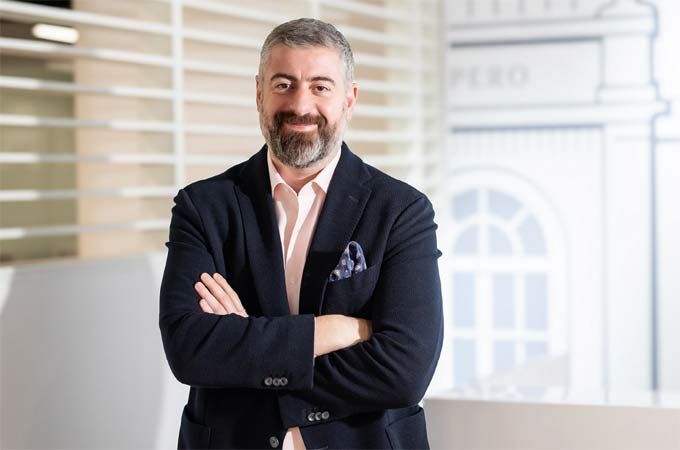
Daniel Hadi, CEO of Engel & Völkers Middle East, said: “Dubai’s real estate market continues to demonstrate exceptional depth, particularly at the luxury end, where demand remains highly resilient. What we saw in March was a natural pause linked to evolving regional conditions, but also a transition towards a more mature phase where buyers and investors become increasingly focused on value, quality, and long-term fundamentals.”
The commercial real estate sector mirrored this trajectory, entering the year with strong momentum before moderating towards the end of the period. Dubai recorded 3,619 commercial transactions, with total sales value reaching AED37.9 billion, reflecting a 32% increase year-on-year.
This growth has been supported by continued business expansion and capital deployment across the emirate, alongside Dubai’s position as a global hub for trade, finance, and enterprise. The strength of the underlying economy is further reflected in the registration of 2,709 new companies with the Dubai Chamber in March alone, reinforcing demand for commercial space across office, retail, and industrial sectors.
Within the commercial sector, office assets emerged as a standout performer, with 1,565 transactions recorded, up 74.5% year-on-year, and average prices rising to AED3,047 per square foot. This growth is driven by strong demand for Grade A, future-ready workspaces, particularly driven by off-plan projects. The majority of off-plan office sales were recorded in Al Sufouh, Business Bay and Dubai Maritime City.
Retail real estate
Retail real estate also delivered robust performance, with transaction volumes increasing significantly and total sales value rising sharply, supported by population growth and the continued expansion of residential communities. Demand remains concentrated in mixed-use developments and high-density areas, where consumer activity continues to strengthen.
Across both residential and commercial sectors, a clear shift towards selectivity is emerging. Buyers, tenants, and investors are placing greater emphasis on asset quality, location, and long-term value, signalling a transition from momentum-driven activity to a more disciplined and mature market environment.
Hadi added: “Short-term shifts in sentiment are expected in any evolving market. What the data continues to show is that the underlying drivers of Dubai real estate, including population growth, business expansion, and sustained capital inflows, remain intact, and they continue to support the market's long-term trajectory."
While near-term activity may remain more measured, the long-term outlook remains firmly positive, with opportunities increasingly driven by quality, pricing discipline, and strategic positioning, he said. – TradeArabia News Service