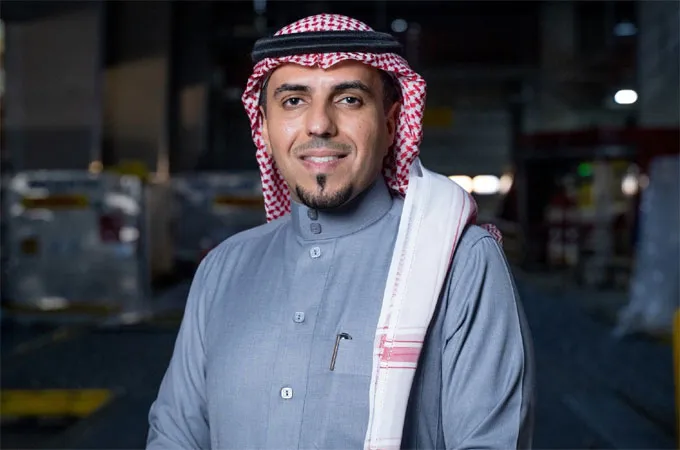
For more than a decade, the telecommunications industry has been defined by a single metric: speed. Progress has been measured in megabits, then gigabits, and now terabits per second, says Bhuvnesh Sachdeva*.
In Saudi Arabia’s rapid digital transformation, speed served as the initial catalyst—connecting cities, enabling services, and laying the foundation for a modern, connected economy.
But as the kingdom advances towards Vision 2030 and prepares to host the FIFA World Cup 2034, it is becoming increasingly clear that speed alone is no longer sufficient. In Saudi Arabia’s environment, resilience - not speed - will define the success of its digital infrastructure.
The environmental cost of connectivity
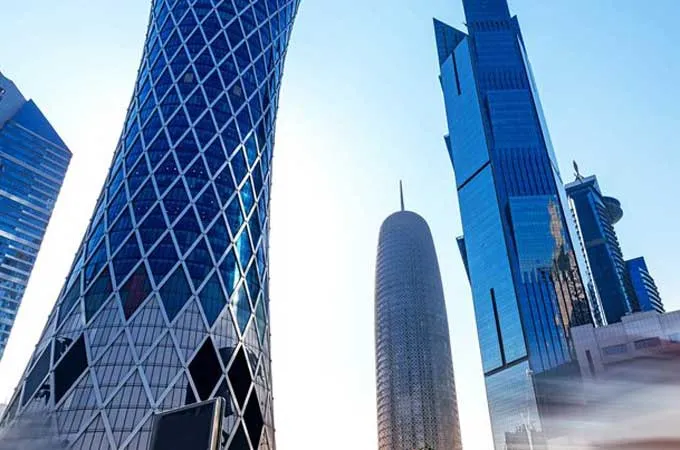
Saudi Arabia is home to some of the most ambitious infrastructure projects in the world. From the vertical scale of Jeddah Tower to the futuristic urban vision of NEOM, the kingdom is redefining what is possible in construction and urban development.
Yet these projects operate under environmental conditions that are among the harshest globally. Temperatures frequently exceed 50°C. Coastal areas face high salinity, while inland regions contend with persistent sandstorms. These are not occasional challenges—they are constant pressures that directly impact network performance.
Under such conditions, heat-induced equipment failures become a tangible operational risk. Traditional networking equipment, often designed for controlled environments, struggles to maintain performance. At the same time, the cooling systems required to sustain these deployments drive up energy consumption and operational expenditure.
The result is a hidden but significant cost to innovation—one that is often underestimated.
When speed fails
In a digitally dependent economy, network failure is not merely an inconvenience. It is a disruption with real consequences.
Airports, energy facilities, logistics hubs, ports, and large-scale public venues all rely on uninterrupted connectivity. A network capable of delivering high speeds under ideal conditions, but unable to sustain performance in extreme heat, cannot support the kingdom’s ambitions.
As Saudi Arabia expands into smart mobility, industrial automation, and large-scale digital services, the margin for failure continues to shrink. The expectation is no longer just fast connectivity—it is continuous connectivity.
A necessary shift in thinking
The next phase of Saudi Arabia’s growth requires a fundamental shift in how infrastructure is designed and deployed.
For too long, the industry has relied on commercial-grade networking equipment housed within controlled environments—often dependent on energy-intensive cooling systems to function reliably.
This model is increasingly misaligned with the realities of the kingdom’s climate and geographic scale. What is required is a transition towards infrastructure built for endurance.
Infrastructure that can operate independently of climate-controlled environments. Infrastructure that is physically robust enough to withstand sand, dust, and corrosive air and an infrastructure that can monitor, adapt, and recover with minimal human intervention. In other words, infrastructure designed not just for performance, but for survival.
The 2034 benchmark
The FIFA World Cup 2034 will be more than a global sporting event—it will be a defining moment for Saudi Arabia’s infrastructure on the world stage.
Visitors will expect seamless digital experiences - from high-definition streaming to immersive, connected environments. But behind every digital interaction lies a physical network.
If that network is not built to withstand the environment in which it operates, performance will degrade precisely when reliability is most critical. The result is not just a technical issue, but a reputational one.
Redefining the metric of success
Saudi Arabia is entering a new phase of digital maturity. The question is no longer how fast a network can operate under ideal conditions, but how reliably it can perform under real-world stress.
Resilience must move from being a secondary consideration to a primary design principle. For developers, operators, and policymakers alike, the challenge is clear: infrastructure must be engineered to match not only the scale of the Kingdom’s ambitions, but also the realities of its environment.
Because in Saudi Arabia, the true measure of a network is not its peak speed—it is its ability to remain operational, consistently and without compromise.
* Bhuvnesh Sachdeva is the Senior Vice President at HFCL, a leading Indian technology company specialising in 5G network, defence security, WiFi and optical fibre