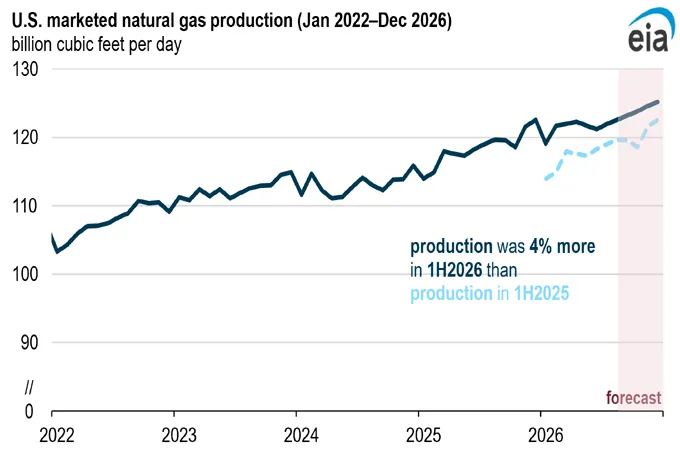
US marketed natural gas production is forecast to reach a record 122.5 billion cubic feet per day (Bcf/d) in 2026, surpassing the previous high of 118.5 Bcf/d set in 2025, according to the US Energy Information Administration’s (EIA) August Short-Term Energy Outlook.

The US Energy Information Administration has sharply raised its forecast for oil prices this year, warning that severe restrictions on shipping through the Strait of Hormuz are likely to persist through August despite President Donald Trump's repeated assertions that the strategic waterway is open.
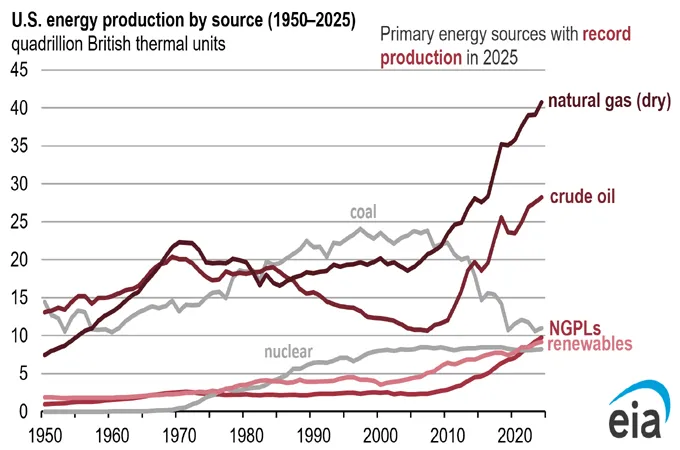
Total energy production in the US increased to a new record of 107 quadrillion British thermal units (quads) in 2025, a 3.4 per cent increase from the previous record set in 2024, according to new data in the US Energy Information Administration (EIA) Monthly Energy Review.
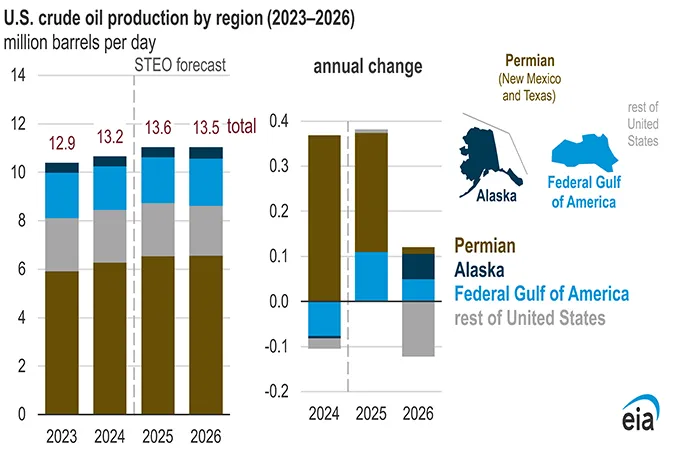
The US Energy Information Administration (EIA), in its latest Short-Term Energy Outlook report, forecasts that US crude oil production will average 13.5 million barrels per day (b/d) in 2026, about 100,000 b/d less than in 2025.
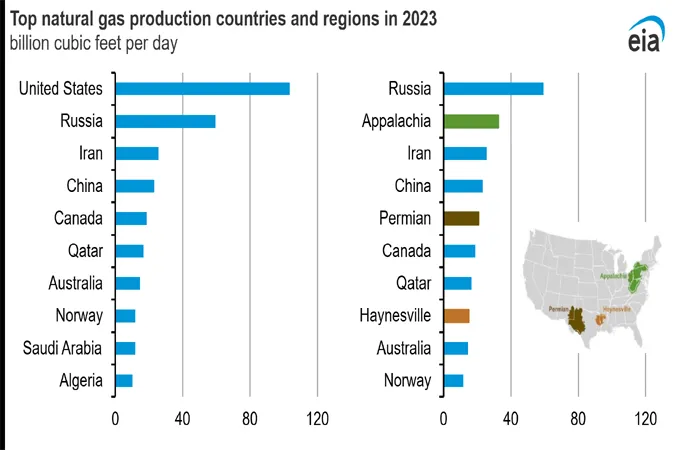
In 2023, the US produced 104 Bcf/d of natural gas, surpassing Russia. Three US regions—Appalachia, Permian, and Haynesville—rank among the world's top ten producers, with Appalachia at 33 Bcf/d, Permian at 21 Bcf/d, and Haynesville at 15 Bcf/d.
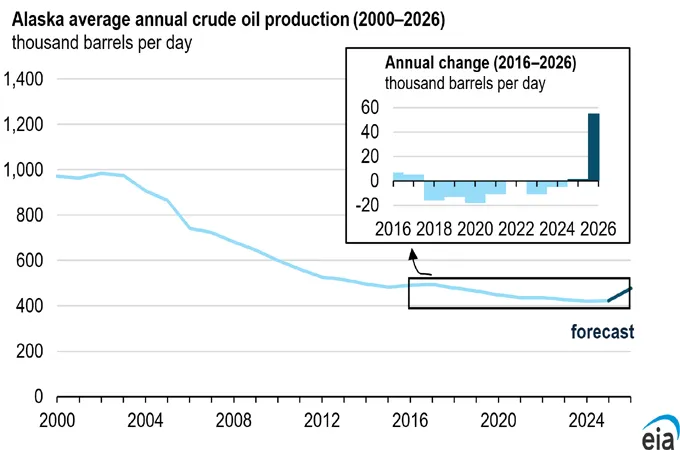
The US Energy Information Administration (EIA) latest Short-Term Energy Outlook forecasts that crude oil produced from Alaska will reach 477,000 barrels per day (b/d) in 2026, the highest level since 2018.

The US Energy Information Administration (EIA) forecasts in its October Short-Term Energy Outlook (STEO) that US crude oil production will average 13.5 million barrels per day (mmb/d) in both 2025 and 2026, both slightly higher than the agency’s September forecast.
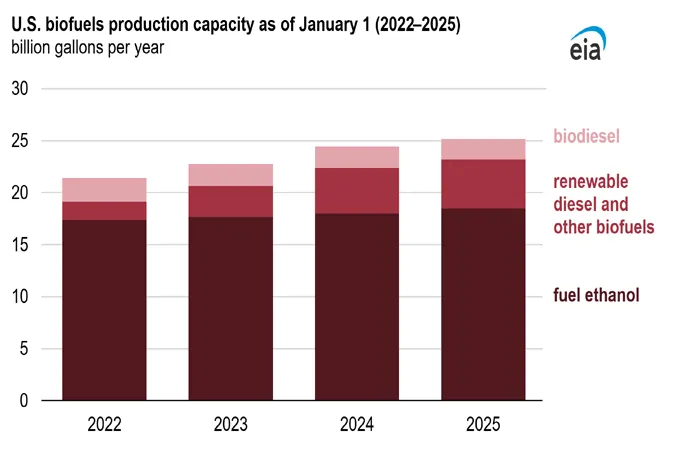
he pace of capacity additions for US biofuel production slowed in 2024, with production capacity increasing by a modest 3 per cent from the start of 2024 to the start of 2025, according to US Energy Information Administration (EIA) latest biofuels production capacity reports.
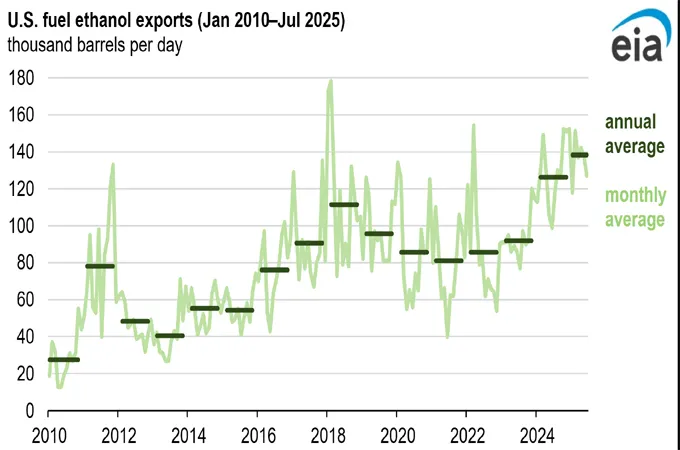
The US is on track to export a record amount of fuel ethanol for the second year in a row in 2025, driven by growing international demand. This growing market for exports is supporting increased US fuel ethanol production, even as domestic consumption stagnates, according to US Energy Information Administration (EIA) report.
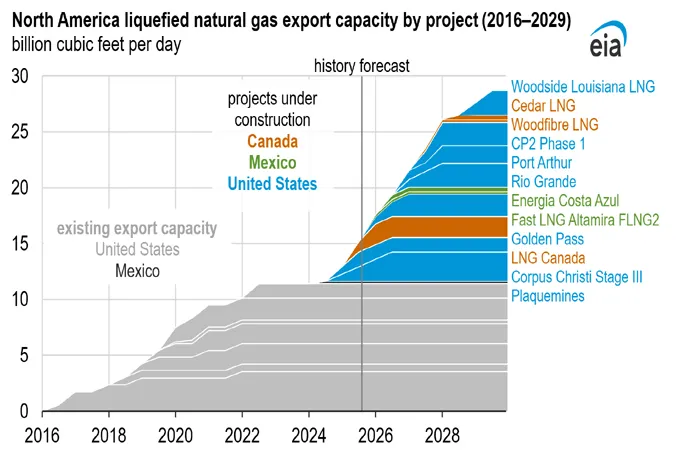
Liquefied natural gas (LNG) exporters in the US have announced plans to more than double US liquefaction capacity, adding an estimated 13.9 billion cubic feet per day (Bcf/d) between 2025 and 2029, according to US Energy Information Administration (EIA).