Oman's General State Budget for 2026 forecasts total public expenditure of approximately RO11.977 billion ($31.15 billion), rising by 1.5 percent from the approved expenditure for 2025.
The total revenues, calculated based on an average oil price of $60 per barrel, amounted to approximately RO11.447 billion ($29.77 billion). This reflects an increase of 2.4 percent over the approved revenues for 2025, said an Oman News Agency report.
Meanwhile, the estimated budget deficit for 2026 stands at RO530 million, a decrease of 14.5 percent from the deficit approved in the 2025 budget, constituting 4.6 percent of total revenues and 1.3 percent of the Gross Domestic Product (GDP).
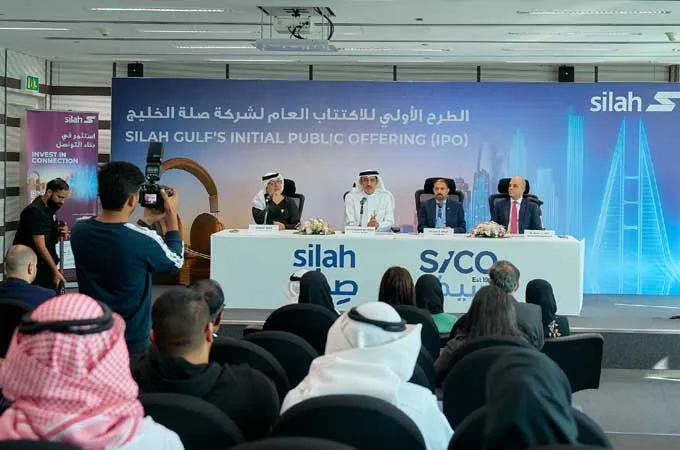
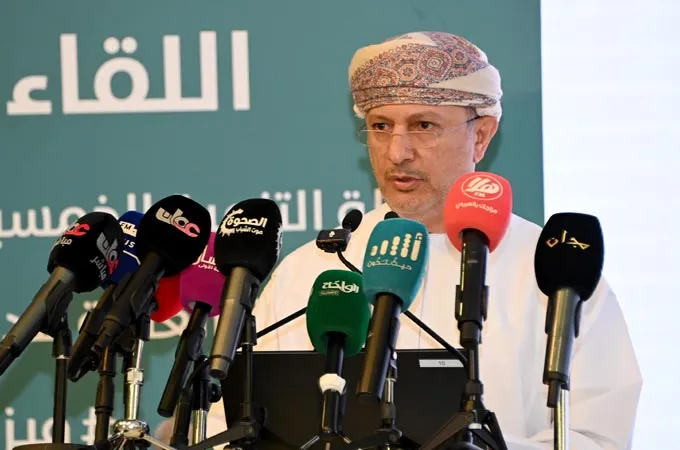
This was announced during a press conference held on Thursday at the Ministry of Finance to disclose details of the financial framework for the Eleventh Five-Year Development Plan (2026-2030) and the General State Budget for the fiscal year 2026, in addition to the preliminary results of the General State Budget for the fiscal year 2025.
Sultan Salim Al-Habsi, Minister of Finance, affirmed the continued growth of Oman's economic activity. Statistical data indicates that the projected real GDP (at constant prices) by the end of 2025 is expected have reached approximately RO39.2 billion, compared to RO34.5 billion at the end of 2021, achieving a growth rate of 14 percent since the start of the (Tenth) Plan.
Furthermore, inflation rates have stabilised within target ranges, with the average inflation rate until November 2025 recorded at around 0.9 percent. This outcome is attributed to government policies supporting petroleum products, electricity and water subsidies, and support for essential commodity prices.
The minister said data indicates a growth in Foreign Direct Investment (FDI) in Oman. By the third quarter of 2025, FDI reached RO30.3 billion, marking an increase of approximately 71 percent compared to the same period in 2021.
The minister stated that regarding government investments, Oman Investment Authority has contributed to economic growth by restructuring government companies and managing domestic and foreign investments. The authority's assets grew to approximately RO21 billion by the end of 2025. Its investment portfolio has diversified across about 50 countries, forming economic and investment alliances that yield direct and indirect benefits, including the development of specialised Omani human resources and the transfer of knowledge and technology to the Sultanate of Oman for utilisation and localization across multiple fields. Additionally, it has contributed to the General State Budget with over RO4.4 billion during the Tenth Five-Year Plan.
He pointed out that the Future Fund Oman has directly contributed to attracting several investments, supporting private sector institutions, and accelerating the growth pace of startups and small and medium enterprises (SMEs) locally and abroad. The total investments approved by the fund till the end of 2025 amounted to 164 projects with a financial commitment of RO462 million, including RO104 million in investments for startups and SMEs.
He said that as a result of the improvement in oil prices during the Tenth Five-Year Plan (2021 – 2025), the General State Budget achieved additional revenues amounting to RO11.291 billion. The government was able to utilise these amounts in a balanced manner between economic and social dimensions and debt reduction. Social expenditure was boosted by RO2.687 billion, and economic expenditure by RO3.837 billion. The remaining amount, RO4.767 billion, was utilised to reduce public debt.
He stated that tenders for the construction of 113 new schools were awarded during the Tenth Five-Year Plan, with 49 schools already completed and the remaining 64 schools to be delivered successively during 2026 and 2027. He noted that the budget of the Ministry of Education increased from RO1.386 billion in 2020 to reach RO1.525 billion for 2026.
The minister pointed out that the construction of 11 hospitals and 19 health centers and institutions was approved during the Tenth Five-Year Plan. Four hospitals and 12 health centers and institutions have been delivered during the plan years. Additionally, it is planned to receive 5 hospitals and 5 health centers and institutions during this year, 2026. Consequently, the budget of the Ministry of Health has increased by about 4 percent, from RO970 million in 2020 to approximately RO1 billion for 2026.
He highlighted that about 2,525 km of main and internal roads across governorates were implemented at an estimated cost of RO2.7 billion. The housing sector was supported with a total of RO545 million during the period of the Tenth Five-Year Development Plan. This is in addition to allocations for supporting Oman Housing Bank loan interest subsidies, which amounted to RO 227 million, through the "Iskan" program implemented by the Bank aimed at reducing waiting periods and successfully reducing the waiting period to 6 months.