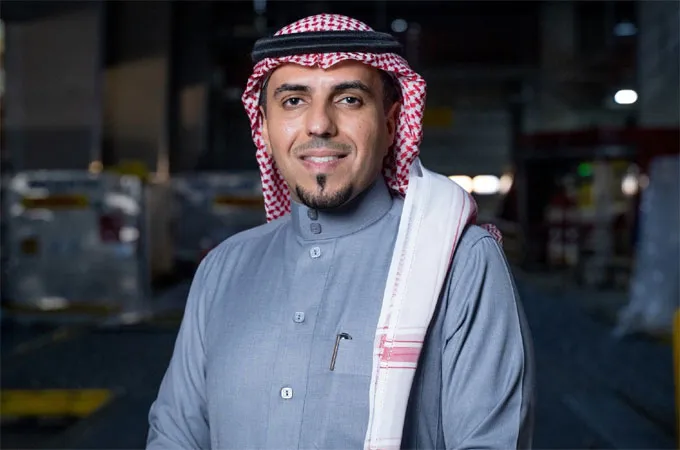
After years of bold ambition and heavy investment, artificial intelligence adoption in the UAE and Saudi Arabia is entering a more practical and performance-driven phase, with organisations under growing pressure to demonstrate real outcomes rather than future potential, said Samir Akel, the Regional Vice President for Emerging Markets at leading process automation platform Nintex.
The conversation around AI in the region is evolving rapidly as boards and leadership teams demand clearer value, stronger controls, and enterprise-wide resilience, he stated.
“Across the UAE and Saudi Arabia, ambition around AI remains high, but expectations are becoming more defined,” noted Akel.
“This year, AI will be judged less on promise and more on performance, with organisations expected to show measurable outcomes, clear governance, and the ability to operate at scale without disruption,” he added.
The shift comes after a decade of sustained digital transformation across both markets. PwC estimates AI could contribute up to $135 billion to Saudi Arabia’s economy and $96 billion to the UAE’s economy by 2030, representing around 12 to 14% of GDP. As these investments mature, leaders are increasingly focused on near-term returns.
"What we’re seeing now is a move away from isolated pilots. Organisations want automation programmes that reduce cycle times, strengthen compliance, and improve workforce productivity across entire operating models, not just in pockets of the business," explained Akel.
This trend is already visible in government and public-sector initiatives, he added.
In the UAE, shared services, digital citizen platforms, and paperless strategies continue to expand, while Saudi Arabia’s Vision 2030 programmes are driving transformation across healthcare, energy, logistics, and public services.
“In environments like these, AI has to be connected to real workflows.It needs to be measured against business KPIs and governed as a core enterprise capability, otherwise the value simply doesn’t materialise,” noted Akel.
Governance, in particular, is emerging as a defining factor in AI strategy across the Middle East. Saudi Arabia’s Personal Data Protection Law is now fully enforceable, with significant penalties for non-compliance, while the UAE’s Personal Data Protection Law and national AI Charter set clear expectations around transparency, accountability, and human oversight.
"For organisations operating across both markets, AI strategy is inseparable from governance," stated Akel. “Systems must be auditable, policy-aware, and designed with compliance built in from the outset, not added later as an afterthought,” he added.
According to him, this regulatory environment is driving demand for orchestration platforms that can coordinate systems, people, data, and policy across the full lifecycle of work.
“Orchestration is becoming central to AI strategy because it’s the only way to operate at national and enterprise scale while maintaining trust. Decision traceability, workflow controls, and compliance reporting are no longer optional,” stated Akel.
At the same time, AI agents are moving from experimentation into real-world deployment, particularly in high-volume, compliance-heavy environments such as government services and regulated industries.
“We’re seeing AI agents transition from proof-of-concept to production. The opportunity is especially strong in the UAE and Saudi Arabia, where digital public services are already among the most advanced globally,” observed Akel.
Nintex refers to this next phase as Agentic Business Orchestration, an approach that embeds goal-oriented AI agents within governed workflows rather than deploying them as standalone tools.
"The organisations that move fastest will be the ones that treat agents as part of a managed operating model. Value comes from orchestration, not autonomy alone," he stated.
Alongside AI adoption, many organisations are also confronting a pressing operational challenge: the end-of-life of legacy workflow technologies.
Microsoft has confirmed the retirement of SharePoint 2013 workflows in Microsoft 365 by April 2026, a move that could disrupt critical processes across the region.
"Across the Middle East, many organisations still rely on these workflows for HR, approvals, service requests, and governance," warned Akel. “When they stop running, services will stall, and that creates a real continuity risk,” he added.
Forward-looking organisations, he pointed out, are already cataloguing and redesigning mission-critical workflows using modern platforms that support governance, analytics, and AI-enabled optimisation from day one.
“What we’re seeing is that workflow modernisation is no longer just a technology refresh. It’s becoming a priority for operational resilience,” said the expert.
As expectations rise, partner ecosystems are also evolving. Managed Service Providers and system integrators are increasingly expected to deliver long-term, measurable outcomes rather than one-off implementations.
“Partners are moving towards becoming managed intelligence providers. Their role now extends to workflow governance, automation operating models, process intelligence, and the controlled deployment of AI in production,” he stated.
Looking ahead, Akel believes the UAE and Saudi Arabia will continue to lead the region in ambition, but execution quality will be the key differentiator.
“The organisations that succeed will be those that connect AI to real work, govern it with intent, and measure outcomes rigorously. That’s how AI becomes a durable advantage, supporting delivery at national and enterprise scale,” he added.-TradeArabia News Service