Confusion over the scope of the newly announced US-Iran ceasefire and Israel's military campaign in Lebanon continued to disrupt shipping through the Strait of Hormuz, with industry operators adopting a cautious wait-and-see approach.
Iran’s Islamic Revolutionary Guard Corps said shipping through the strategic waterway had been halted after what it described as an Israeli ceasefire violation in Lebanon.
Heaviest attacks
The claim came after Israel launched one of its heaviest strike waves since the conflict began, targeting more than 100 sites in Lebanon within minutes, according to the Israeli military. Lebanon’s health ministry said at least 182 people were killed and nearly 900 injured.
The escalation has exposed sharply divergent interpretations of the ceasefire announced Tuesday by US President Donald Trump.
Tehran maintains that the agreement extends to hostilities involving Hezbollah in Lebanon, while Washington and Israeli Prime Minister Benjamin Netanyahu insist the arrangement applies only to direct US-Iran hostilities and does not restrict Israeli military operations against Hezbollah.
Adding to the uncertainty, Hezbollah said early Thursday it fired rockets into northern Israel in response to what it called Israeli ceasefire violations, marking its first reported attack since the ceasefire announcement.
Reuters reported that the exchange has raised fresh doubts over whether the two-week truce can hold.
The White House has previously indicated that the ceasefire depends on keeping the strait open
Vance to join talks
Diplomatic efforts are meanwhile moving toward planned talks in Pakistan, where US Vice President JD Vance and special envoys Steve Witkoff and Jared Kushner are expected in Islamabad from Saturday for discussions linked to Iran. But Tehran has already signalled dissatisfaction, with parliament speaker Mohammad Bagher Ghalibaf saying parts of Iran’s proposal had been violated even before negotiations begin, casting doubt on whether talks will proceed smoothly.
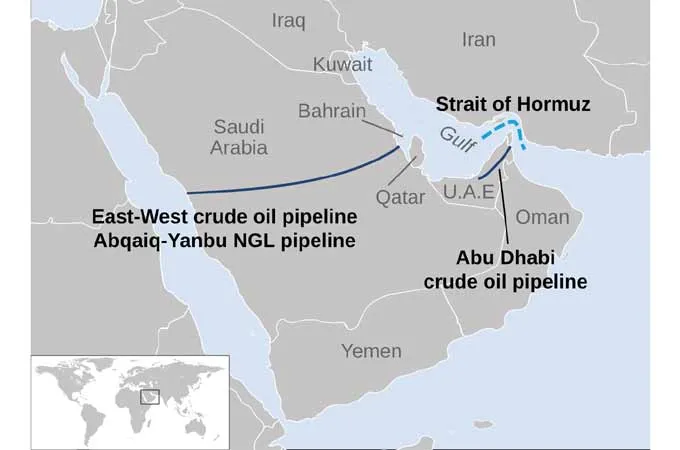
Shipping markets are watching developments closely, as operators remain uncertain about how and when vessels can safely move through the Strait of Hormuz, one of the world’s most critical oil transit chokepoints.
Shipping executives and insurers say that despite the ceasefire announcement, there is still no clear evidence of normal vessel movement resuming. Energy analysts noted that crude exports have yet to show signs of meaningful recovery, suggesting any impact on oil supply or fuel prices may take time to emerge.
Industry participants say the ceasefire remains fragile, and many shipowners are reluctant to move vessels until they see stronger evidence that the agreement will hold.
Shipping delays seen
Several shipping operators are considering delaying departures for several more days, with some discussing the possibility of coordinated convoy movements later in the ceasefire period if conditions stabilise. Insurers have also maintained elevated war-risk premiums, citing uncertainty over which Iranian authority is authorising passage and how transit permissions will be managed during the limited two-week window.
The caution is reflected in traffic data: only three vessels were recorded crossing the strait on Wednesday, according to Lloyd's List, while MarineTraffic data showed hundreds of ships still waiting in the wider Gulf region, including 426 tankers, 34 LPG carriers and 19 LNG vessels.