The UAE’s private sector is getting ready to implement mandatory e-invoicing in phases from July 1, 2026, that is expected to reduce downtime, increase transparency, and improve the collection of Value-Added Tax (VAT) and Corporate Tax.
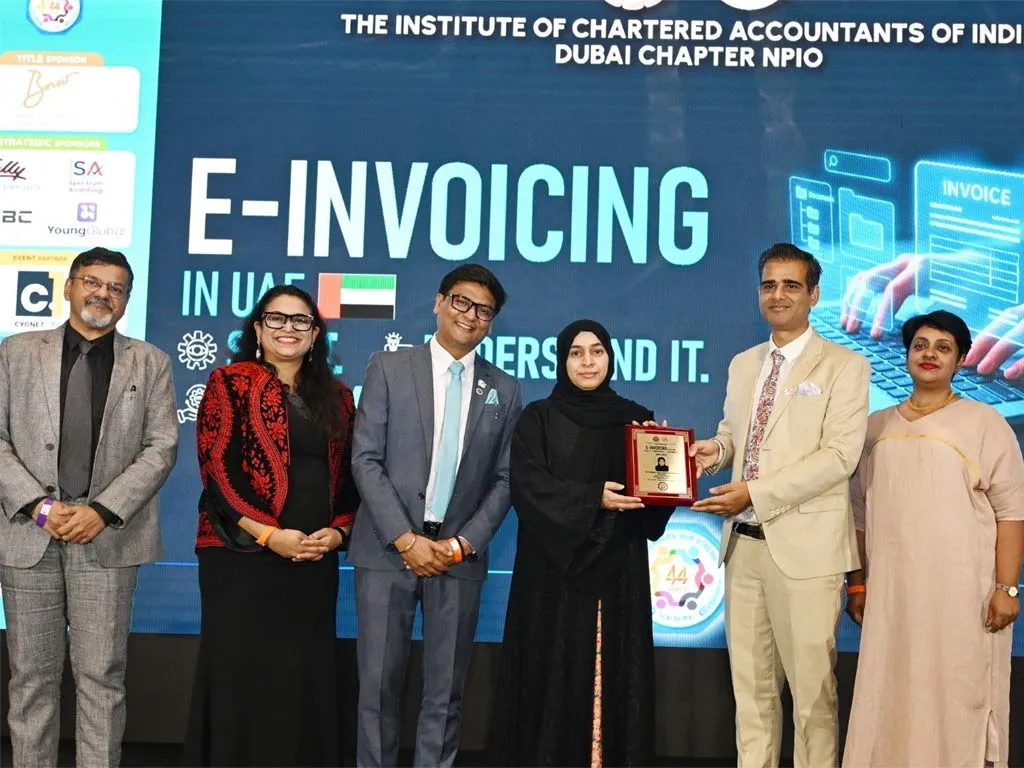
The system will strengthen the UAE digital economy, officials said at a conference organised by the Dubai Chapter of the Institute of Chartered Accountants of India (ICAI), attended by more than 600 professionals.
The conference, titled: E-Invoicing in the UAE – See It, Understand It and Implement It – was organised to create greater awareness on the E-Invoicing system, that goes live on January 1, 2027, for businesses generating more than Dh50 million turnover. However, companies will have to select the Accredited Service Providers (ASPs) from amongst the 28 authorised ASPs approved by the UAE Federal Tax Authority (FTA) by July 1, 2026.
Mariam Abdullah Al Matroushi, Deputy Director of Fujairah Department of Finance and Member of the Board of Directors at the Federal Tax Authority, said: “The UAE is moving steadily toward developing its tax system by adopting an e-invoicing system in less than two months, in phases from January 1, 2027, starting with companies generating more than Dh50 million turnover, that requires all stakeholders to start preparing for E-Invoicing.
“This will become mandatory for companies with turnover less than Dh50 million around the second half of 2027. This digital E-Invoicing system is transparent and will help all stakeholders in real-time processing VAT and Corporate Tax in the UAE.
“This step is part of the UAE Government’s vision to build a knowledge- and technology-based economy, with E-Invoicing serving as a pivotal tool to support financial innovation and strengthen integration between the public and private sectors.”
More than 23.78 million physical cheques valued at Dh1.5 trillion were processed through the UAE Central Bank’s Image Cheque Clearing System (ICCS) in 2025, a large chunk of these payments are linked to sale and purchase transactions by businesses that were recorded through manual and paper invoices.
CA Rishi Chawla, Chairman of the Dubai Chapter of the ICAI, said: “The introduction of E-Invoicing is not the end, but the beginning of the country’s digital transformation and we all should work together to help businesses to successfully incorporate E-Invoicing into their core financial eco-system.
“Currently all businesses issue invoices – both paper and electronic invoices – to realise and record buying and selling products. E-Invoicing makes the process digital, transparent, instant and helps all partners in executing it and reporting it on time with the Federal Tax Authority. I urge all businesses to get ready and implement this system before July 1 deadline.
“The introduction of e-invoicing in the UAE is set to significantly enhance business efficiency and financial transparency. By enabling real-time validation and standardised reporting, it will streamline invoicing cycles, reduce delays, and improve cash flow for companies.
“At the same time, greater visibility and accuracy in transactions will strengthen compliance, reduce leakages, and build trust across the market—further reinforcing the UAE’s position as a transparent and efficient global business hub.”
The UAE Funds Transfer System (UAEFTS) witnessed 114.9 million retail transactions valued at Dh9.9 trillion in 2025, according to the UAE Central Bank – most of which are recorded through invoices. Institutional transfers through UAEFTS totalled 865,708 transactions valued at Dh14.5 trillion in 2025.
The total value of 139.55 million payments through UAE FTS and ICCS last year exceeded Dh25.9 trillion ($7.06 trillion), according to the UAE Central Bank. However, from January 1, 2027, most of these types of transactions will become part of the E-Invoicing eco-system that will reflect on the FTA records real time and help improve tax collection.
Mariam Al Matroushi outlined several key benefits of implementing e-invoicing.
“It enhances tax compliance and reducing errors while accelerating auditing and review processes. It supports transparency and combats tax evasion while reducing operational costs related to paper-based procedures and at the same time, improving the business environment and boosting investment attractiveness,” she said.
‘It is important for businesses to be ready for this transition, and I urge them to update their accounting systems and train their staff to ensure a smooth shift and maximize the benefits of the new system.”
What is E-Invoicing?
E-invoicing is an advanced digital system that allows invoices to be issued, stored, and exchanged between companies and government entities in a structured electronic format, replacing traditional paper invoices. The system aims to enhance data accuracy, reduce human errors, increase transparency, and enable tax authorities to monitor commercial transactions in real time or near-real time.
The system relies on integrating companies’ accounting systems with approved digital networks, allowing invoices to be issued, verified, and approved electronically according to unified standards — helping to reduce tax evasion and improve collection efficiency.
The UAE is implementing a mandatory e-invoicing system starting in phases from July 2026 to, replacing paper/PDF invoices with structured, machine-readable XML files. Using the Peppol 5-corner model, accredited service providers (ASPs) will validate and transmit B2B/B2G invoices directly to the Federal Tax Authority (FTA) to boost digital efficiency and tax compliance. - TradeArabia News Service