The Gulf faced a fresh escalation on Monday as US President Donald Trump announced the immediate reinstatement of a blockade targeting Iranian shipping in the Strait of Hormuz and proposed a 20 per cent charge on all cargo transiting the strategic waterway, intensifying a growing war of nerves between Washington and Tehran over one of the world's most critical energy chokepoints.
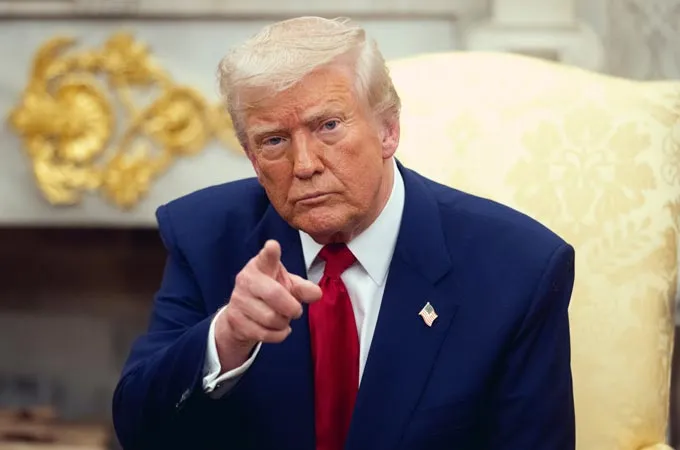
In a post on Truth Social, Trump declared that the United States would become the "Guardian of the Hormuz Strait", saying the waterway would remain open for global trade while Iranian vessels and ships trading with Iran would be prevented from entering or leaving.
"The Hormuz Strait is OPEN, and will remain OPEN, with or without Iran," Trump wrote, adding that the US was reinstating "the Iranian blockade", which he said would apply only to Iranian ships or their customers, while all other nations would enjoy free passage.
He also announced that the US would seek reimbursement for providing security by imposing a 20 per cent charge on all cargo passing through the strait. However, he did not explain how the tariff would be implemented or enforced under international maritime law.
"The U.S.A. will be, from this point forward, known as 'THE GUARDIAN OF THE HORMUZ STRAIT,' but as such, and as a matter of FAIRNESS, will be reimbursed, at the rate of 20% on all cargo shipped, for any and all costs necessary to do the job of providing safety and security to this very volatile section of the World. The process and formation will begin immediately."
The announcement marked the latest escalation in the confrontation between Washington and Tehran, which have exchanged military strikes in recent days while both sides have asserted authority over the strategic waterway through which roughly one-fifth of the world's oil and liquefied natural gas supplies pass.
Trump also claimed that Iran had broken a previously undisclosed agreement with Washington, referring to a "done deal", but offered no details about the nature or timing of the alleged agreement.
Iran swiftly rejected the US move. Earlier, Iran's military said it would not allow the United States to "interfere in the management" of the Strait of Hormuz, while the country's newly established Persian Gulf Strait Authority maintained that transit through the waterway was currently not possible.
The US military, however, insisted that shipping traffic continued to move through the strait, underscoring the conflicting narratives emerging from both sides as tensions rise.
The uncertainty has heightened concerns over global energy supplies and regional trade, prompting companies to explore alternative logistics routes that bypass the Strait of Hormuz.
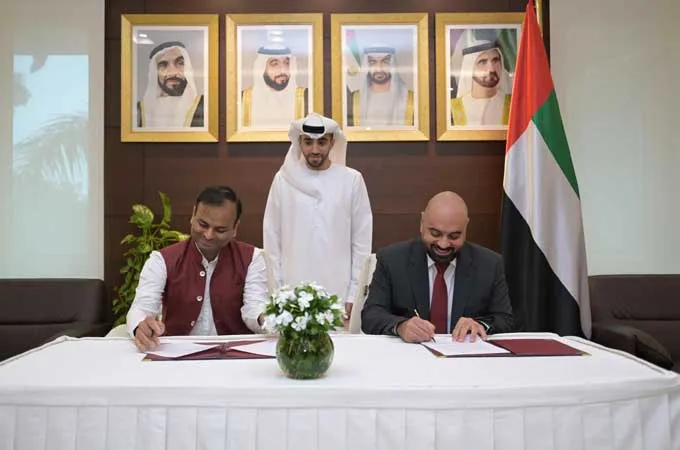
In the UAE, Dubai-based port operator DP World is reportedly planning a major new port and container terminal on the country's east coast in Fujairah, according to the Financial Times. The proposed development would provide an alternative maritime gateway outside the Strait of Hormuz, reducing reliance on Jebel Ali Port during periods of regional disruption.
DP World is understood to be in discussions with government authorities on the project, with financing and ownership arrangements still under negotiation. A senior company official told the newspaper that the new port could become operational within 18 months.