More than 900 workers at hydropower projects remain trapped or unaccounted for in Nepal after a devastating flash flood and debris flow swept through the country's Himalayan valleys, turning the disaster into a major humanitarian crisis as well as a threat to its fast-growing power sector.
Nepal's disaster authorities have identified 933 hydropower workers among those missing, with rescuers racing against time to reach workers believed to be trapped inside tunnels at several power projects in the Rasuwa and Nuwakot districts.
The number is particularly significant because many of the affected hydropower projects are either operational or under construction, and workers were inside tunnels and other underground facilities when the floodwaters and huge volumes of mud and debris struck.
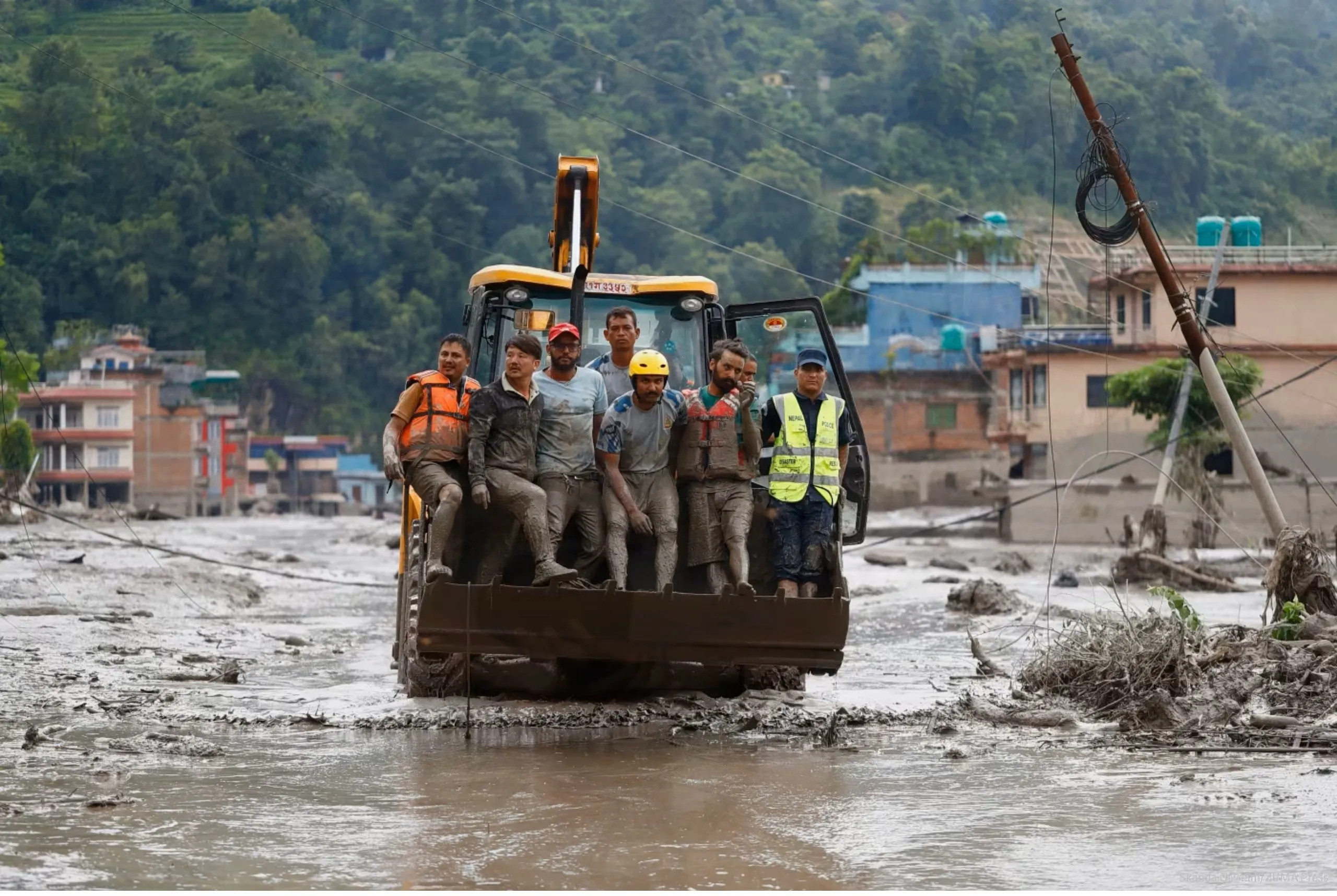
At the Upper Trishuli 1 hydropower project, 350 of 576 people initially reported missing had been rescued by Saturday, while 93 remained unaccounted for at the Rasuwagadhi project. Another 42 were missing from the Langtang Khola project, 158 from Upper Trishuli 3B and 42 from Upper Trishuli 3A, according to information available to rescuers. Officials have warned that the actual number could be higher because some construction projects may have workers who were not formally registered.
The immediate priority is to determine how many of those still missing are alive inside the tunnels.
An 11-member Indian rescue and medical team, including specialists experienced in tunnel operations, has arrived in Nepal to support the effort. India has also been sending relief supplies and other assistance as the scale of the catastrophe has become clearer.
Death toll climbs as search continues
The hydropower workers are only part of a much larger tragedy.
Nepal's death toll had risen to 675 by Sunday, with 2,498 people still missing, according to the latest figures. More than 7,500 people have been rescued. The disaster has also left hundreds injured and destroyed homes, roads, bridges, power infrastructure and other essential facilities.
The disaster extends across the border into Tibet, where Chinese authorities have reported 16 deaths and 546 people missing. Among those missing on the Chinese side are 261 foreign nationals from 23 countries, including 104 Nepalis and 49 Indians.
Taken together, the cross-border disaster has killed at least 691 people and left more than 3,000 missing.
The figures have risen sharply since the disaster struck on August 26, when a massive mass of ice, rock and debris swept into Himalayan river systems, triggering devastating flash floods along the Nepal-Tibet border.
Entire valleys swept away
The floods have devastated settlements along the Bhote Koshi and Trishuli river systems, with some communities effectively wiped out. The torrent carried mud, boulders and debris through valleys, destroying buildings, roads, bridges and border infrastructure.
One of the worst-hit locations was the Gyirong border crossing, a major trade and transit point between Nepal and Tibet, which was severely damaged.
The disaster also created new lakes and unstable water bodies behind debris and ice dams, raising fears of additional flooding. Rescue operations have consequently been complicated by the possibility of further surges and landslides.
Poor weather has further restricted helicopter operations, while thick mud and massive boulders have made access to several hydropower tunnels extremely difficult.
A disaster for Nepal's hydropower ambitions
The concentration of casualties at hydropower projects highlights the growing exposure of Nepal's rapidly expanding electricity industry to extreme Himalayan hazards.
Nepal has made hydropower a central pillar of its economic strategy, seeking to exploit its enormous river systems to increase domestic electricity supply and expand power exports to neighbouring countries.
But many projects are located in narrow, steep Himalayan valleys where floods, landslides, glacial events and earthquakes pose significant risks.
The latest disaster has therefore damaged not only individual power projects but also parts of the infrastructure on which Nepal's ambitions to become a major regional electricity exporter depend.
The immediate concern, however, remains the workers underground.
International rescue effort expands
Nepal has requested specialised international assistance, particularly for tunnel rescues, body recovery and identification, while continuing to conduct general search-and-rescue operations with its own forces.
India and China have sent assistance and specialist teams. Nepal has also sought help with the construction of temporary bridges and other infrastructure needed to reconnect areas cut off by the disaster.
The human toll is expected to remain fluid as rescuers reach areas that have been inaccessible since Wednesday's floods.