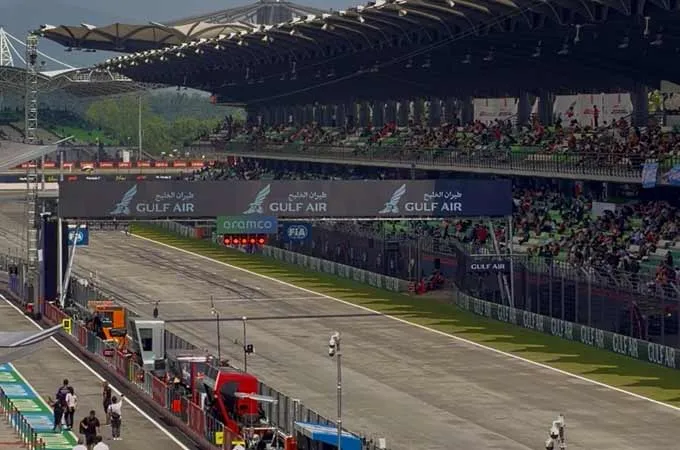
The growing influence of wealthy investors and states in football is intensifying a debate over who owns the game and whether its fans are increasingly being priced out, speakers at a Doha Debates town hall in Toronto said.
A sports journalist, football historian and filmmaker joined 20 students from Qatar, Canada, Mexico and elsewhere to debate whether football remains a community institution or is becoming a commodity as global capital reshapes the sport.
Football historian and sociologist David Goldblatt argued that clubs should not be controlled by private individuals or states, saying they represent a form of collective cultural capital.
“Football clubs should not be privately owned by anyone. They shouldn’t be owned by states, or by rich men or rich women,” Goldblatt said.
Kely Nascimento, president of the Nascimento Foundation and daughter of Brazilian football legend Pelé, challenged the view that football was necessarily better before the influx of wealth.
“I did some research into what it was like before the money. It didn’t seem like it was that great,” she said, questioning whether the idea of football as a purely community-owned institution was more utopian than realistic.
CBC Sports senior contributor Shireen Ahmed called for greater scrutiny of the source and use of money in the sport rather than treating all investment as inherently negative.
“This discussion that money is bad in all cases—it’s nuanced, and it’s complicated. So I would rather have accountability for that money and transparency,” she said.
The discussion also focused on the growing cost of attending top-level football matches.
Nawaf Al-Kuwari, a naval architecture and marine engineering graduate from the University of Strathclyde in Glasgow, questioned the accessibility of Premier League football to working-class fans.
“I wonder why the working class have difficulties attending, and it’s not accessible for them to attend Premier League matches,” he said. “It seems to me like it’s more of a luxury than it is accessible.”
Students also raised the political dimensions of football. Regina Aldrete, an international relations student at Tecnológico de Monterrey University, said the sport often reflects wider social and political tensions.
“Football is inherently political. Therefore, it is like a mirror of society,” she said, citing tensions surrounding football matches between El Salvador and Honduras.
The town hall, titled “Football fandom: Community or commodity?”, was moderated by journalist Imran Garda and filmed at The Terminal Theatre in Toronto.
The programme was produced as part of the Qatar, Canada and Mexico 2026 Year of Culture, an initiative aimed at strengthening ties between the three countries through cultural exchange.
The latest episode is part of Doha Debates’ global town hall series and is available on Doha Debates and Al Jazeera Digital platforms.
Amjad Atallah, managing director of Doha Debates, said the Toronto discussion demonstrated the difficulty of finding simple answers to questions surrounding football and its future.
“Very few things hold a billion people's attention at once–fewer still spark this much passionate debate,” he said.