US President Donald Trump threatened to “annihilate” Iran if Tehran fails to reach a deal with Washington, while at the same time signalling that a diplomatic settlement could be within reach after US and Iranian representatives held lengthy talks on the sidelines of the United Nations General Assembly.
The sharp contrast between the threat of further military action and renewed diplomatic contacts underscored the uncertainty surrounding the nearly seven-month US-Iran war, with the Strait of Hormuz emerging as a key issue in efforts to end the conflict.
Addressing the UN General Assembly in New York on Tuesday, Trump said he faced a “big decision” over whether to pursue an agreement that would allow Iran to rebuild or destroy the Islamic Republic.
“Will a deal be made with Iran that lets them rebuild and create a far greater country than it ever was before?... Or do I annihilate the Islamic Republic and do it quickly,” Trump said.
He said an agreement could potentially be reached after the November 3 US midterm elections, although he later told Middle Eastern leaders that a deal could come “maybe before” the elections.
Trump’s remarks came as his special envoy Steve Witkoff confirmed that US and Iranian delegations had engaged in lengthy discussions through mediators throughout the day.
“Today, on the sidelines of the United Nations General Assembly, we engaged in lengthy talks with the Iranian delegation through the mediators, who shuttled between the two sides throughout the day,” Witkoff said in a post on X.
He described the discussions as a completed round that he hoped would prove “constructive and promising”, adding that mediators would continue their work.
Trump separately described the meeting as “very good” and said it lasted about three hours. US officials involved included Witkoff and Jared Kushner, according to Trump, while Iranian state media reported that Foreign Minister Abbas Araghchi met Witkoff.
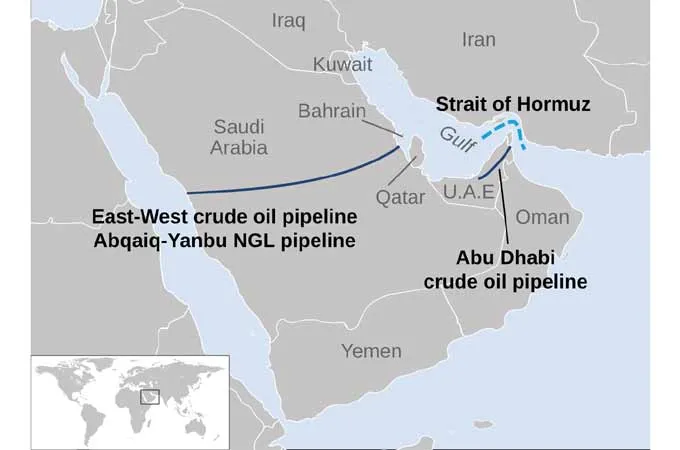
The talks appear to have focused heavily on the Strait of Hormuz, through which a major share of the world's oil and gas shipments normally passes. Iranian officials have linked any reopening of the waterway to concessions from Washington.
Iranian state media reported that Araghchi conveyed Tehran's conditions for reopening the strait, including an end to the US naval blockade, the release of frozen Iranian assets and an end to the war across the region. A senior Iranian official separately told Reuters that Tehran could reopen the waterway within seven days if Washington eased military pressure and lifted the blockade on Iranian ports.
The issue has particular significance for Gulf states, which depend heavily on uninterrupted shipping through Hormuz and have also faced attacks on infrastructure and US military facilities during the conflict.
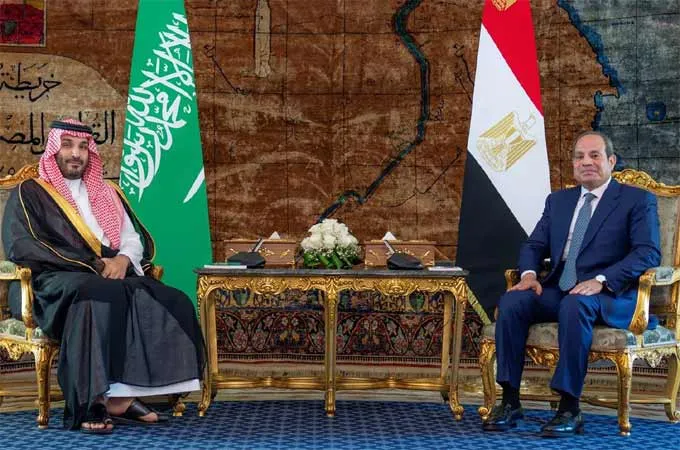
Trump met leaders from Gulf and other Middle Eastern countries in New York as diplomatic efforts intensified. Regional governments have been pressing for an end to the war and the restoration of normal shipping through the strait, while also seeking to avoid a settlement that would give Tehran greater leverage in the region.
Qatar has been working with Pakistan to facilitate dialogue between Washington and Tehran, while Saudi Arabia, Egypt, Pakistan and Turkey have called for diplomacy and backed implementation of the Islamabad memorandum between Iran and the United States.
Iran, meanwhile, rejected Trump's threat.
Iran's Armed Forces described his UN remarks as “propaganda” and warned that the country's military was fully prepared to deliver what it called more severe and unpredictable blows against any aggressor.
The Islamic Revolutionary Guard Corps also warned Washington against launching further attacks, saying the United States would gain “nothing but failure”. The warnings came as Tehran continued to combine its diplomatic engagement with threats of military retaliation.
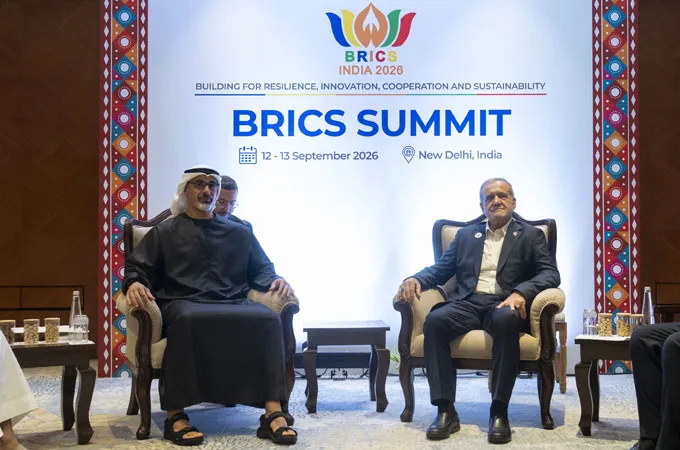
Iranian President Masoud Pezeshkian arrived in New York for the UN General Assembly, raising the possibility of further high-level diplomatic contacts. No meeting between Pezeshkian and Trump had been announced, although Trump has indicated that he remains open to direct engagement.