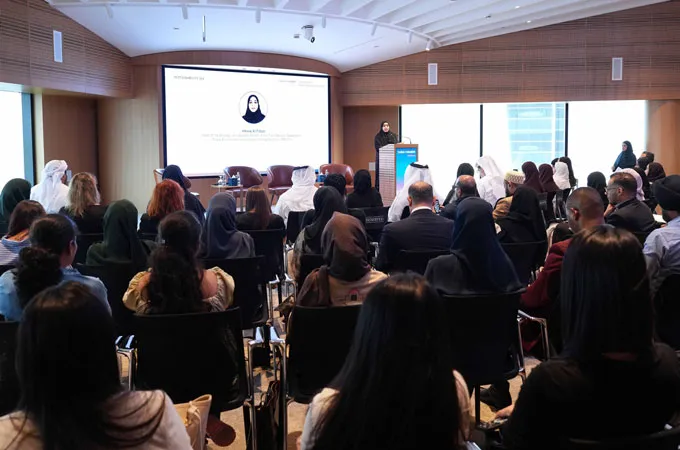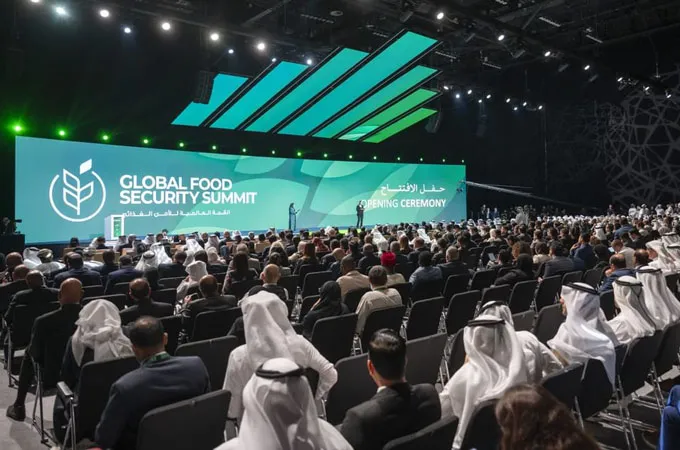
International cooperation, food system resilience and investment-driven solutions were among the key themes discussed during the first day of the Global Food Security Summit (GFSS) 2026.
The show opened in the presence of Sheikh Hamdan bin Mohamed bin Zayed Al Nahyan, Deputy Chairman of the Presidential Court for Special Affairs at Adnec Centre Abu Dhabi. Bringing together ministers, senior government officials, international organisations, investors, industry leaders, researchers and experts from around the world.
The summit explored opportunities to strengthen global food security and advance more resilient, sustainable and inclusive food systems.
Global Food Week 2026
The summit is taking place as part of Global Food Week 2026, organised by Adnec Group, a Modon company, in partnership with the Abu Dhabi Agriculture and Food Safety Authority (Adafsa).
Held under the theme “Global Collaboration for Food Security for All,” the two-day summit examines the policies, partnerships and investments required to address the growing challenges facing food security worldwide.
Discussions during the opening day focused on strengthening international cooperation, enhancing food system resilience, advancing agricultural innovation and mobilising investment to support long-term food security and sustainable development.
The first day of the summit featured a ministerial address, keynote remarks and high-level panel discussions that highlighted the importance of coordinated action among governments, international organisations, financial institutions and the private sector in building more secure and sustainable food systems for future generations.
International perspectives on food security and resilience
In a keynote address, Dr AbdulHakim Elwaer, Assistant Director-General and Regional Representative for the Near East and North Africa at the Food and Agriculture Organisation of the United Nations (FAO), highlighted the importance of advancing water-efficient farming, strengthening local food production systems, improving cold-chain infrastructure and reducing food loss and waste through technology, innovation and increased public and private sector investment.
He noted that agricultural trade, social protection and cross-cutting policies must be aligned to make nutritious food and healthy diets more available and affordable. He added that FAO continues to support countries through policy advice, investment planning, technical assistance and capacity-building across food safety, climate adaptation, natural resource management, fisheries, rural livelihoods and agricultural value chains.
In his keynote titled “Food Security Through Synergies,” Saleh Abdullah Lootah, Chairman of the UAE Food and Beverage Manufacturers Group, stressed that food security should not be measured solely by production capacity, but by how reliable, sustainable and cost-effective the entire food system is.
He highlighted the lessons learned from recent global disruptions, including the COVID-19 pandemic and geopolitical tensions, which exposed vulnerabilities across food value chains and underscored the importance of building more resilient food systems.
Tanzania-UAE Green Silk Road initiative launched
The launch of the Tanzania-UAE Green Silk Road Initiative highlighted a new model for strengthening food security through integrated agricultural value chains, investment and cross-border collaboration.
Announced as a strategic partnership between Abu Dhabi National Investment and Development (ADID), the Tanzania Mercantile Exchange (TMX) and Tanzanian partners, the initiative aims to create a sustainable food security and economic corridor connecting Tanzania and the UAE, while linking production, processing, storage, logistics, trade and market access.
Shamsa Al Fahim, CEO of ADID, highlighted that food security today is no longer solely a question of supply, but of building resilient systems that produce, process, store and move food efficiently.
She noted that the Green Silk Road is designed as an integrated value chain rather than simply a trade route, connecting agriculture, technology, investment and markets to create shared prosperity between Tanzania and the UAE.
Godfrey Malekano, CEO of TMX, highlighted Tanzania's significant agricultural potential and its ambition to become a future food basket for the Gulf region. He noted that Tanzania is seeking to build partnerships rather than request aid, pointing to the country's agricultural resources, production capacity and investment opportunities that can support food security, value-added processing and sustainable economic growth for both countries.
Championing food equality through partnerships
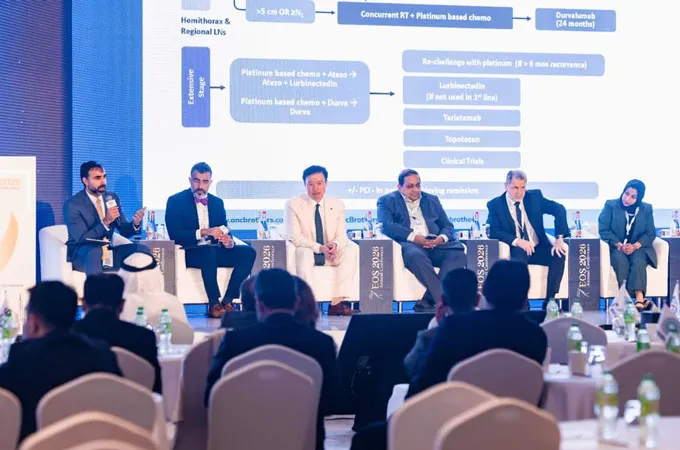
The panel discussion, “Championing Food Equality Through Partnerships,” explored how governments, international organisations, development finance institutions, investors and the private sector can work together to create more equitable food systems.
Speakers highlighted the importance of risk-sharing, investment, resilience and regional cooperation in improving access to affordable and nutritious food while supporting vulnerable communities and agricultural producers.
Dina Saleh, Special Envoy for the Middle East at the International Fund for Agricultural Development (IFAD), emphasised that food security is one of the clearest tests of effective international cooperation at a time of geopolitical fragmentation, climate shocks and constrained development financing. She highlighted the need for stronger partnerships that distribute risk more fairly across food systems and build resilience before crises occur.
Wagner Albuquerque de Almeida, Regional Industry Director for Manufacturing, Agribusiness and Services at the International Finance Corporation (IFC), highlighted that food insecurity is increasingly a challenge of affordability, access and distribution rather than food availability alone. He pointed to the significant proportion of the global population that lacks access to quality food despite sufficient production across the food system.
Samer Abdeljaber, Regional Director for the Middle East, North Africa and Eastern Europe at the World Food Programme (WFP), highlighted the growing impact of climate shocks, conflicts and market disruptions on food security across the region. He noted that ensuring access to nutritious and affordable food requires coordinated action among governments, humanitarian organisations, development institutions and the private sector.
Dr AbdulHakim Elwaer, Assistant Director-General and Regional Representative for the Near East and North Africa at the Food and Agriculture Organisation of the United Nations (FAO), highlighted that no country can successfully address food security challenges in isolation. He stressed that stronger regional cooperation, integration and coordinated investment are essential for building resilient food systems in an increasingly complex global environment.
How UAE is setting the global standard for camel milk
The panel discussion, “How the UAE is Setting the Global Standard for Camel Milk,” focused on scientific research, product innovation, international standards, export opportunities and market development, highlighting the UAE's efforts to strengthen the competitiveness of camel milk and position it as a globally recognised food product.
The session started with remarks by Tariq Abdul Rahim Al Hosani, Chairman of Al Ain Farms Group, who highlighted the untapped potential of camel milk and its growing global relevance. He underscored its deep connection to the UAE’s heritage, noting that camel milk provided the nutrition needed to sustain communities across the region for generations.
He further highlighted the UAE’s ambition to advance camel milk as a global product, noting that “Made in the UAE” is not a slogan anymore. He stressed that the industry is committed to long-term investment despite the challenges ahead, adding that the ultimate goal is “to have camel milk on every table in the world,” allowing more people to benefit from its quality and value.
Marwan Abdullah Al Saadi, Assistant Undersecretary for the Regions Sector at the Ministry of Climate Change and Environment, highlighted the importance of understanding market requirements before pursuing export opportunities. He noted that producers should proactively assess market expectations, identify potential gaps and engage with relevant authorities early in the process.
He emphasised that governments play a key role in facilitating market access by working closely with counterpart authorities in importing countries, helping producers navigate regulatory requirements and ensuring compliance with international standards while supporting the expansion of UAE food exports.
Aisha Salem Helal Al Kaabi, Chair of the National Team for Development of an International Standard for Pasteurised Liquid Camel Milk, highlighted the growing international demand for camel milk and the need for globally recognised standards to support expanding production and trade. She noted that developing an international standard would help ensure product quality and authenticity, strengthen consumer confidence and support fair trade.
She also highlighted the UAE's leadership in camel milk production, explaining that the initiative will enhance the competitiveness of UAE camel milk products while supporting the sustainable development of the wider camel sector.
Lauren Brisbane, Co-Founder and Director of QCamel, Australia, highlighted the importance of scientific research and consumer education in developing new markets for camel milk. She noted that understanding and communicating the nutritional and health benefits of camel milk played a critical role in building consumer awareness and acceptance in Australia. By focusing on camel milk’s unique characteristics and long history of consumption, she said producers can create stronger market awareness and support continued growth in international markets.
Strategic partnership for advancing investment
A panel on Finance, Investment and Blended Capital for Innovative Food Systems explored how to mobilise private investment into the first mile of agriculture. Diane Menville, Associate Vice President Finance and Chief Financial Officer at International Fund for Agricultural Development (IFAD), noted that smallholder farmers receive only 0.8% of climate finance, and said blended finance can reduce risk and unlock private capital. Ahmad Mukhtar, FAO Representative to the United Arab Emirates and OIC of the FAO Subregional Office for the GCC States and Yemen, called for food security to be treated as a business opportunity, urging governments to channel part of their subsidy spending into aggregation and blended finance vehicles. The session was moderated by William Wang, Chief Representative for Middle East & Africa at the Sino-International Entrepreneurs Federation (SIEF).
A fireside chat on Scaling Innovation for Global Food Security: The India Perspective, moderated by Jamal Al Mulla, examined how India and the UAE can deepen cooperation on food security. Dr Tarun Bajaj, Sr. Consultant and Advisor at the Ministry of Commerce & Industry, Government of India, highlighted India's agricultural scale and its growing use of AI and precision technologies across farming, processing and logistics. He said the India-UAE Comprehensive Economic Partnership Agreement (CEPA) has strengthened two-way trade, and described the two countries as complementary partners, with India as a consistent supplier and the UAE as a demand market and regional re-export hub. He encouraged UAE investors to target gaps in agricultural supply chains, such as cold storage, ripening and packing facilities, and proposed a joint roadmap built on committed supply and clearly defined roles.
Another panel on Cultivating the Next Generation of Inclusive Food System Leaders: Human Capital brought together Dr Haifa Fahoum Al Kaylani OBE, President & Founder of the Arab International Women's Forum; Prof. João Bosco Monte, President of the Brazil Africa Institute; and Nabeel Goheer, Chief of Path International. Moderated by Dina Mongy, Director of Corporate Affairs at Nestlé, the discussion highlighted the role of women and youth in shaping the future of food systems. Speakers called for practical, locally adapted skills transfer, genuine decision-making roles for young people and women, and partnerships built on shared benefit.
The session was followed by a success story FAO video on the six elements of a systems approach to agrifood systems.
Turning dialogue into action
GFSS serves as a platform for governments, international organisations, financial institutions, investors, private sector leaders and innovators to address the challenges shaping global food systems and identify practical solutions that strengthen food security, accelerate sustainable agricultural development and improve access to nutritious food.
This year's edition welcomes participants from more than 70 countries and features more than 20 ministers and senior government officials, over 80 speakers, 350 registered CEOs, and over 3,500 delegates, reflecting the growing importance of international collaboration in addressing global food security challenges.
Global Food Week 2026 is taking place from October 6 to 8, bringing together the global food ecosystem through an international exhibition, high-level thought leadership sessions and a dedicated business platform designed to shape the future of food systems.—TradeArabia News Service