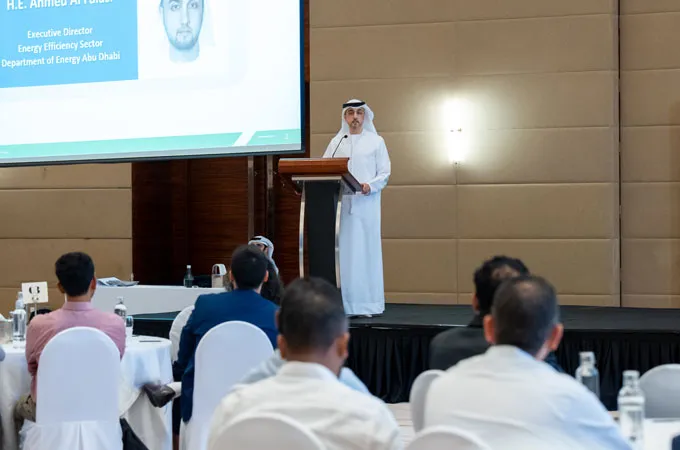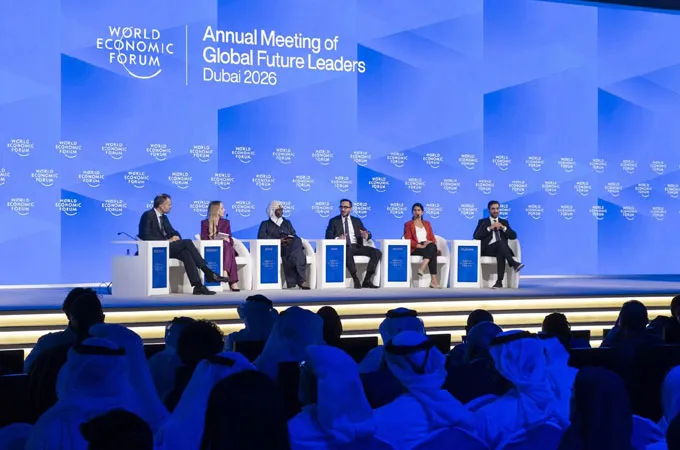
Leaders from technology, business, civil society called for greater adaptability, investment in human capabilities and youth inclusion as artificial intelligence reshapes societies, economies and workplaces, during the opening session of the Annual Meeting of Global Future Leaders 2026 in Dubai.
The event is being organised by the UAE Government and the World Economic Forum (WEF) in collaboration with the Dubai Future Foundation.
The meeting runs in Dubai until tomorrow (October 15) and its outcomes will contribute to shaping the agenda of the WEF Annual Meeting in Davos.
The opening session featured Professor Fadel Adib, entrepreneur and Professor at the Massachusetts Institute of Technology (MIT); Mariam Nourya Koné, Founder of Hackily and Global Shaper; Kiara Winona Sweeney, Vice-Curator of the Global Shapers’ Munich Hub; Suhani Jalota, Founder and CEO of Myna Mahila Foundation; and Mathieu Flamini, Co-Founder and CEO of GFBiochemicals.
The discussion was moderated by Sebastian Buckup, Managing Director of the World Economic Forum.
These five leaders used the opening panel of the summit to answer a single question: what do leaders need to unlearn to focus on the future without tripping over the present?
Natalie Pierce, Director of the World Economic Forum’s Global Shapers Community, said the Youth Pulse report found that climate change remains the top priority for young people worldwide.
She noted that artificial intelligence has evolved from a prediction a decade ago into a daily reality, making the key question today not what AI can do, but what young people will do as it continues to reshape their lives and work.
Pierce called for new pathways into the labour market and for enhancing the value of human capabilities alongside AI, an area where young people want to see innovation from both governments and businesses.
She added that despite concerns about climate change, jobs, and technology, young people remain optimistic about progress and expect stronger economic prospects than previous generations.
Adib said that artificial intelligence is changing how people think on a personal level, becoming an extension of the human mind.
He noted that its impact is unfolding on two fronts: a global one affecting geopolitics, economies, and industries, and a personal one redefining what it means to be human. He added that AI is increasingly moving into the physical world through sensing technologies, robotics, and automation, while breakthroughs in quantum computing and nuclear fusion could help shape the coming decade.
Koné highlighted that young people in Sub-Saharan Africa are among the most optimistic in the world, with many believing they will enjoy better lives than their parents. She described this optimism as a valuable asset and encouraged African youth to take ownership of the future by building their own systems and solutions.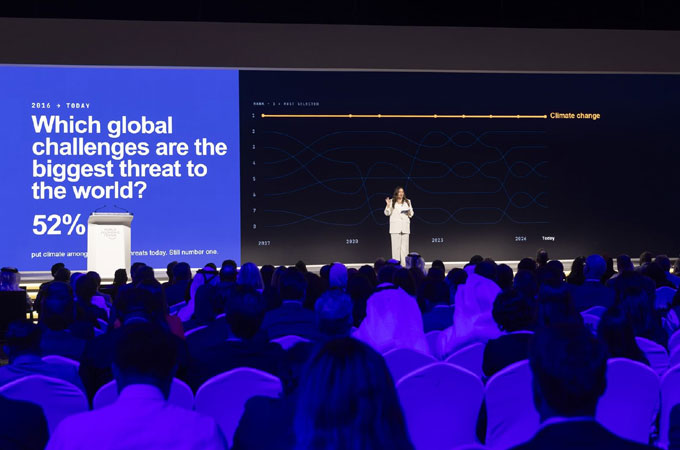
Sweeney stressed that building for the future requires more than recognising the need for change or setting ambitious goals for 2050. It requires changing the decisions made today and transforming how organisations operate. She identified three characteristics of successful organisations: adaptability, the willingness to realign budgets and incentives towards long-term goals, and the ability to experiment, adjust course, and scale successful initiatives.
Jalota argued that the future must be built around people’s real lives and that communities should play an active role in the design and development of technology. She noted that AI systems that fail to reflect the voices of the majority of the world’s population are inherently limited, while economies that do not invest in their untapped workforce remain constrained in their potential.
Flamini identified three qualities that will define future success: adaptability, rapid learning, and anticipation. He compared a chief executive to a great athlete who thinks ahead before receiving the ball, noting that both perform under pressure and require leadership that combines high expectations with genuine human connection, resilience, and perseverance.
The discussion brought together youth voices, innovators, and leaders from government, academia, and business to exchange perspectives on the future amid accelerating global change. Participants emphasised that the future is a leadership challenge that requires collective action among governments, businesses, scientific institutions, and youth communities.
At the end of the session, the speakers agreed on the importance of developing a shared understanding of priorities that enables leaders to prepare for change rather than simply react to it.
They stressed that leadership is not about having all the answers, but about asking the right questions, listening to diverse perspectives, and turning dialogue into practical collaboration. They also highlighted the value of leveraging data, youth insights, and diverse expertise to strengthen resilience, expand participation, and scale innovation into lasting impact.