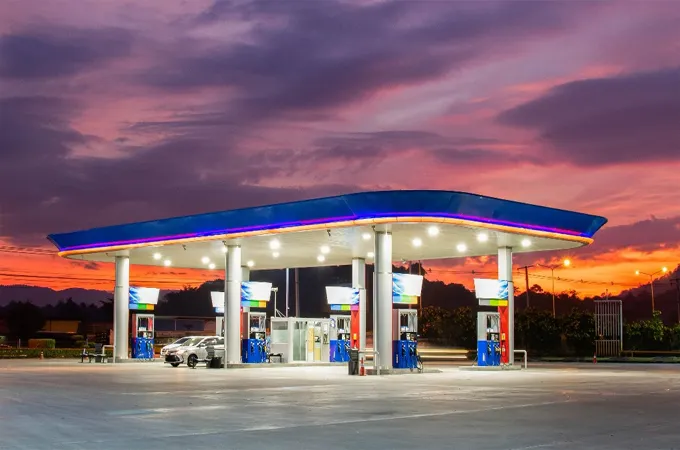
Oman’s Ministry of Commerce, Industry and Investment Promotion will begin implementing the provisions of the new regulatory framework for fuel filling stations, issued under Ministerial Decision No. (142/2025), effective Wednesday, May 6, 2026.
This move comes in
line with the Ministry’s continued efforts to advance the fuel station sector
by enhancing the quality of services provided to consumers and supporting the
investment environment through updating regulatory frameworks and streamlining procedures
for issuing licences to establish and operate stations, thereby improving
sector efficiency and keeping pace with economic growth requirements, reported
Oman News Agency.
The Ministry noted that the fuel filling
station sector in Oman recorded notable activity during 2026, with 16
applications submitted for the establishment of new stations, alongside the
issuance of two operating licences and six licences to construct fuel filling
stations, reflecting growing investment interest in this vital sector.
Nasra Al Habsi,
Director General of Commerce at the Ministry, affirmed that the new updates to
the regulatory framework for fuel filling stations come with ongoing
institutional efforts to enhance service quality and develop the energy
sector’s infrastructure, in line with the goals of Oman Vision 2040.
She noted that the
regulation aims to simplify licensing procedures and classify stations
according to modern technical and planning standards that ensure sustainability
and strengthen the local investment environment, while providing integrated
services that meet consumer needs, improve urban planning efficiency and
support economic growth across the governorates of Oman.
Ahmed Al Balushi, Head
of Petroleum Products Licensing Section at the Ministry, said the new
regulation issued under Ministerial Decision No. (142/2025) represents a
developmental shift in organising the sector, noting that it is aligned with
market developments and urban planning requirements.
He added that the
regulation aims to organise and classify licences for establishing and
operating fuel stations, while setting clear technical and planning
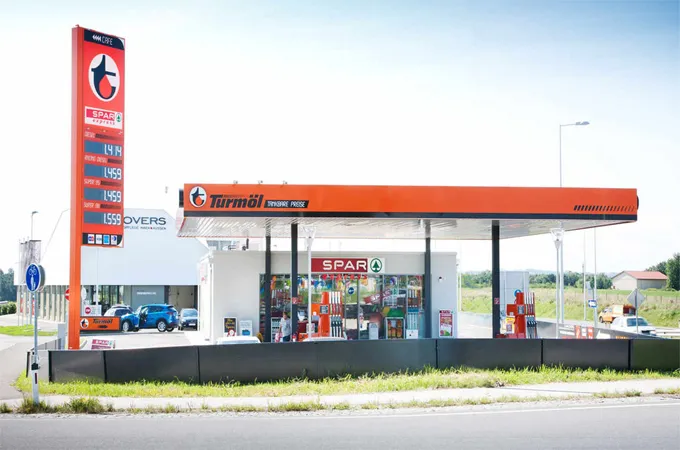
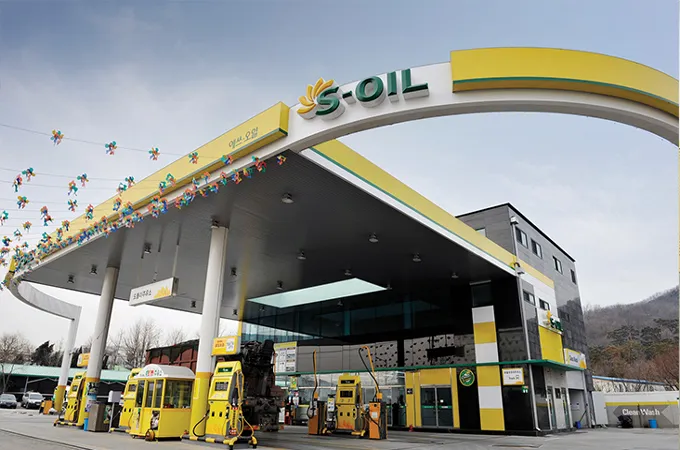
requirements. Stations have been classified into four categories based on size
and the type of services provided: integrated stations with a minimum area of
10,000 square metres, commercial stations at 3,000 square metres, smart
self-service stations at 800 square metres, and mobile stations that provide
services through portable units.
He pointed out that
the regulation sets precise requirements for distances between stations,
stipulating a minimum of 5 kilometres between stations in the same or opposite
direction on non-dual carriageways, with certain exceptions for locations in
Muscat Governorate and the wilayats of Salalah and Sohar, based on economic
feasibility and regional needs.
It also requires a
minimum distance of 50 kilometres between integrated stations in the same
direction, with exceptions permitted by decision of the competent committee
based on defined technical and planning criteria.
Regarding
requirements, Ahmed Al Balushi explained that establishing fuel stations
requires proof of ownership, a lease agreement or usufruct rights, with the
site designated for commercial or mixed residential-commercial use, in addition
to meeting economic feasibility, safety, technical and planning requirements,
as well as providing hydrogen refuelling services.
The Head of the
Petroleum Products Licensing Section added that the regulation mandates
integrated stations to provide a range of essential services, including service
and commercial facilities, parking spaces, solar energy infrastructure and
electric vehicle charging points, while allowing the addition of hydrogen
refuelling points in accordance with approved regulations.
With regard to
procedures, the Ministry explained that licence applications are submitted to
marketing companies, which evaluate sites and refer them to the relevant
authorities.
Applicants are
provided with forms to obtain approvals from the competent entities. Operating
licences are issued within 30 days of meeting all requirements and are valid
for three years, renewable.
The Ministry confirmed
that the regulation sets out administrative penalties ranging from warnings to
financial fines, and may extend to suspension or cancellation of licences in
serious cases.
It stressed that these
measures aim to enhance safety standards, ensure balanced geographical
distribution of fuel stations, and guarantee compliance with approved
regulations.