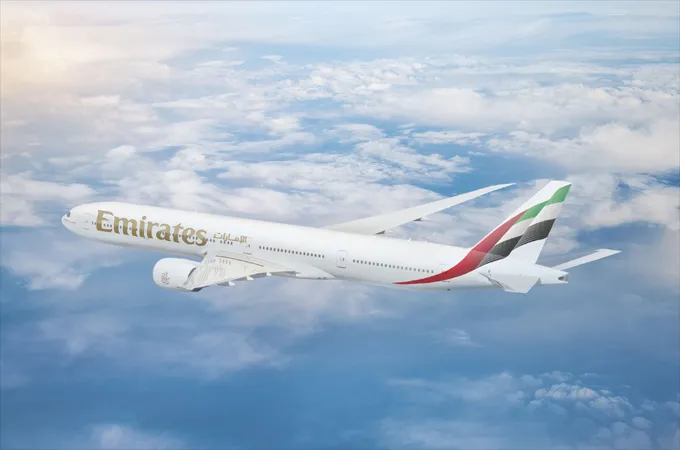
Emirates confirmed it stands ready to launch daily services to Berlin and Stuttgart, committing more than €100 million ($116 million) each year in operational expenses, staff, airport charges, fuel and other expenditures, subject to the approval of the German Federal Ministry of Transport.
Berlin sits as the political heart of Europe’s largest
economy.
A city of 3.9 million
people, it is home to a thriving start-up ecosystem, a well-established
diplomatic community, and a cultural scene that draws millions of visitors each
year.
Yet its long-haul connectivity has not kept pace with the
city's strong global credentials. In fact, according to OAG schedule data, over
85% of Berlin Brandenburg Airport’s international connectivity is concentrated
within Europe.
Stuttgart faces a comparable gap in long-haul services.
The economic engine of Baden-Württemberg, one of Germany’s
most export-driven states, remains underserved when it comes to long-haul air
connectivity, the very kind of connectivity manufacturers, suppliers, and
trading partners depend upon.
Tim Clark, President of Emirates Airline, said,
"Emirates is ready to bring daily widebody connectivity to Berlin and
Stuttgart and connect them with our extensive network, backed by substantial
investment. These are two of Germany's most important economic centres, yet
both remain underserved when it comes to long-haul connectivity. German
businesses have told us they need it, the Berlin Chamber of Commerce has called
for it, our own data confirms the demand is there, and flights are forecast to
be full. Emirates already connects Germany to 50 destinations across Africa,
the Middle East, Southeast Asia, and Australasia that no German airline serves.
These are destinations that matter to German exporters, tourism operators, and
the millions of travellers looking for more choice and better connections. All
we are asking for is the opportunity to serve these cities and their
communities, and we remain committed to working constructively with the German
authorities to make that a reality and deliver tangible benefits that would be
felt across both city regions from day one of our operations.”
New Emirates routes to both cities would generate hundreds
of new jobs.
A 2012 study by the German Aerospace Centre (DLR) estimated
that a daily Emirates service to both Berlin and Stuttgart would create close
to 1,000 direct and indirect jobs.
That figure remains broadly consistent today.
In addition to improved choice for passengers, local
Baden-Württemberg, Berlin and Brandenburg cargo connectivity would also receive
a boost.
A daily Emirates widebody service with a Boeing 777-300ER
would provide more than 280 tonnes of belly-hold cargo capacity per week,
creating a vital new conduit for time-sensitive imports and exports including
pharmaceutical products, electrical equipment, machinery, and transport
technology components.
Of the 2.36 million passengers carried on Emirates' flights
to and from Germany in 2025, 40% flew between Dubai and Germany, while 60% were
passengers connecting onwards, underscoring the dual role Dubai plays as both a
premium destination, growing source market and a global transfer hub.
If daily Berlin and Stuttgart flights were permitted,
Emirates would offer convenient, one-stop connections for German travellers and
businesses in these cities and regions.
In 2025, Emirates' top markets to and from Germany included
Australia, Indonesia, Sri Lanka, and Vietnam.
None of these destinations are served by German airlines
from Frankfurt or Munich. Extending this connectivity to Berlin and Stuttgart
would not cannibalise existing routes but rather fill a longstanding gap.
A one-stop connection on Emirates, via Dubai, would provide
a more seamless journey with a consistent onboard product in a four-cabin
configuration, and a meaningful improvement over the multi-transfer narrow-body
alternatives operated by German airlines that are currently available.
For Berlin, the Emirates experience would offer something
for every traveller, including its award-winning Premium Economy cabin
delivering a step-up in comfort, and its First Class with enclosed private
suites and personalised service remains unmatched in the industry.
Berlin's business community has already voiced the need for
this service clearly. In 2023, the Berlin Chamber of Commerce and Industry
published a survey in which 75% of respondents described the long-haul offering
at Berlin as deficient or insufficient.
Dubai was named a number one priority for connections that
urgently need to be strengthened, both as a destination and as a transfer hub.
Today, Berlin and Stuttgart are connected directly to Dubai
exclusively by narrow-body aircraft with limited onboard amenities, and only on
a seasonal basis.
A daily Emirates Boeing 777 service would deliver a step
change, not only in passenger experience and comfort, but also in cargo
capacity.
Germany logged nearly 1.2 million overnight stays from GCC
visitors in 2024, a valuable tourism segment that stays longer, spends more,
and has a direct and positive impact on tourism revenues.
GCC visitors contributed an estimated €2.3 billion to the
German economy in 2024 alone.
The German National Tourist Board projects GCC visitor
numbers will reach 3 million annually by the end of the decade.
Direct Emirates services would position Berlin and Stuttgart
firmly on the map for GCC visitors, opening up a tourism segment with enormous
growth potential by connecting both cities with visitors who currently choose
destinations served directly with widebody aircraft.
The economic case is clear. Daily Emirates services to
Berlin and Stuttgart would create hundreds of jobs, strengthen trade links,
open up underserved destinations, and attract high-value tourism.
Emirates believes these services would complement Germany's
existing aviation ecosystem, offering travellers and businesses greater choice
and competition on routes where it is needed most.
The airline remains committed to engaging constructively with the German Federal Government and looks forward to the opportunity to bring the benefits of long-haul connectivity to Berlin and Stuttgart. -TradeArabia News Service