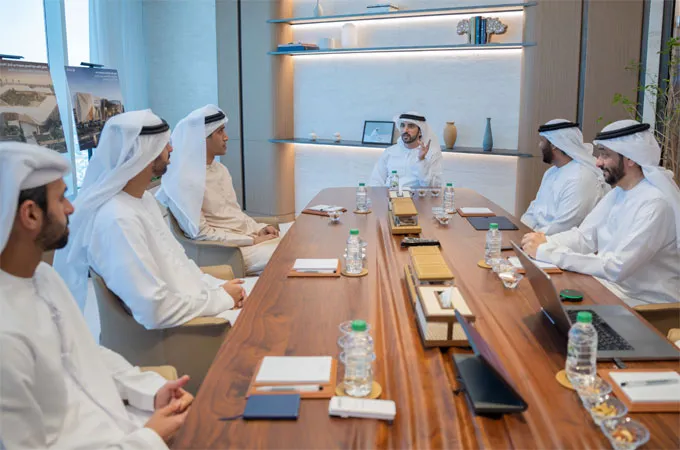
HH Sheikh Hamdan bin Mohammed bin Rashid Al Maktoum, Crown Prince of Dubai, Deputy Prime Minister, Minister of Defence, and Chairman of The Executive Council of Dubai, has approved a series of new development projects and initiatives by Dubai Municipality.
The approved projects include the ‘Dubai Falcon Market,’ the ‘Dubai Creek Lighting’ project, the launch of the ‘First AI-Powered Park Design Challenge in Dubai,’ and initiatives to collaborate with internationally renowned architects on landmark projects across the emirate, said a WAM news agency report.
These initiatives reflect Dubai’s approach to leveraging innovation, advanced technologies, and urban design to develop human-centric projects that strengthen national identity and support sustainable urban development and the creative economy.
Sheikh Hamdan said: “Dubai continues to develop transformative urban projects guided by a comprehensive vision that places people and quality of life at the heart of its priorities, while adopting innovation, sustainability, and advanced technology as key pillars in shaping the future of the city. We believe that the cities best prepared for the future are those capable of creating resilient urban environments, integrated facilities, and enriching urban experiences that reflect identity, culture, and the aspirations of society.”
He added: “These new projects build on Dubai’s journey in developing innovative public spaces and urban facilities that enhance community engagement, support the creative economy, and elevate quality of life, further strengthening the emirate’s position as a leading global model in designing the cities of the future.”
The Dubai Falcon Market project is the first integrated and specialised falcon market of its kind in the region. The market’s design draws inspiration from the symbolism and cultural significance of the falcon in Emirati heritage, reflecting the authenticity of local identity within a fully integrated contemporary experience. The project aims to create a unique destination celebrating falconry heritage as an authentic part of the UAE’s cultural and national identity.
The project forms part of Dubai’s broader strategy to develop its rural and desert areas, aimed at enhancing the environmental and heritage character of these locations while creating sustainable destinations that improve quality of life, preserve local heritage, and provide integrated experiences for residents and visitors alike. It also reflects Dubai’s vision of developing distinctive facilities that celebrate Emirati culture while presenting it through a contemporary lens aligned with the emirate’s global standing.
The market features an innovative architectural design inspired by the wings of a falcon, symbolising strength, movement, and connection, and creating a unique visual identity that blends heritage with a future-focused spirit. It will include specialised retail outlets for falcons and related supplies, spaces for cultural and heritage events and activities, a fully integrated veterinary clinic, and a range of services and experiences for visitors, all within an integrated urban environment that further strengthens Dubai’s position as a global destination for culture, heritage, and innovation.
The total area of the project is approximately 50,000 square feet, with an estimated cost of around AED50 million ($13.61 million).
Dubai Creek Lighting project
The Dubai Creek Lighting project aims to create an integrated visual and urban experience along Dubai Creek, spanning a total length of 8 km. The initiative seeks to enhance the aesthetic and historical identity of the creek and surrounding areas while elevating the visitor and resident experience through a new night-time destination that reintroduces Dubai Creek as one of the emirate’s most important cultural and historical landmarks.
The project includes the development of a fully integrated night-time experience across Dubai Creek through the implementation of an innovative lighting system that enhances the area’s visual identity and revitalises waterfronts and historical districts after sunset. The lighting system will cover promenades, creek entrances, heritage markets, building façades, and waterfront walkways, creating a vibrant, safe, and attractive urban environment for pedestrians and visitors.
The project also aims to transform the creek into an exceptional night-time destination that combines architectural, historical, and cultural beauty by highlighting heritage and architectural details and enhancing night-time activities and interactive experiences. This reflects Dubai’s identity as a city that never stops moving and aligns with global best practices in developing waterfronts and historical districts.
Scheduled for completion in the first quarter of 2027, the project forms part of Dubai’s ongoing efforts to transform its waterfronts into integrated global destinations that support the tourism and cultural sectors while enhancing quality of life and the urban experience across the emirate.
First AI-Powered Park Design Challenge
As part of Dubai’s ambition to strengthen its global leadership in leveraging artificial intelligence in city development, the First AI-Powered Park Design Challenge has been approved in Dubai as the world’s first initiative of its kind. The challenge aims to develop an innovative model for designing parks and public spaces using AI technologies throughout the planning and design phases, while also leveraging data analytics to better understand community needs and public space usage patterns to create more integrated and responsive urban experiences.
The challenge targets designers and urban environment specialists, university students and researchers, startups, and innovation leaders in the fields of AI, technology, and design. It aims to strengthen Dubai’s urban innovation ecosystem, attract creative ideas, and develop future-oriented design solutions that support sustainable cities and quality of life.
Reservoir Park
As part of ongoing efforts to strengthen Dubai’s position as a global platform for urban creativity and design, Dubai Municipality, through its Urban Planning and Design Lab, continues to engage leading international architects in developing landmark projects that reflect the emirate’s future vision while reinforcing its local identity through a contemporary global perspective.
In this context, Dubai Municipality announced its collaboration with internationally renowned Japanese architect Kengo Kuma to develop the ‘Reservoir Park’ project, marking Kuma’s first park project in Dubai. The design vision draws inspiration from the harmonious relationship between nature, people, and architecture, blending architectural innovation with local cultural identity in a way that reflects Dubai’s unique urban heritage through a contemporary global design language.
The project forms part of Dubai Municipality’s broader vision to develop world-class urban destinations in collaboration with leading international architectural figures, reinforcing Dubai’s position as a global leader in designing future cities and advancing an urban model that combines sustainability, innovation, cultural identity, and human connection to place.