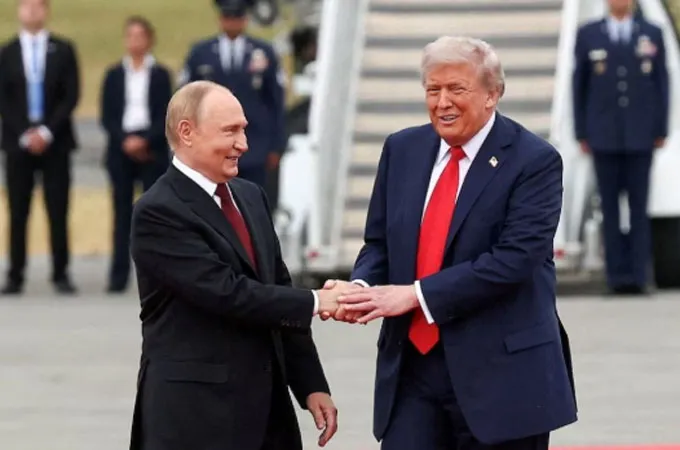
The fragile US-Iran peace agreement reached last week is already facing challenges as Washington and Tehran offer conflicting interpretations of key provisions, while US Secretary of State Marco Rubio begins a Middle East tour aimed at reassuring skeptical regional allies.
Speaking at a rally in Pennsylvania on Tuesday, US President Donald Trump said Iran had agreed to allow nuclear inspections "into infinity" as part of the framework agreement negotiated in Switzerland. Iranian officials quickly disputed that claim, saying no such commitment had been made during the talks, reported Reuters.
The disagreement highlights broader uncertainty surrounding the accord, with the two sides also presenting differing accounts regarding financial incentives for Iran, control of the Strait of Hormuz, and the relationship between the deal and Israel's parallel conflict in Lebanon.
Despite the differences, Trump struck an optimistic tone, saying negotiations with Tehran were progressing smoothly. The US also eased travel restrictions on Iran's World Cup soccer team, allowing it to travel earlier to Seattle for its next match.
The agreement, which ended a four-month US-Israeli military campaign against Iran, has generated mixed reactions both domestically and internationally.
In Washington, signs of weakening public support for the conflict have emerged. A Reuters/Ipsos poll found that 35% of Americans believe the US is now in a weaker position relative to Iran than before the war, while only 23% believe the country is in a stronger position.
Congress also delivered a symbolic rebuke to the administration's war policy.
In a landmark move, the Republican-controlled US Senate approved a measure instructing Trump to halt the war in Iran or seek congressional approval before continuing military action, reported BBC.
A handful of Republicans joined Democrats in Tuesday's 50-48 vote. The same measure was passed by the US House of Representatives earlier this month.
But the resolution is largely symbolic because, even after passing both chambers of Congress, it will not be sent to Trump for his consideration and does not carry the force of the law, it stated.
It came as Republicans in Congress have expressed scepticism about a peace plan Trump agreed with Iran, and the unpopular conflict approaches its fifth month.
Reacting to this, Trump termed it "poorly timed and meaningless".
"So, I have Iran on the 'ropes,' ready to go down for the fall... and the US Senate decides to have a poorly timed and meaningless War Powers Act Vote," Trump wrote on his Truth Social platform criticising the resolution on Tuesday night.
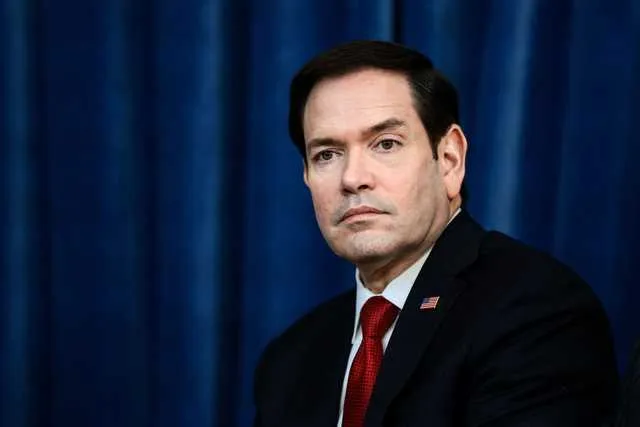
Meanwhile, Rubio arrived in Abu Dhabi on Tuesday for a three-day Gulf tour focused on explaining and defending the agreement to regional partners concerned that Washington may have offered too many concessions to Tehran.
Rubio faces the challenge of defending an agreement strongly backed by Trump while addressing concerns from Gulf allies who supported efforts to end the war but remain uneasy about the terms of the accord. His remarks during the trip are expected to be closely watched both in the region and in Washington, where many Republicans have criticized the agreement as overly favorable to Iran.
"This most certainly will come up in these discussions," Rubio told reporters when asked about Gulf allies' concerns.
The secretary of state's visit marks his first major diplomatic mission centered on the Iran agreement. In recent weeks, Vice President JD Vance had taken the lead in negotiations, including talks with Iranian officials in Switzerland, reported Reuters.
Among the most contentious aspects of the deal is a proposed $300 billion reconstruction fund for Iran, which Gulf governments fear could help Tehran rebuild military capabilities damaged during the war.
Regional leaders are also concerned that the agreement does not address Iran's ballistic missile program, despite missile and drone attacks targeting Gulf states during the conflict.