Middle East Energy, marking its 50th edition, has outlined a rapidly changing regional energy landscape ahead of its September event at Dubai World Trade Centre.
The Q3/Q4 Energy Outlook Briefing brought
together media, organisers and knowledge partner Rystad Energy to examine
trends expected to shape the power sector through 2050.
Middle East Energy 2026, taking place from
September 1–3, is expected to attract more than 35,000 energy professionals
from nearly 120 countries and over 1,500 exhibitors covering power generation,
transmission and distribution, storage and energy efficiency.
Rystad Energy forecasts that MENA’s
installed power capacity will quadruple from 580 gigawatts (GW) in 2025 to
2,328 GW by 2050, while regional electricity demand is projected to more than
double from 1,671 terawatt-hours (TWh) to 3,670 TWh.
The briefing identified rising electricity
demand, rapid renewable deployment and increasingly complex project delivery as
key trends.
Demand growth will come not only from
industry and residential users but also from data centres, hydrogen, transport
and commercial and public services.
In the UAE, electricity’s share of final
energy demand is forecast to rise from 17 per cent in 2025 to 42 per cent by 2050.
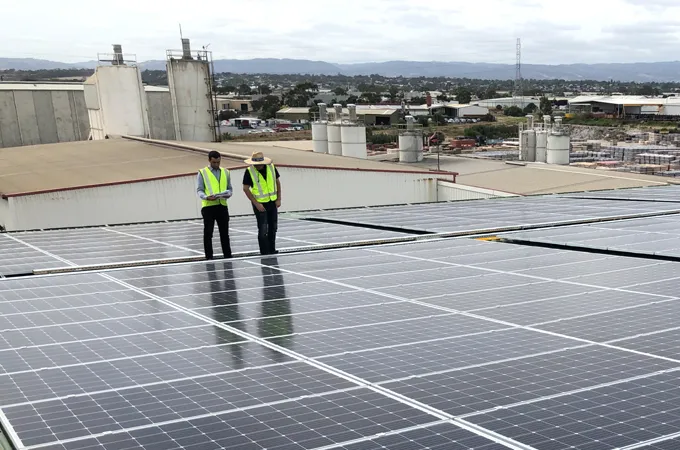
Solar is expected to play a growing role,
with its share of UAE generation projected to increase from 11 per cent currently to
50 per cent by 2050.
Regional solar manufacturing is also
forecast to expand sevenfold by 2030, alongside accelerated investment in
battery storage.
“The Middle East is entering a period of
significant expansion in its power system,” said Carlos Torres Diaz, Head of
Power at Rystad Energy. “There’s a very big push towards renewable energy. At
the same time, nuclear remains a viable source of supply, while gas also
remains in the mix. Looking at what’s expected for the Middle East and Africa,
we see that the region will become the third largest consuming region after
Asia-Pacific and North America. As the Middle East region diversifies beyond
oil and gas, power demand is set to double by 2050, with forecasts reaching
3,670 TWh, with data centres, commercial activity and public services
contributing to this demand.”
Aditya Saraswat, Head of Upstream Research
MENA & Caspian at Rystad Energy, said, “Especially in the UAE, it has been
critical to highlight that the country has been playing both sides of the
energy balance. It is ramping up supply alternatives, both conventional and
alternative, to make sure that we move into an orderly energy transition.
Secondly, it is also ensuring that domestic demand is flexible enough. It is a
flexible energy system catering to diverse demand.”
The briefing also highlighted the growing
role of artificial intelligence and digitalisation in strengthening energy
resilience, while gas is expected to remain part of the regional energy mix
alongside renewables, nuclear power and storage.
Mark Ring, Group Director, Middle East
Energy said, “Representing the generation, transmission and distribution,
storage and efficiency sectors across the entirety of the show has been central
to what we do, and the outlook shared today showcases why convening the energy
industry remains critical to delivering on rising demand. Middle East Energy is
no longer only an industry exhibition. Alongside its core focus as a trade
event for the industry, this year has seen growing presence from the investment
sector, reflecting the increasing importance of the role of capital required to
develop and modernise infrastructure. What we can see reflected in the 30,000+
attendee registrants for 2026 is that Middle East Energy will continue to be a
global meeting point for trade, for investment and for advancing power
infrastructure. This year’s speaker lineup, alongside our participants and
exhibitors, reflects exactly that. Those conversations will certainly start on
those stages, but they will continue onto the show floor and onto exhibitors’
stands.”
The event will feature more than 210 speakers across five stages, with discussions on AI, digitalisation, energy efficiency, grid infrastructure, storage, renewables and investment. Its 50th edition will also feature the Powered by Her programme, highlighting women’s contributions to the energy sector, alongside the Dubai Global Leaders session and Global Energy Efficiency Alliance Round Table. -OGN/TradeArabia News Service