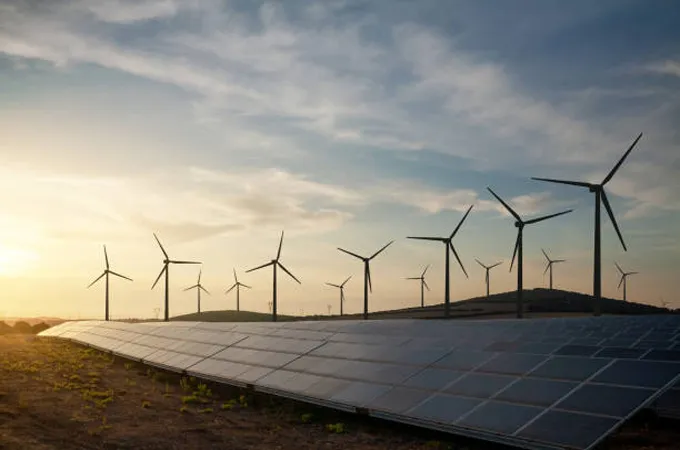
The US is entering a new phase in renewable energy policy as federal tax credit changes establish tighter timelines for wind and solar projects, placing greater importance on completion deadlines, project eligibility and compliance with supply chain requirements.
The changes are reshaping the policy framework for wind and
solar development in the country, says GlobalData, an intelligence and
productivity platform.
GlobalData’s latest report, “North and South America
Renewable Energy Policy Handbook 2026,” reveals that the One Big Beautiful Bill
Act makes the timing of construction and project completion key considerations
for developers seeking to qualify for incentives.
Enacted in July 2025, the legislation introduced termination
provisions for the Section 45Y Clean Electricity Production Credit and Section
48E Clean Electricity Investment Credit for applicable wind and solar
facilities placed in service after December 31, 2027, subject to statutory
exceptions.
Mohammed Ziauddin, Power Analyst at GlobalData, comments:
“The changes to US clean electricity tax credits mark an important shift in the
policy environment for wind and solar. With the initial transition window now
closed, developers must assess their remaining project timelines, construction
milestones and eligibility requirements against the applicable statutory
deadlines. The distinction between projects that qualified under the applicable
transition provisions and those that did not is now central to investment and
development decisions.”
A defining feature of the revised framework is the
distinction between the deadline for beginning construction and the deadline
for placing a project in service.
Now that the July 4, 2026 window to satisfy beginning of
construction requirements under the statutory transition provisions has passed,
the primary remaining milestone for non-exempt projects is the December 31,
2027 placed in-service cutoff.
Ziauddin adds: “Under the legislation, applicable wind and
solar facilities that did not qualify for transition relief must be placed in
service by December 31, 2027, to remain eligible for the relevant Section 45Y
or Section 48E credit. Meanwhile, facilities that met the beginning of
construction requirements by the July 4, 2026 deadline remain eligible under
the transition provisions, subject to ongoing completion and continuity
conditions. These rules make it critical to distinguish the date on which construction
began from the date on which a facility becomes operational.”
The policy changes also affect the requirements that
developers must consider when establishing eligibility.
In February 2026, the US Treasury Department and the
Internal Revenue Service (IRS) issued guidance on restrictions concerning
material assistance from prohibited foreign entities.
These restrictions apply to certain clean electricity
facilities and energy storage technologies, with the relevant rules depending
on factors including construction commencement and the applicable tax credit
provisions.
The IRS has also published guidance on the statutory
termination of the wind and solar credits.
The implementation of these requirements means that project
qualification involves both timing considerations and compliance with
applicable ownership, sourcing, and material assistance rules.
Ziauddin continues: “The revised federal framework also
needs to be considered alongside state-level renewable energy policies.
Renewable portfolio standards, clean electricity requirements, and state
procurement programs continue to form part of the policy landscape for
renewable energy development. These measures operate through different
regulatory and procurement mechanisms and should be distinguished from federal
tax credits, whose eligibility conditions are established under federal law.”
The implications of the federal changes are specific to the
US and should not be interpreted as a region-wide change in renewable energy
tax policy.
Canada, Mexico and countries in South America operate under
their own legislative, regulatory and incentive frameworks.
The US policy changes therefore represent a national
development within the wider Americas renewable energy policy landscape rather
than a common regional deadline for wind and solar projects.
Ziauddin concludes: “The direction of US wind and solar policy is increasingly defined by statutory eligibility conditions, construction milestones, and supply chain compliance. For developers, understanding the interaction between federal tax provisions and state-level policy frameworks is essential when assessing project eligibility. The policy framework also highlights why developments in the US need to be evaluated separately from the renewable energy support mechanisms operating elsewhere across the Americas.” -OGN/TradeArabia News Service