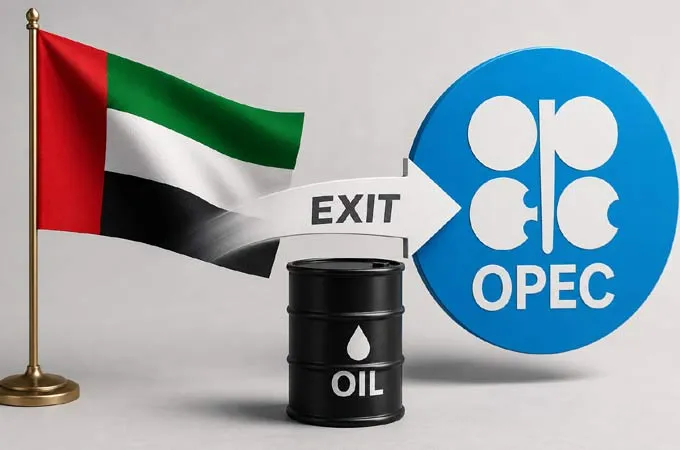
The United Arab Emirates’ planned exit from OPEC and OPEC+ from May 2026 is expected to have limited immediate impact on oil markets in the near term but could weaken the group’s supply management over time, HSBC said, while OPEC+ sources signalled the alliance would remain broadly intact.
Eni signed a programmatic agreement with the Venezuelan Ministry of Hydrocarbons and the state-owned company PDVSA to relaunch oil activities, specifically at Junin-5 (PDVSA 60 per cent, Eni 40 per cent), located in the Orinoco Belt, a heavy oil field containing 35 billion barrels of certified oil in place.
In a shock move poised to rattle global oil markets, the UAE has announced it will exit the Organisation of the Petroleum Exporting Countries and its wider Opec+ grouping, effective May 1, 2026.

The UAE’s decision to exit Opec and Opec+ marks a significant turning point in global oil markets, said a leading market analyst, highlighting shifting geopolitical dynamics and evolving supply expectations. The UAE is leaving the alliance effective May 1, ending nearly six decades of membership.

Global oil prices climbed further on Monday, underscoring mounting concern over the energy crisis triggered by the US-Iran conflict and shipping disruptions in the Strait of Hormuz.

The Saudi Arabia economy is showing resilience despite a sharp hit to oil production from regional conflict, with a surge in crude prices helping offset the impact, according to a report by Al Rajhi Capital.

Oil prices surged past the $105 threshold on Friday as an escalating maritime standoff between Iran and the United States in the Strait of Hormuz rattled global energy markets.

Conflict between the US, Israel and Iran has disrupted Strait of Hormuz shipping, exposing limited export alternatives. Existing pipelines offer partial relief, while proposed routes face major political, security and financial challenges.

Oil prices jumped on Wednesday (April 22) with Brent trading above $100 a barrel, erasing earlier losses following reports of gunfire attacks on at least three container ships in the Strait of Hormuz.

Assala Gabon announced the start of production from the Grand N'Gongui (GNG) field. The field contains a 10–15 metre oil rim within the Gamba Formation, with up to 350 MMstb of stock tank oil initially in place (STOIIP).