The United States launched a fresh wave of military strikes across Iran overnight, targeting more than 80 sites after Tehran resumed attacks on commercial shipping in the Strait of Hormuz, further destabilising a fragile ceasefire agreed less than three weeks ago.
The escalation followed attacks on three commercial tankers transiting the strategic waterway, where projectiles struck the vessels, prompting Washington to accuse Iran of violating the memorandum of understanding under which it had agreed to halt attacks on international shipping. The US also reimposed sanctions on Iranian oil sales in retaliation.
US Central Command (CENTCOM) said its forces completed strikes against more than 80 targets, including Iranian air defence systems, command-and-control networks, coastal radar installations, anti-ship missile capabilities and more than 60 Islamic Revolutionary Guard Corps (IRGC) fast boats operating in and around the Strait of Hormuz.
Three ships attacked
"Iran recently attacked three commercial vessels transiting the strait including Marshall Islands-flagged M/T Al Rekayyat, Saudi Arabia-flagged M/T Wedyan, and Liberian-flagged M/T Cyprus Prosperity. The unwarranted aggression by Iranian forces is a clear and dangerous violation of the ceasefire and undermines freedom of navigation," CENTCOM said.
"US forces remain postured and prepared to hold Iran accountable when the agreement is not adhered to or obeyed," CENTCOM said.
Iran vows 'crushing response'
The strikes came hours after massive crowds gathered in the holy city of Qom for the funeral of Iran's slain Supreme Leader, Ayatollah Ali Khamenei.
Iran swiftly condemned the attacks, warning of a "crushing response" and accusing Washington of breaching the recent understanding between the two countries.
"The Armed Forces of the Islamic Republic of Iran will deliver a crushing response to the U.S. aggression and terrorist action," Iran's Khatam al-Anbiya Central Headquarters said in a statement carried by state media.
The command also declared that it would "under no circumstances" allow foreign interference in the management of the Strait of Hormuz, insisting that vessels should use only routes designated by Iran.
Iranian parliamentary speaker and chief negotiator Mohammad Bagher Ghalibaf accused Washington of violating the memorandum of understanding, saying in a post on X that "the era of bullying and extortion is over."
Alert in Kuwait, Bahrain
The renewed confrontation triggered heightened security across the Gulf.
Air defence systems were activated in Bahrain and Kuwait following reports of hostile missile and drone threats. Kuwait's military urged residents to follow safety instructions as interceptor operations were underway, while Bahrain's Interior Ministry sounded warning sirens and advised people to move to the nearest safe location.
Bahrain hosts the headquarters of the US Navy's Fifth Fleet, while Kuwait is home to several major US military installations that have previously been targeted by Iran.
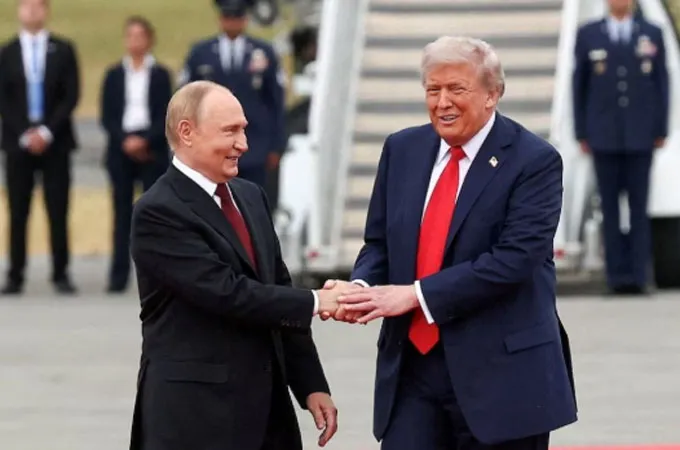
The latest military exchange has raised fears that the ceasefire is rapidly unravelling, with the security of the Strait of Hormuz expected to dominate discussions among US President Donald Trump and other NATO leaders meeting in Ankara.