Oil prices extended their rally on Tuesday after surging about 5% in the previous session, as fresh demands by US President Donald Trump and Iran's insistence on major concessions from Washington cast renewed doubt over efforts to reopen the strategically vital Strait of Hormuz.
Brent crude was trading around $87.8 a barrel on Tuesday, while US West Texas Intermediate was near $82.2, after both benchmarks jumped more than 5% on Monday to their highest levels since July 31. The latest gains marked a fourth consecutive session of increases.
The sharp reversal in oil markets comes after crude prices fell more than 7% last week on expectations that Iran and Oman were nearing an agreement that could restore shipping through the Strait of Hormuz, one of the world's most important energy chokepoints.
Those hopes have weakened sharply after Tehran made clear that an agreement with Oman on a safe shipping route would not by itself amount to a full reopening of the strait. Iran has tied a broader reopening to concessions by Washington, including the lifting of sanctions and other measures it says are necessary to end the current confrontation.
Trump, meanwhile, has introduced another potentially difficult obstacle to a deal, saying Iran must pay compensation for people he says were killed or seriously wounded by the country.
The competing demands have increased uncertainty over whether the two sides can reach an understanding that would allow commercial shipping to return to normal.
Hormuz remains at the centre of the crisis
The stakes for energy markets are exceptionally high.
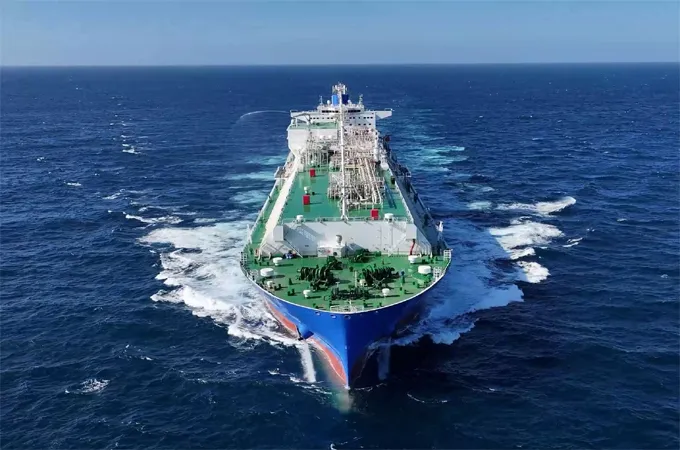
Before the conflict, about 20.9 million barrels a day of oil moved through the Strait of Hormuz, equivalent to roughly one-fifth of global petroleum liquids consumption and about one-quarter of global seaborne oil trade. The waterway also carries about one-fifth of the world's LNG trade, with Qatar accounting for the overwhelming majority of Gulf LNG shipments through the strait.
The closure has therefore become one of the central economic consequences of the war, with markets increasingly pricing in the possibility that disruption could last much longer than previously expected.
The problem is particularly acute for LNG. While Saudi Arabia and the UAE have pipeline infrastructure capable of bypassing part of the oil flows normally passing through Hormuz, there is no comparable alternative route for most LNG exports from the Gulf. The OECD notes that Saudi and UAE pipelines can reroute only a portion of the oil affected by the disruption, while Qatar's LNG exports remain heavily dependent on maritime passage through the strait.
The result is a growing risk premium in energy prices. Investors are no longer pricing only the possibility of an immediate military escalation; they are also factoring in the economic consequences of a prolonged disruption to one of the world's key energy corridors.
Iran hardens its security leadership
The uncertainty over diplomacy has been accompanied by a significant reshuffle at the top of Iran's security establishment.
Iranian President Masoud Pezeshkian has appointed veteran Revolutionary Guards commander Mohsen Rezaei as secretary of the Supreme National Security Council, replacing Mohammad Bagher Zolghadr.
Rezaei, 71, is a long-serving former commander of the Islamic Revolutionary Guard Corps who led the organisation during much of the Iran-Iraq war and has subsequently occupied senior political and economic positions. He is also regarded as a close ally of Supreme Leader Ayatollah Mojtaba Khamenei and has taken a sceptical position toward negotiations with Washington.
Zolghadr has instead been reassigned as a political adviser to Khamenei.
The appointment is significant because the Supreme National Security Council coordinates Iran's highest-level decisions on national security and foreign policy. The choice of a veteran IRGC commander at a time of negotiations with Washington could reinforce perceptions that Tehran is preparing for a prolonged confrontation and is unwilling to make major concessions without reciprocal moves from the United States.
The reshuffle also comes as Iran's leadership seeks to consolidate its position following months of war and pressure from the United States and Israel.
IRGC leadership also reinforced
Iran has simultaneously reinforced the military leadership of the Islamic Revolutionary Guard Corps.
Brigadier General Ahmad Vahidi has been appointed commander-in-chief of the IRGC and promoted to major general. Vahidi is a veteran of the Revolutionary Guards and has previously served as defence minister and in other senior military and political positions.
The appointment gives the IRGC a commander with extensive experience across Iran's military and security establishment at a particularly sensitive moment.
Iran rejects US sanctions pressure
Iran has also rejected Washington's intensifying economic pressure.
Foreign Ministry spokesman Esmaeil Baghaei criticised US sanctions policy after US Treasury officials described the measures as an effort to economically suffocate Tehran.
Baghaei argued that Washington repeatedly turns to sanctions when diplomacy fails and then increases sanctions when previous measures do not produce the desired result. He portrayed the policy as a sign of US dependence on economic coercion rather than a successful negotiating strategy.