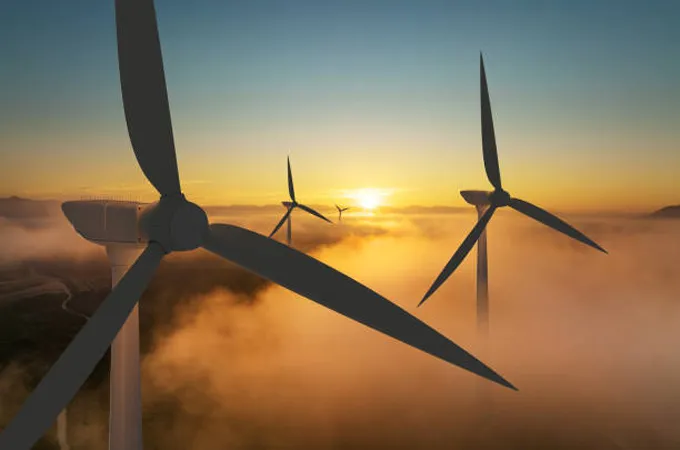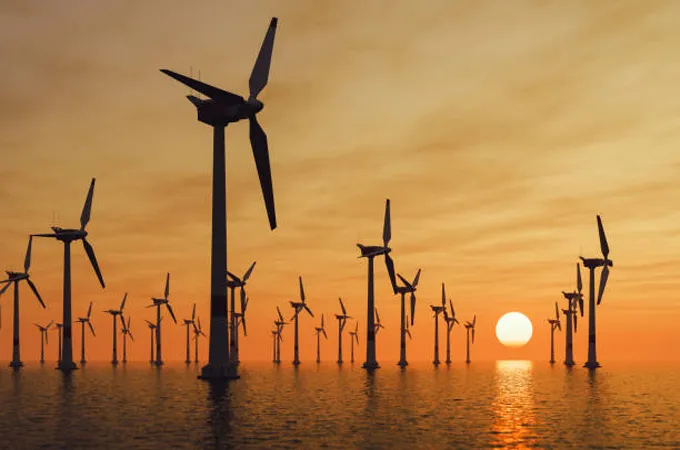
Europe is entering an offshore wind “supremacy phase” as governments move from ambitious targets to project delivery, securing multi-gigawatt development pipelines through redesigned auctions, stronger revenue protections and faster permitting, according to GlobalData.
The findings from GlobalData’s Europe Renewable Energy
Policy Handbook 2026 show that offshore wind is increasingly being
positioned as strategic infrastructure and a key source of large-scale,
low-carbon electricity.
Attaurrahman Saibasan, Power Analyst at GlobalData, said:
“Governments are increasingly designing auctions to balance cost discipline
with deliverability, adapting contract structures, redefining risk allocation
for grid links, and tightening pre-qualification rules so awarded projects are
genuinely buildable. The key differentiator is no longer only who offers the
lowest price, but who can deliver at scale under permitting limits, supply
chain constraints, and increasingly complex grid integration.”
European governments are increasingly adopting two-way
Contracts for Difference (CfDs) and similar mechanisms to reduce revenue
volatility while maintaining competitive pricing.
Auction rules are also expanding beyond price, with greater
focus on indexation, project timelines, non-performance penalties, industrial
benefits and sustainability criteria.
Recent auctions highlight the changing market. Germany’s
2025 auction for two North Sea sites totalling 2.5GW attracted no bids, with
factors including limited revenue stabilisation, permitting uncertainties and
potential misalignment between project and grid delivery timelines.
France launched a tender of around 10GW in mid-2026, split
between fixed-bottom and floating offshore wind projects.
The UK’s latest CfD round awarded more than 8GW of
fixed-bottom and floating capacity, with fixed-bottom projects securing notably
lower strike prices.
Floating offshore wind is also gaining momentum as
governments seek to develop deeper waters where fixed-bottom technology is
unsuitable.
European markets are preparing dedicated tenders and
adapting support mechanisms to account for higher costs and technology risks.
Saibasan said: “This shift is strategically significant: it
expands the viable geography for offshore wind in parts of the Atlantic and
Mediterranean, and it supports new industrial ecosystems around floating
foundations, mooring systems, dynamic cables, specialised ports, and new
O&M models. For investors, floating wind signals both higher near-term risk
and potentially larger long-term addressable markets, especially as learning
curves and industrialisation reduce costs over time.”
Offshore wind is also becoming increasingly integrated into
wider energy-system planning, supporting industrial electrification, clean
hydrogen and e-fuels production, as well as cross-border interconnection and
grid balancing.
Saibasan concluded: “Offshore wind is now one of Europe’s most consequential renewables battlegrounds not only for decarbonisation, but for energy security, industrial competitiveness, and long-term power affordability. The next winners will be those jurisdictions that combine credible auction design with fast, transparent permitting and investable grid delivery.” -OGN/TradeArabia News Service