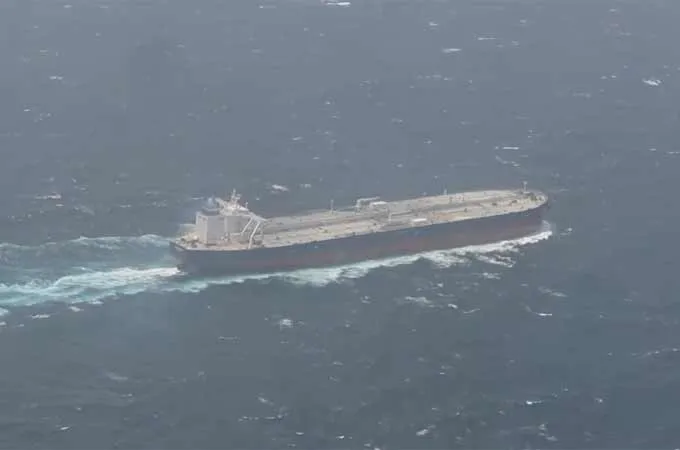
The US military escorted 40 commercial vessels carrying about 18 million barrels of oil through the Strait of Hormuz on Tuesday, a wartime record, as Washington and Tehran traded their heaviest blows in weeks, CNN reported, citing two US officials familiar with the operation.
The vessels were protected by US air, naval and space assets as American forces simultaneously struck Iranian military capabilities around the strategic waterway and defended the ships against drone attacks. US forces also neutralised anti-ship cruise missiles during the operation, according to the officials.
The operation came as President Donald Trump said the renewed US military campaign against Iran would not continue for “too long”, while warning that Washington was prepared to carry out further strikes.
Trump said US forces had targeted Iranian radar and missile systems and other equipment near the Strait of Hormuz, arguing that Iran's ability to track shipping had been severely damaged.
“It was a very heavy attack last night, and we're prepared to do another one any time we want,” Trump told reporters at the White House.
The US has increasingly focused its military campaign on securing the waterway, a vital route for global energy supplies, while maintaining a naval blockade of Iranian ports.
Before the war began, about 20 million barrels of oil a day passed through the strait. Shipping traffic, however, remains well below normal levels, with only four commodity vessels recorded transiting on Tuesday, according to preliminary Kpler data cited by Reuters.
The latest escort operation has demonstrated that the US can facilitate oil shipments through the waterway despite the conflict, but shipping companies remain wary of the risks.
The US Navy continues to strictly enforce the blockade against Iran. As of September 2, US forces have redirected 86 commercial vessels, disabled 3 and boarded 2 to ensure compliance, CENTCOM said.
Meanwhile, The Kuwaiti Armed Forces announced early Thursday that its air defence systems are actively intercepting hostile Iranian missile and drone attacks.
In a statement carried by the Kuwait News Agency (KUNA), the military confirmed that any loud explosions heard across the nation are the result of ongoing air defence operations neutralising incoming targets.
Meanwhile, China has called for a new regional security framework as Beijing seeks to expand its diplomatic influence amid the conflict.
Chinese President Xi Jinping, visiting Egypt on Wednesday, urged Middle Eastern countries to oppose external interference and become “masters of their own destiny”, while calling for consideration of a new regional “security architecture”, according to China's state news agency Xinhua.