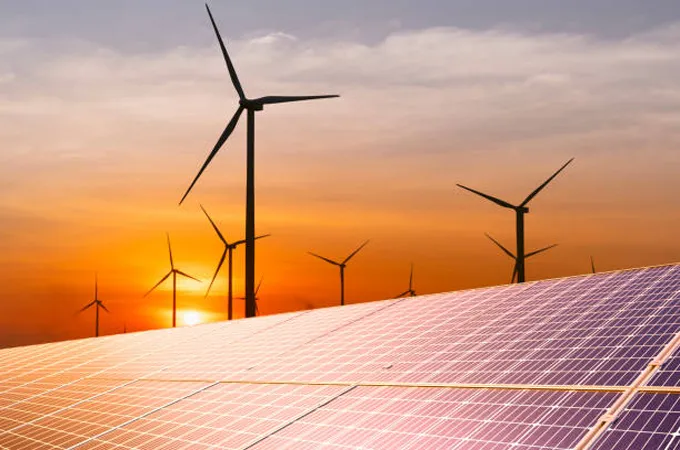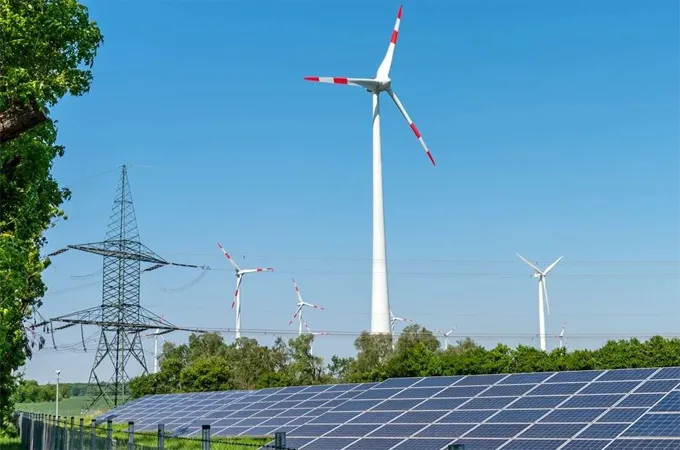
Global renewable energy capacity reached 5.15 terawatts at the end of 2025, keeping the world on a path to approach globally agreed targets, though a dramatic acceleration is urgently required.
According to a new report released during Climate Week NYC
by the International Renewable Energy Agency (IRENA), the COP31 Presidency
Türkiye, and the Global Renewables Alliance (GRA), installed capacity must more
than double to reach 11.2 terawatts by 2030.
While a record 693 gigawatts of new renewable power was
added in 2025, annual growth must surge to 1,200 gigawatts on average between
2026 and 2030.
The report, titled Delivering on the UAE Consensus: Tracking
progress toward tripling renewable energy capacity and doubling energy
efficiency by 2030, also highlights a significant lag in energy efficiency.
Energy intensity improved by only about 2 per cent in 2025,
falling far short of the 4 per cent annual target necessary to meet the UAE
Consensus savings goal.
Policymakers are
being urged to tackle persistent bottlenecks in investment, infrastructure, and
electrification ahead of the UN Climate Conference COP31 in Antalya, Türkiye.
To bridge these gaps, experts recommend upgrading grids by
investing nearly $1 trillion annually between 2026 and 2030, deploying
efficient electric technologies like storage, boosting 24/7 renewables, and
harnessing artificial intelligence to manage rising electricity demand and
clean supply.
António Guterres, United Nations Secretary-General, emphasised
the urgency of these steps, stating: “Renewable energy records are being
smashed year after year as the clean energy revolution accelerates. But we must
go further and faster to clear the bottlenecks that delay the transition, drive
investment to developing countries, and break our addiction to volatile fossil
fuels once and for all.”
Highlighting the uneven nature of the transition, Francesco
La Camera, Director-General of IRENA, added: “Renewables can still close the
gap towards 2030, but energy efficiency is falling behind, electricity demand
is rising faster than expected, and the grid infrastructure has failed to keep
pace with renewables deployment. With signs that capacity expansion could also
slow, we need a reality check on our ambition towards .5 deg C. IRENA’s revised
roadmap makes it clear: we need to move faster, electrify faster and build the
systems to support it. That means rapidly scaling and modernising renewable
generation, grids, storage and flexibility. Electrification with renewables is
one of the most powerful policy levers to accelerate and drive further action.”
The upcoming COP31 summit aims to place electrification
front and center on the global agenda.
Murat Kurum, COP31 President-Designate, noted: “This report
shows a transition moving forward, but too unevenly. As the COP31 Presidency,
we are placing electrification at the heart of our agenda, because it enhances
efficiency, reduces our dependence on volatile energy markets, and is essential
to achieving the climate goals we have already agreed. In Antalya, we will
rally the world behind a new science-based goal: 35 per cent of final energy
consumption met by electricity by 2035. Meeting it will demand urgent focus on
buildings, transport and industry, underpinned by resilient grids and finance.
I invite every actor to align behind this target and bring their solutions to Antalya.”
This sentiment was echoed by Chris Bowen, Australia’s
Minister for Climate Change and Energy and President of Negotiations for COP31,
who added: “The COP28 commitment to triple renewables and double energy
efficiency laid out a clear path forward. IRENA’s update shows that not enough
progress is being made towards that goal - and that we need to accelerate our
efforts and support investment in electrification, from modern grids and
storage to clean, affordable and reliable electricity. Australia is duly working
in close partnership with Türkiye to ensure COP31 is an ‘Electrification COP’.”
Ben Backwell, Chair of the Global Renewables Alliance, underscored the unstoppable market momentum, stating: “We're witnessing an irreversible shift toward renewable energy as the dominant growth engine of the economy. The momentum is with us, and this marks the beginning of a new era in the energy transition. Recent geopolitical shocks have threatened economies worldwide and put energy security back at the top of the global agenda. Renewables offer us a path to safety, reducing dependence on imported fuels, creating skilled jobs and stimulating growth. Astonishing progress has been made, with more renewables added in 2025 than ever before - narrowing the gap to reaching the tripling goal, but we still have a way to go to install more capacity by 2030 than in all previous years combined. Governments must change gear and make renewables a national economic priority today. This means working with businesses to address barriers to renewable energy projects, through expanding grids, deploying storage and electrifying homes, transport and wider industry. The prize is enormous: stronger economies, greater energy security and better lives.”
Driven by falling technology costs, such as a 95 per cent
drop in battery storage costs since 2010, variable renewables like solar and
wind are projected to comprise roughly 62 per cent of total installed power by
2030, overtaking fossil fuels.
Around-the-clock 24/7 renewables and co-located storage are
also entering the mainstream.
Looking ahead, scaling up efficient electrification across sectors will remain vital for global decarbonisation efforts well beyond 2030. -OGN/TradeArabia News Service