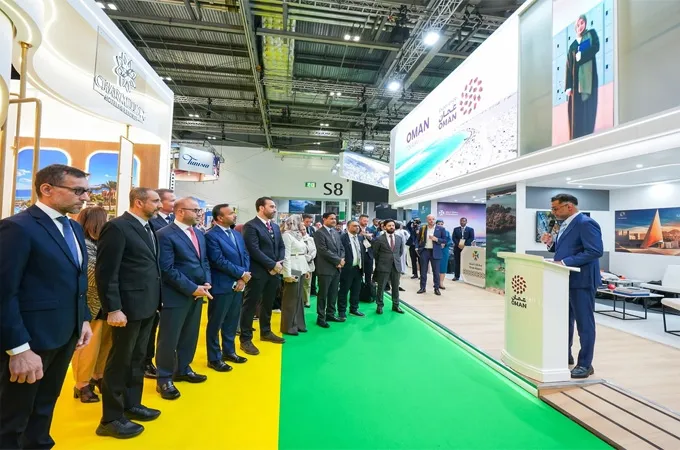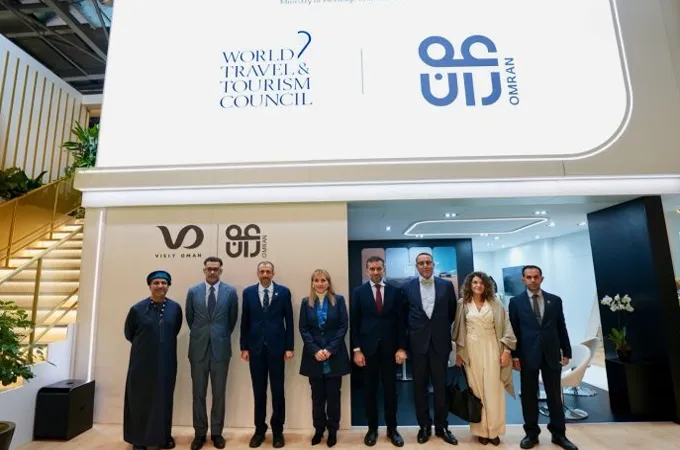
The World Travel & Tourism Council (WTTC), in partnership with OMRAN Group, has launched its inaugural Power, Efficiency & Opportunity (PEO) Indices, introducing a new framework to assess the economic, environmental and social performance of the global Travel & Tourism sector across 184 economies.
Unveiled at World Travel Market (WTM) London, the indices
were developed by WTTC and Oxford Economics to provide a broader assessment of
tourism performance, moving beyond traditional indicators such as visitor
numbers and economic contribution.
The framework examines three interconnected dimensions: the
economic power of tourism, the efficiency with which destinations use resources
and manage their environmental footprint, and the employment and social
opportunities generated by the sector.
The indices aim to provide governments, investors and
industry leaders with a more comprehensive tool for benchmarking destinations,
identifying performance gaps, guiding investment decisions and supporting
sustainable and resilient tourism growth.
The Travel & Tourism Power Index measures the sector's
economic scale and influence through GDP contribution, employment and
investment.
According to the findings, tourism's economic power remains
concentrated among a relatively small number of economies, with the top 20
accounting for 81% of global Travel & Tourism GDP in 2024.
The United States, China and India ranked as the world's
most powerful tourism economies, reflecting their economic scale, employment
contribution and investment levels.
Germany, France, the United Kingdom, Japan, Mexico, Spain
and Saudi Arabia completed the top 10.
The research also identified differences in how destinations
perform across individual indicators, with some countries recording stronger
results in tourism investment or employment relative to their overall economic
contribution.
However, the findings highlight that economic scale does not
necessarily translate into stronger environmental performance or greater
employment opportunities. Countries leading the Power Index do not
automatically rank highest in the other two categories, reinforcing the
importance of assessing tourism performance across all three dimensions.
The Environmental Efficiency Index evaluates the sector's
environmental footprint relative to the economic activity it generates,
covering greenhouse gas emissions, low-carbon energy use, water consumption,
air pollution and materials efficiency.
One of the key findings was an improvement in global
environmental efficiency between 2019 and 2024. The sector's overall score
increased by 2.3 points, supported by progress across several indicators.
The low-carbon energy component improved by 6.7 points,
while greenhouse gas intensity recorded a 3.9-point improvement, indicating
that tourism activity is becoming less environmentally intensive in a number of
destinations.
The findings suggest that economic expansion and
environmental sustainability can advance together through long-term policy
measures, stronger environmental standards and investment in clean energy
infrastructure.
Sweden ranked first among high-income economies in
environmental efficiency, while Costa Rica led the upper-middle-income
category, demonstrating that environmental leadership is not limited to
countries at a particular stage of economic development.
The third measure, the Opportunity Index, assesses tourism's
contribution to social development and inclusion through its share of national
employment, employment growth, youth participation and female employment.
The findings highlight Travel & Tourism's role as an
important source of employment and an accessible entry point into the labour
market, particularly for women and young people.
Croatia ranked first among high-income economies, while the
Maldives led the upper-middle-income group. El Salvador and The Gambia topped
the lower-middle-income and low-income categories, respectively.
In destinations such as the Maldives, Grenada and Belize,
tourism accounts for a particularly significant share of national employment,
underlining its contribution to inclusive economic growth and job creation.
WTTC President and CEO Gloria Guevara said: “Travel & Tourism
is one of the world’s most powerful sectors, and these new Indices give us a
broader and more holistic way to understand its impact. As the sector grows, we
must focus on quality as well as quantity of growth. By assessing economic
contribution, environmental efficiency and employment opportunities together,
the Indices provide valuable insights to support sustainable growth and
informed decision-making, while highlighting the sector’s ability to create
opportunities for women and young people around the world.”
Ayad Al Balushi, CEO of OMRAN Group, said: “The PEO Indices
represent an important step forward in how we define and measure tourism
success, looking beyond growth to the efficiency, opportunity and lasting value
the sector creates. OMRAN Group is proud to partner with WTTC in advancing this
global perspective and supporting more informed decision-making across the
sector. The findings reinforce our shared ambition to shape a future where
tourism is economically strong, environmentally responsible and inclusive,
creating meaningful and sustainable value for destinations, communities and
future generations.”
Oman's tourism performance
The research also highlights Oman's progress in tourism
development, with the country's 2024 scores across all three PEO dimensions
improving compared with 2019.
Oman demonstrated particularly strong performance in
employment opportunities, with women accounting for 28% of jobs in the Travel
& Tourism sector, compared with 18% across the Middle East.
Young people represent 13% of Oman's tourism workforce,
compared with less than 9% of employment across the wider national economy,
highlighting the sector's contribution to creating opportunities for the next
generation.
The country's tourism power has been supported by growth in
its GDP contribution and employment, while improvements in environmental
efficiency reflect progress in areas including water consumption, air pollution
and materials use.
The findings are particularly relevant as Oman continues to
pursue economic diversification and strengthen tourism's contribution to
long-term development.
For OMRAN Group, the indices provide a framework for
assessing the relationship between tourism investment, destination development
and sustainability, helping inform decisions that deliver economic benefits
while improving environmental performance and supporting local communities.
The partnership between WTTC and OMRAN Group reflects a
shared focus on using data and research to guide tourism development, with the
new indices intended to help destinations balance economic growth,
environmental responsibility and social inclusion.
By measuring these dimensions together, the PEO framework seeks to offer a more complete understanding of tourism competitiveness, recognising that the sector's long-term success depends not only on its economic contribution but also on how efficiently it operates and the opportunities it creates for communities. -TradeArabia News Service