Nissan Motor Co has unveiled a new long-term vision aimed at reshaping its future around artificial intelligence-led mobility and a stronger focus on customer experience.
The strategy, branded “Mobility Intelligence for Everyday Life,” places AI-defined vehicles (AIDVs) and flexible electrification options at the core of the company’s next phase of growth, as it looks beyond its current turnaround plan.
President and CEO Ivan Espinosa said the timing was right to set a clearer direction for the company’s future.
“This is the right moment to articulate Nissan’s long-term vision as we look beyond the Re:Nissan plan and set a clear path for the future,” he said. “Our vision defines where Nissan is headed, with customer experience as our guiding priority.”
Under the new roadmap, Nissan aims to integrate “mobility intelligence” into everyday driving through smarter, more intuitive and accessible technologies, while continuing to offer a range of electrified powertrain options tailored to different markets.
The company said the approach would help it build a sustainable competitive edge by focusing on next-generation technologies, simplifying its product portfolio, and restructuring its global market strategy. It also plans to reorganise its industrial model around clearly defined vehicle families to improve efficiency and value delivery.
Nissan added that its ongoing Re:Nissan transformation plan remains on track in its final year, having improved cost competitiveness, factory utilisation and product momentum—laying the foundation for the newly announced long-term strategy.
AI-led intelligence and Electrification
Artificial Intelligence is central to Nissan’s approach to technology innovations, enabling the Nissan AIDV, which will combine Nissan AI Drive Technology and Nissan AI Partner technology to enhance mobility and optimize time spent in transit.
Building on real-world deployment of advanced driver assistance technologies, Nissan is integrating AI with vehicle control and safety systems. Nissan aims to deploy Nissan AI Drive technology across 90 percent of its lineup over the long term.
The new Nissan Elgrand, scheduled for launch in summer 2026 will adopt next-generation ProPILOT with end-to-end autonomous capability by the end of fiscal 2027.
Alongside the introduction of Nissan AI Drive technology focused on advancing autonomous driving, the company will enhance the customer experience using Nissan AI Partner technology that connects intuitively to support everyday activities and integrate vehicle naturally into everyday life.
Nissan’s AI-led experience and the next phase of autonomous mobility will be enabled by increasing electrification. Nissan’s breakthrough e-POWER series hybrid technology is extending electrification adoption, providing a core platform that delivers electric-like driving and creating a natural bridge to fully electric vehicles.
Alongside e-POWER, Nissan will offer a broader range of electrified powertrains to meet diverse customer needs across global markets. This diversified powertrain lineup includes a new hybrid electric vehicle system (HEV) for future frame-based vehicles, serving customers requiring greater capability and long-range confidence. Nissan will complete the spectrum of customer choice by offering plug-in hybrid and range-extender hybrid solutions through partnerships.
Streamlined product portfolio
Nissan’s product strategy is built on clarity of role and faster development. The company will streamline its global lineup from 56 to 45 models, exiting low-performing models and reallocating reinvestment to growth areas. At the same time, Nissan will expand powertrain options for each model, giving customers more choice, increasing volume per model, and strengthening our business foundation.
Models categorised by role
As part of its new portfolio approach, Nissan is focusing its model strategy around four categories:
* Heartbeat: Models embodying Nissan’s identity, emotional value, and innovation;
* Core: Models that sustain global business with scale and stability;
* Growth: Models targeting expansion where demand is emerging;
* Partner: Models that extend market coverage through disciplined collaboration.
The company showcased models that embody the next steps from this strategic focus. They are:
* New X-Trail and Rogue Hybrid e-POWER: Global Core models featuring Nissan’s unique electric-motor-driven system that provides the efficiency of a strong hybrid with the spirited driving character provided by electric motors – all without needing to charge.
* Juke EV: A Europe Core model that combines bold, distinctive design with full electrification and intelligent features.
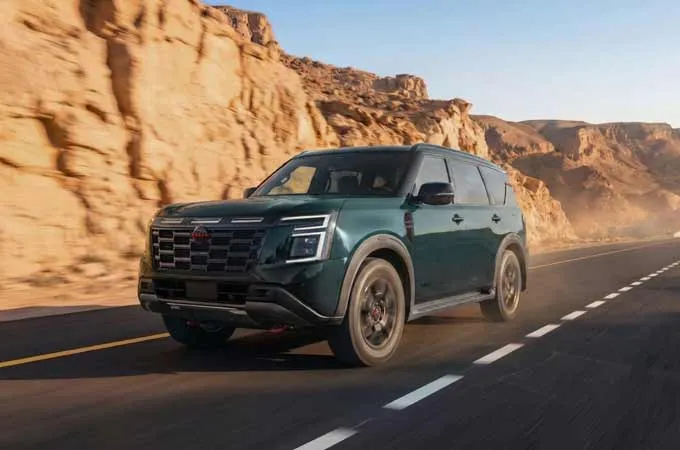
* Xterra: A Heartbeat model for the US, offering an adventurous spirit, body-on-frame strength and purpose-driven design.
* Skyline: A Heartbeat model for Japan, delivering performance, precision and driver-focused character.
In the premium segment, INFINITI will remain important within Nissan’s product strategy. The brand will be revitalised through new and refreshed models, beginning with the all-new 2027 QX65 SUV this spring. This will be followed by four additional models: a new mid-size hybrid SUV, a performance-oriented V6 sedan and two frame-based hybrid SUVs.
Industrial Model
As part of the vision, Nissan is transforming its industrial model through the Nissan Product Family strategy.
This will move the company’s focus from model-by-model optimisation to architecture-led development built on shared vehicle platforms, powertrains and software platform.
Nissan will concentrate development around three product families that will account for more than 80 percent of global volume, increase volume per model by more than 30 percent while accelerating development speed and technology rollout.
By aligning product design and industrial execution from the start, Nissan strengthens quality, improves cost discipline, and enables faster, more competitive product launches at scale.
Redefined market approach
Nissan is evolving its global business strategy with redefined roles for its three lead markets: Japan, the US and China.
These three markets will play a dual role in its overall market strategy serving as pillars of performance while also acting as global drivers for competitiveness and industrial capability. Together, these markets anchor Nissan’s ability to scale innovation, tailor volume to demand and set standards for how to compete globally on speed, cost and consumer relevance, it said.
In addition, Nissan’s long-standing presence and brand strength in Mexico and the Middle East continue to deliver high value within the company’s global portfolio. Mexico is a core industrial and profitability anchor, driving scale expansion and earnings across the Americas and beyond through a strong industrial base and Nissan’s highest global market share. The Middle East remains a priority growth and profit market, fuelled by exports from lead markets and a mix skewed toward large SUVs and premium segments where Nissan’s strength closely matches customer demand.
Beyond the lead markets, other markets including Europe, India and Africa will play a role in expanding Nissan’s reach and supporting overall growth. Together, they will form a cohesive market strategy aligned with Nissan’s product portfolio approach.
Summing up the vision, Espinosa concluded: “As we continue on our path to recovery, it is essential that Nissan demonstrates our relentless focus on serving the customer, seizing the opportunities provided by AI technologies, expanding electrification and driving innovation into our vehicles to deliver sustainable market growth.” -TradeArabia News Service