Iran and Israel said on Monday they had halted attacks against each other following an appeal from US President Donald Trump, while US forces simultaneously escalated pressure on Tehran by disabling an oil tanker attempting to reach an Iranian port in defiance of Washington's naval blockade.
The developments offered a temporary respite in the most direct confrontation between Iran and Israel since April, but underscored the fragile nature of the ceasefire as both sides warned they were prepared to resume military action.
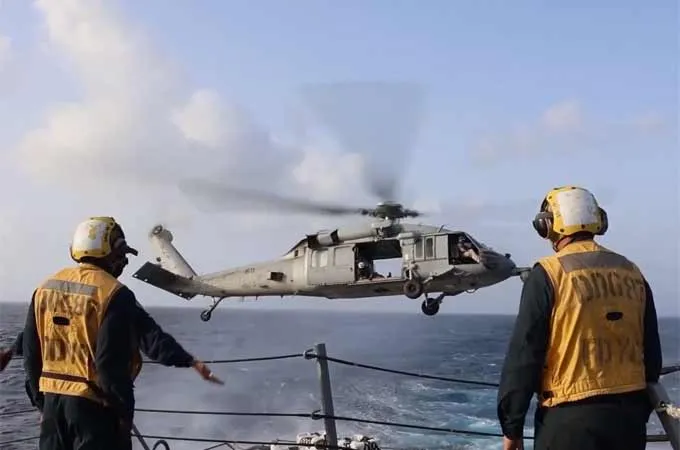
US Central Command (CENTCOM) said it disabled Palau-flagged M/T Marivex as it transited international waters in the Gulf of Oman toward Iran. An F/A-18 Super Hornet from USS Abraham Lincoln (CVN 72) fired a precision munition into the ship's engineering and steering spaces after the crew failed to comply with directions from US forces. Marivex is no longer sailing to Iran, it said.
CENTCOM forces have disabled seven non-compliant vessels, redirected 134 ships that complied, and allowed 42 vessels supporting humanitarian aid to pass since initiating the blockade on April 13, it added.
The vessel, carrying 24 Indian crew members, reportedly caught fire after the strike, though Indian authorities said all sailors were safe, said a Reuters report. India's shipping ministry said it was coordinating with the Ministry of External Affairs, the Indian Navy, defence authorities and diplomatic missions in the region to ensure the crew's safety. The Indian embassy in Oman said it was working with Omani authorities, who assisted in rescuing the sailors.
The US blockade of Iranian ports was imposed in April after Iran sharply curtailed shipping through the Strait of Hormuz, one of the world's most critical oil and gas transit routes. Washington says the restrictions apply to vessels trading with Iran, though not to ships merely passing through the strait to other destinations.
Meanwhile, signs of de-escalation emerged in the Iran-Israel conflict after Trump urged both sides to halt attacks. A source briefed on the matter said Israel had decided to suspend strikes on Iran, while Iranian officials also indicated that offensive operations had ceased for now.
The latest round of fighting began when Iran launched missiles toward Israel late Sunday, describing the attack as retaliation for Israeli strikes against the Iranian-backed Hezbollah movement on the outskirts of Beirut.
Israel subsequently targeted Iranian air defence systems and a petrochemical facility that it said was involved in ballistic missile production. Iran's Islamic Revolutionary Guard Corps responded by claiming responsibility for a strike on a similar facility in the Israeli port city of Haifa.
Despite the pause in hostilities, both sides signalled that the confrontation could quickly reignite. Iranian officials warned they would resume attacks if Israel continued operations against Hezbollah in Lebanon. Israeli Prime Minister Benjamin Netanyahu, for his part, indicated that Israel's campaign against Hezbollah would continue.
Trump, who has repeatedly pledged to bring an end to the conflict, suggested the United States could declare "total victory" over Iran within two weeks. He also reportedly warned Netanyahu that additional strikes on Iran risked further international isolation for Israel.
The conflict has rattled energy markets and heightened concerns over global oil supplies. Oil prices surged by as much as 5% during the latest exchange of attacks before retreating.
Iran has vowed to maintain control over the Strait of Hormuz and defeat what it calls the US naval blockade of its ports. With traffic through the strategic waterway severely disrupted, concerns are growing over the impact on global energy flows and emergency oil reserves.