British multinational oil and gas company bp today (June 9) announced that it is reorganising its business into two operating segments as part of efforts to simplify its structure, improve performance and increase shareholder returns.
Effective July 1, the company will consolidate its operations into Upstream and Downstream divisions, replacing its current three-segment structure.
Gordon Birrell has been appointed as the Executive Vice President of Upstream, while Richard Harding will serve as interim Executive Vice President of Downstream.
Both bring decades of operational experience and leadership to their roles. A recruitment process is underway to appoint a permanent EVP Downstream.
Announcing this major shake-up, Chief Executive Meg O'Neill said the changes were intended to streamline decision-making and strengthen execution.
"Over the past two months, I have spent time with our teams, partners and investors around the world, and I am encouraged by the strong support for our strategic direction. Focusing bp around two distinct segments is an important step in accelerating delivery. It will reduce complexity and strengthen execution," she stated.
"bp has an incredibly capable team, with deep expertise across the oil and gas value chain. We are capitalising on opportunities across our portfolio, strengthening the balance sheet and unlocking sustainable growth. We are moving firmly towards a simpler, stronger and more valuable bp," she added.
The two-segment model – one focused on resource development and production, and the other on customers and markets – will clarify accountabilities and enable faster, more effective decision-making, said the statement.
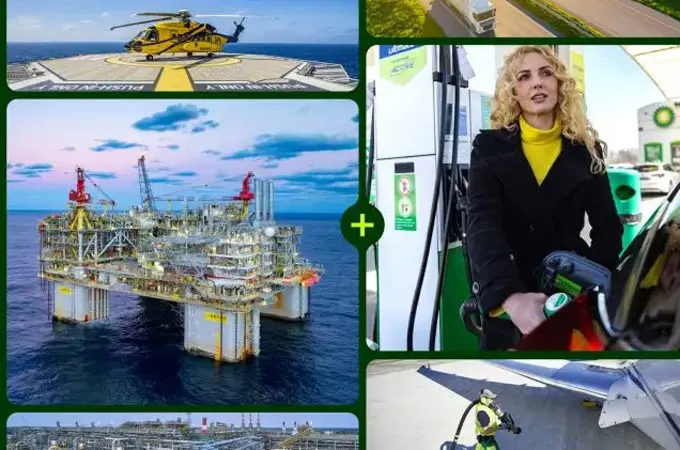
Upstream will bring together bp’s oil and gas regions, including exploration, development and production activities, streamlining how the company finds, develops and produces the energy the world needs. It will also include bp’s upstream joint ventures and its renewable natural gas and CCS businesses.
Downstream will include refining, terminals, pipelines, mobility and convenience, biofuels, aviation, hydrogen and Castrol, aligning how bp makes, moves and sells its products, it added.
Supply, Trading & Shipping will continue to operate across both segments, supporting delivery and value creation across the integrated system. As a distinctive capability for bp, it connects the portfolio, optimizes flows and delivers material value uplift.
Renewable businesses, including solar and offshore wind, will sit within the Technology function as bp continues to advance a capital-light model in these areas.
This organisational change builds on the concrete actions bp is taking to simplify its portfolio, reduce costs, maintain tight capex discipline and strengthen its balance sheet – all in service of growing value and returns for shareholders.-TradeArabia News Service