The 14-point memorandum of understanding (MoU) signed by the United States and Iran aims to reopen the Strait of Hormuz while offering Tehran a pathway to significant economic relief. However, it defers many of the most contentious issues that fuelled the recent conflict to subsequent negotiations.
The interim agreement, released to the media on Wednesday after being digitally signed by US President Donald Trump and Iranian President Masoud Pezeshkian, aims to consolidate the ceasefire, reopen the Strait of Hormuz and establish a framework for negotiations on a comprehensive settlement within 60 days.
However, the document — fewer than 800 words in length — leaves many of the most difficult questions unresolved, including the future of Iran's nuclear programme, the disposition of its enriched uranium stockpile, and the sequencing of sanctions relief and compliance measures. Those issues are to be negotiated during the next phase of talks.
What the agreement does contain are potentially transformative economic incentives for Iran. The MoU commits Washington to refrain from imposing new sanctions during the negotiation period and outlines a process that could ultimately lead to the lifting of US and UN sanctions, the release of frozen Iranian assets, the resumption of unrestricted oil exports and the mobilisation of at least $300 billion in reconstruction and recovery financing.
The text was read to reporters by a senior Trump administration official, who acknowledged that both sides retain the right to walk away from the process if final terms cannot be agreed.
Critics argue that the framework falls short of several objectives repeatedly cited by President Trump during the conflict. Iran's governing system remains intact, its ballistic missile programme survives untouched, and the agreement does not require Tehran to immediately surrender its stockpile of highly enriched uranium. Nor does it compel Iran to end support for regional groups such as Hezbollah, issues that are deferred to future negotiations.
The MoU instead reflects an effort to halt hostilities and stabilise regional energy markets. It provides for the reopening of the Strait of Hormuz, restoration of commercial shipping and a phased withdrawal of US naval restrictions around Iran, measures that could eventually return substantial volumes of Iranian oil to global markets.
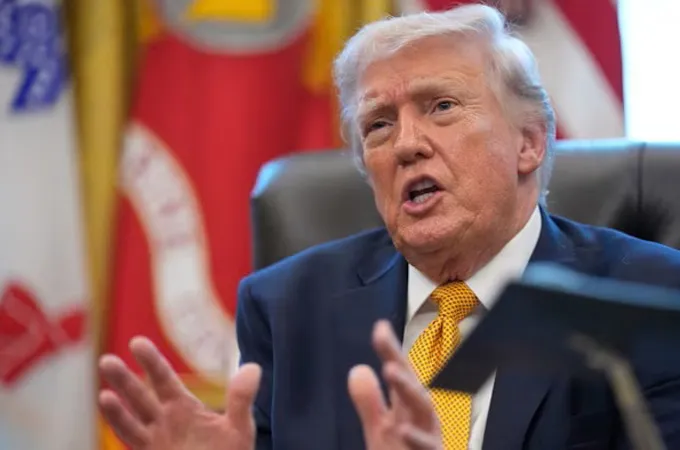
The agreement also appears to signal a softer US position on Iran's missile capabilities. Asked in Paris about Iran retaining ballistic missiles, Trump told reporters: "I'm saying that if other countries have them, it's a little bit unfair for them not to have some."
Here's a summary of the text released by US officials:
1. Immediate and permanent end to military operations on all fronts, including Lebanon.
2. Mutual respect for sovereignty and territorial integrity.
3. Commitment to negotiate a final agreement within 60 days (extendable).
4. US to lift naval blockade and restore maritime traffic within 30 days. The traffic of vessels will be in proportion to the numbers of pre-war traffic being restored by Iran. The US further undertakes to remove its forces from the proximity of Iran within 30 days after the final deal.
5. Iran to restore commercial shipping through the Strait of Hormuz with no charge, for 60 days only, from the Gulf to the Sea of Oman and vice versa. The traffic of commercial vessels will immediately start. Iran will conduct dialogue with Oman to define the future administration and maritime services in the Strait of Hormuz in discussion with other Gulf littoral states in line with the applicable international law and the sovereign rights of coastal states of the Strait of Hormuz.
6. The US undertakes with regional partners to develop a definitive plan with at least $300 billion for the reconstruction and economic development of Iran. The mechanism for this plan will be finalised as part of the final deal within 60 days. All required licenses, waivers, and permissions needed for the relevant financial transactions will be granted by the US.
7. The US undertakes to terminate all types of sanctions against Iran in an agreed upon schedule as part of the final deal.
8. Iran reaffirms that it shall not procure or develop nuclear weapons. The US and Iran have agreed to resolve the disposition of stockpiled enriched material pursuant to a mechanism that will be mutually agreed upon, in accordance with the schedule mentioned in paragraph seven with the minimum methodology to be down blending on site under the supervision of the IAEA. The two parties also agreed to discuss the issue of enrichment and other mutually agreed matters related to Iran's nuclear needs, based on a satisfactory framework being agreed upon in the final deal.
9. Pending the final deal, the US and Iran agree to maintain the status quo. Iran will maintain the current status quo of its nuclear program and the US will not impose any new sanctions and will not deploy additional forces in the region.
10. Until the termination of sanctions, US will issue waivers for the export of Iranian crude oil, petroleum products, and derivatives, and all associated services, including banking transactions, insurances, transportation, etc.
11. The US undertakes to make fully available for use the frozen or restricted funds and assets of Iran. The US and Iran will mutually agree on the procedures related to the release of these funds during the negotiation. Such funds, whether retained in the original account or transferred, shall be made fully usable for payment to any ultimate beneficiary designated by the Central Bank of the Islamic Republic of Iran. The US undertakes to issue all necessary licenses and authorizations accordingly.
12. An executive mechanism will be established to monitor the successful implementation of this MOU and the future compliance of the final deal.
13. After signing this MOU, and subject to the beginning of the implementation of paragraphs 1,4,5,10 and 11 of this MoU, the US and Iran will start negotiations regarding the final deal exclusively on the other paragraphs.
14. The final deal will be endorsed by a binding UNSC resolution.