The UAE is entering a new phase of government development built on deploying Agentic AI in the design of public services, policies and procedures, advancing the leadership's vision of building the world's most effective and forward-looking government, said Mohammad bin Abdullah Al Gergawi, Minister of Cabinet Affairs and Chairman of the National Committee for the Agentic AI Project.
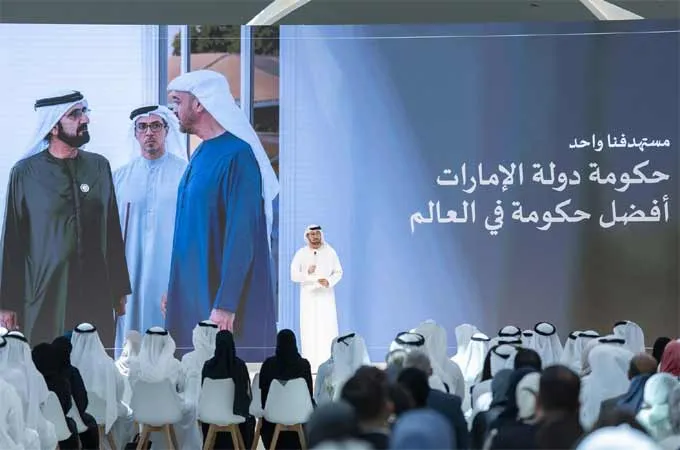
The announcement came during the Agentic AI workshop organised by the Presidential Court and the Ministry of Cabinet Affairs in Dubai, with the participation of 600 employees from both entities, as part of the UAE Government's national project to convert 50 percent of federal government operations, procedures and services to Agentic AI models within two years, said a WAM news agency report.
The workshop reviewed the targets of the next phase of AI-powered government transformation and explored new operating models designed to raise government efficiency, improve output quality, accelerate delivery and strengthen decision-making.
Al Gergawi said the directive to convert 50 percent of government operations to Agentic AI models within two years represents a defining strategic step in redesigning how government works, making it more efficient, more productive and more capable of delivering world-class services, in line with the UAE's global leadership in harnessing advanced technology for the benefit of people and communities.
He added: "The world is going through a fundamental shift driven by artificial intelligence, and the UAE, thanks to its forward-thinking vision and early investments, has positioned itself at the forefront of nations ready to embrace and capitalise on this transformation. Agentic AI does not replace people, it makes them more capable, and opens wider possibilities for creativity, innovation and impact."
Al Gergawi also announced the launch of the "Top 3 AI Agents Award" within the Ministry of Cabinet Affairs, designed to drive innovation and reward the development of AI agents that deliver measurable impact across government work areas.
Haitham Al Rais, Secretary-General of the National Committee for the Agentic AI Project, presented the ministry's transformation plan to convert 75 percent of its operations, services and specialised functions to Agentic AI models, focusing on improving operational efficiency, raising output quality and enabling employees to concentrate on higher-value work.
Key targets include accelerating task completion, strengthening information reliability, supporting evidence-based decision-making, and reducing the time needed to complete institutional support functions, strategies, policies and legislation.
Implementation runs across four stages: assessment and readiness, capability building, pilot deployment and the launch of specialised AI agents, through to full-scale rollout.
Shamsa Jaber Al Falasi, Executive Director of Transformation and Development at the Presidential Court, took part in a session titled "Thinking Beyond Human Limits," sharing the Presidential Court's work in building advanced national capabilities in artificial intelligence.
Al Falasi conveyed the directives of Sheikh Mansour bin Zayed Al Nahyan, Vice President, Deputy Prime Minister and Chairman of the Presidential Court, to accelerate the shift to Agentic AI.
The directives include converting 75 percent of the Presidential Court's services to Agentic AI-powered models within the next two years, alongside the launch of its own Top 3 AI Agents Award as a dedicated incentive initiative for Presidential Court employees.