The United States launched a fresh wave of military strikes against Iran on Sunday after Tehran targeted a merchant vessel transiting the Strait of Hormuz, sharply escalating a conflict that has spread across the Gulf and further dimmed hopes for a return to diplomacy.
The latest exchange marked the third round of US strikes against Iran this week, with US Central Command (CENTCOM) saying American forces hit around 140 Iranian military targets after what it described as an attack by Iran's Islamic Revolutionary Guard Corps (IRGC) on a Cyprus-flagged container ship in the strategic waterway. One crew member from the vessel remains missing.
The renewed fighting comes days after President Donald Trump declared a US-Iran ceasefire agreement "over" following an earlier exchange of attacks, although he has said negotiations could still resume if conditions permit.
The IRGC acknowledged opening fire in the Strait of Hormuz but described the action as a warning shot against a vessel attempting to transit through what it called an "unauthorised route". It subsequently declared the Strait of Hormuz closed, accusing foreign powers of interfering in the region through commercial shipping movements.
Separately, the UK Maritime Trade Operations (UKMTO) centre said crew members aboard a damaged container ship near the Strait of Hormuz were forced to abandon the vessel, although it did not identify the ship.
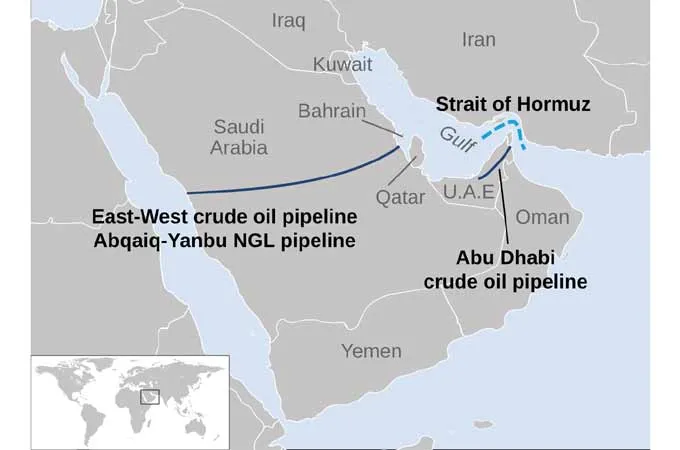
The closure of the Strait of Hormuz, through which around one-fifth of global oil supplies pass, threatens to disrupt international energy markets and commercial shipping, raising concerns over global supply chains and crude exports from the Gulf.
Iranian state media reported explosions across several locations along the country's southern coastline following the US strikes, including Bushehr province, home to Iran's only operational nuclear power plant, Qeshm Island near the Strait of Hormuz, and the strategic port city of Bandar Abbas.
The confrontation also widened across the region, with several Gulf states reporting missile and drone threats.
The IRGC said it carried out retaliatory strikes against Prince Hassan Air Base in Jordan, while Qatar's Ministry of Defence said it intercepted a missile targeting the country. Bahrain activated nationwide warning sirens and urged residents to seek shelter, and the United Arab Emirates said it was responding to missile and drone threats.
Despite the escalating hostilities, diplomatic efforts remain underway.
Iranian Foreign Minister Abbas Araghchi held talks in Oman on Saturday focused largely on the future of navigation through the Strait of Hormuz. According to reports, Muscat has drafted a tentative proposal to regulate shipping routes through the vital waterway in an effort to prevent further military incidents.
US officials have maintained that broader negotiations with Tehran, including nuclear talks, cannot move forward until safe passage for commercial shipping through the Strait of Hormuz is restored.
The latest escalation has deepened fears of a prolonged regional conflict involving the United States, Iran and multiple Gulf states, while increasing risks to one of the world's most critical maritime energy corridors.