The United States has threatened to impose damaging secondary sanctions on countries, financial institutions and companies that continue to provide economic lifelines to Iran, opening a potentially far-reaching new front in Washington’s campaign to isolate Tehran as the war approaches its six-month mark.
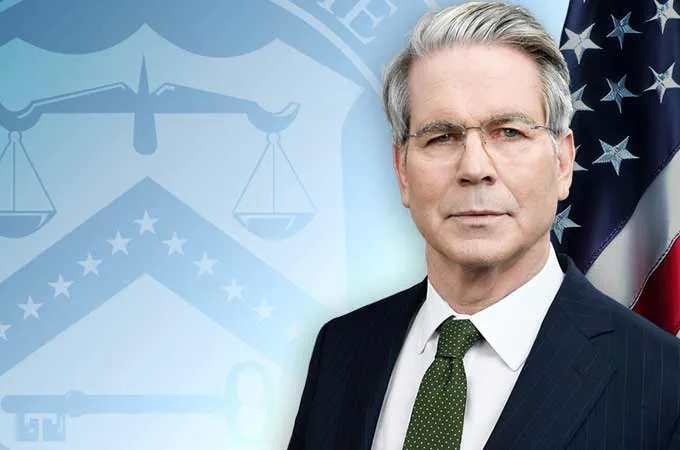
US Treasury Secretary Scott Bessent on Monday described the campaign as an “economic onslaught” against Iran’s financial connections around the world and warned that the administration would move rapidly against governments and businesses that continue to facilitate trade with Tehran.
But despite the rhetoric surrounding what the Trump administration has called an “economic D-Day,” Washington stopped short of immediately imposing the sweeping penalties that had been anticipated. Instead, Bessent said countries and institutions would be given a short period to adjust their activities before the United States begins deploying its secondary-sanctions powers.
The Treasury simultaneously announced sanctions against about 60 individuals, companies and vessels linked to Iran, targeting networks involved in oil revenues, shipping, technology, aviation, gold and digital assets. The measures span several jurisdictions, including China, Hong Kong, the United Arab Emirates, Singapore and France.
The immediate focus, however, is the threat to countries that continue doing business with Iran.
“No country is out of the reach of US sanctions,” Bessent said when asked whether Washington could target Chinese banks involved in facilitating Iranian oil transactions. He warned that institutions forming part of the financial network that converts Iranian oil into revenue for Tehran would be targeted.
Chinese banks in the crosshairs
China is potentially the biggest test of the new strategy. It has for years been Iran’s largest buyer of crude and remains a critical outlet for Tehran’s oil revenues.
Yet the new US sanctions did not include the major Chinese financial institutions that Washington suspects of facilitating Iranian oil trade. The decision appears to give Beijing and other trading partners time to alter their activities before Washington escalates to measures that could have much broader consequences for the global financial system.
Bessent declined to identify which countries would face secondary sanctions or specify when the penalties would begin.
“Why would I want to blow up the global financial system?” he said, explaining the decision to give countries a “cure period” while stressing that the US would move quickly if they failed to comply.
The timing is particularly sensitive because President Donald Trump and Chinese President Xi Jinping are expected to meet in Washington in late September. Sanctioning major Chinese banks could complicate efforts to extend agreements covering rare earths and US tariffs.
Financial system becomes the main weapon
Bessent also issued a direct warning to financial institutions and organisations that help Tehran move or disguise money. He said entities involved in laundering Iranian funds would be removed from the US financial system, effectively threatening their ability to access dollar-based banking and international financial networks.
The Treasury secretary also said he expected a major announcement involving a financial institution by the end of this week, although he did not identify the institution.
The threat is significant because access to the US dollar and the wider international banking system gives Washington sanctions leverage well beyond the US economy. Institutions that are cut off can find it difficult to conduct international payments, maintain correspondent banking relationships or deal with companies exposed to the US financial system.
Bessent singled out Iran's Bank Melli, which maintains branches in Europe, the Middle East and Asia, saying: “Every branch of Bank Melli must be shuttered and dark.”
Five new sectors exposed to secondary sanctions
The Trump administration is also expanding the range of Iranian economic activities that could trigger secondary sanctions.
Bessent identified five sectors: digital assets; gold; technology; aviation; and shipping.
The move widens the potential reach of US sanctions beyond the traditional focus on Iran’s oil industry and military procurement networks.
The latest measures also target Iran's so-called shadow fleet of tankers, companies involved in oil transportation and networks that help Tehran evade restrictions.
The US has already sanctioned more than 1,000 people, vessels and aircraft in Iran-related actions since Trump began his second term in 2025, according to Treasury Department data cited by Reuters. Previous measures have targeted oil tankers, shipping insurers, weapons-procurement networks and digital exchanges. The Treasury has estimated that recent measures have frozen about $500 billion in Iran-linked cryptocurrency.
Washington seeks to close Iran's sanctions-evasion networks
The new campaign reflects a recognition in Washington that simply sanctioning Iranian companies and officials has not been enough to shut down Tehran's access to international commerce.
Iran has spent decades developing mechanisms to circumvent US restrictions, including front companies, alternative shipping arrangements, changing vessel registrations and networks of intermediaries.
Iran's economy under mounting pressure
The US offensive comes as Iran's economy faces increasingly severe strains. The Iranian rial has fallen to a record low of more than 2 million rials to the dollar on the open market, according to currency-tracking websites, while inflation and shortages have sharply increased the cost of living.
Trump has argued that the economic pressure demonstrates that Iran is collapsing. Tehran, however, has repeatedly said it is capable of surviving sanctions and countering Washington's economic campaign.
Iranian Finance Minister Ali Madanizadeh said the country was “fully prepared” to counter the new sanctions, while senior Iranian negotiator and parliamentary speaker Mohammad Bagher Ghalibaf dismissed the US threats.
Iranian officials have also warned that continued economic warfare could trigger retaliation, particularly around the strategically vital Strait of Hormuz.
Tehran threatens response
Iran's security chief Mohsen Rezaei has warned that Tehran would regard participation in the US economic campaign as hostile action. Iran has also threatened to respond by restricting energy flows through the Gulf if Washington continues its economic offensive.
The threats raise the possibility that an escalation in financial sanctions could have consequences well beyond Iran's economy, particularly if Tehran responds by tightening restrictions on commercial shipping through Hormuz.
That would put further pressure on global energy markets at a time when the conflict has already pushed oil prices higher. Reuters reported that the disruption to shipping through the strait has helped keep energy prices elevated.