UAE banks’ viability ratings could face risks from asset-quality deterioration under Fitch Ratings’ adverse scenario, in which effects from the Iran conflict are significantly more severe than under Fitch’s base case, with real estate lending the most likely source of stress.
In addition to asset quality strains, lower business volumes and higher impairments under the adverse scenario would both reduce profitability, feeding through to weaker capital buffers.
Banks could also face liquidity pressure and deposit outflows, but Fitch expects the UAE authorities to provide ordinary liquidity support if needed, as underlined by the precautionary support package recently announced by the Central Bank of the UAE.
The central bank has also announced the possible introduction of regulatory forbearance for banks if asset quality deteriorates sharply, although this short-term protection potentially backloads higher provisions and losses further into the future.
Risks to banks’ viability ratings also include potential damage to the perception of the UAE as a safe jurisdiction for savings and doing business, weighing on longer-term growth, said the top ratings agency.
This could reduce investment into the UAE (notably Dubai) and increase outbound investment by local residents, as well as dampening fund transfers into the region, it stated.
Disruption to air traffic and tourist inflows is likely to have only a small direct impact on UAE banks, whose lending to the transportation (mostly aviation) and tourism sectors is limited. Fitch estimates the two combined accounted for less than 3% of total loans at end-2025.
Furthermore, banks’ exposures are mainly to Emirates and Etihad. In a stress scenario, we believe these companies would be supported by the government, limiting associated asset-quality risk, said the Fitch report.
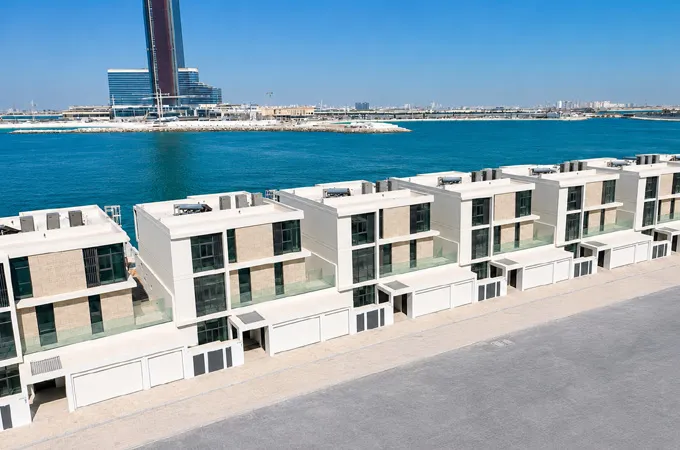
"Weaker economic activity, reduced tourism and slower population growth would put pressure on residential and commercial real estate markets. Before the conflict started, Fitch forecast real estate prices to undergo a moderate correction of up to 15% over 2H25–2026 following several years of strong growth. However, conflict spillovers will add further pressure, resulting in a larger correction than forecast," it added.
Corporate real estate accounted for 13% of gross loans at end-2025, down from 20% at end-2021, and this sector is likely to be the main source of new Stage 3 loans if the conflict is prolonged.
Some banks still have high concentrations in their loan books, namely - Sharjah Islamic Bank (29%), Ajman Bank (28%), Commercial Bank International (CBI; 41%), Commercial Bank of Dubai (20%) and United Arab Bank (UAB; 20%). Their asset-quality metrics could weaken, adding profitability pressures, if the real estate price correction exceeds our pre-conflict expectations.
Fitch has conducted a severe asset-quality stress test on its rated UAE banks, assuming impaired loans ratios were to triple, or even quadruple, from end-2025 levels.
The results indicate that Al Masraf Bank and CBI have the most limited common equity Tier 1 capital buffers under this deep stress, reflecting their already-high Stage 3 loan ratios at end-2025. Fitch’s stress test also assumed a 10% outflow of total deposits and identified that all rated banks would be able to withstand such outflows without extraordinary support.
However, liquidity coverage of deposits would weaken to around 10% for Ajman Bank, Al Masraf, Emirates Islamic Bank and Abu Dhabi Islamic Bank, said the top ratings agency.
Fitch said its rated UAE banks’ Issuer Default Ratings (IDRs) are all support-driven. "In most cases, we view the UAE or Abu Dhabi authorities as the ultimate providers of extraordinary support, and bank ratings are therefore mostly sensitive to the UAE and Abu Dhabi sovereign ratings, though for HSBC Bank Middle East we factor in support from its parent group. Any future negative rating action on the sovereign ratings would, in turn, affect local banks’ IDRs," it added.-TradeArabia News Service