The United Arab Emirates (UAE) is accelerating construction of a major new oil pipeline that will double ADNOC’s crude export capacity through the emirate of Fujairah, significantly strengthening the country’s ability to ship oil to global markets without relying on the strategically vital but increasingly vulnerable Strait of Hormuz.
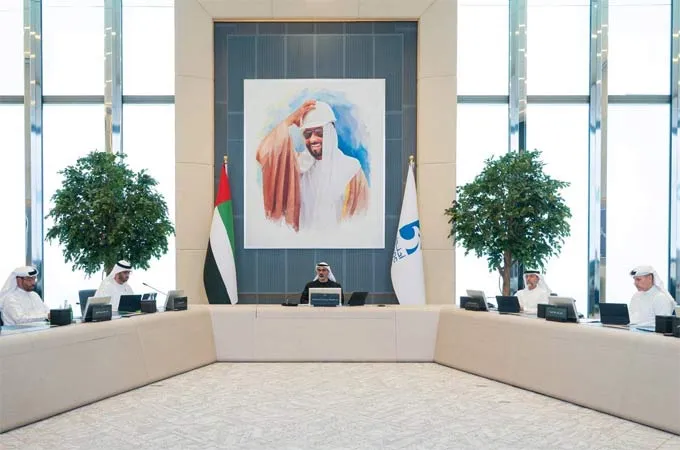
The announcement was made following a meeting of the Executive Committee of the Board of Directors of Abu Dhabi National Oil Company, chaired by Abu Dhabi Crown Prince and Chairman of the Executive Committee Sheikh Khaled bin Mohamed bin Zayed Al Nahyan.
According to the Abu Dhabi Media Office, Sheikh Khaled reviewed ADNOC’s operational performance and was briefed on the progress of the new West–East 1 pipeline, which is under construction and is scheduled to become operational in 2027.
Once completed, the project will double ADNOC’s export capacity via the emirate of Fujairah, one of the world’s most important energy hubs located on the Gulf of Oman, outside the Strait of Hormuz.
Strategic Significance
The pipeline comes at a time of heightened geopolitical tensions in the Gulf, with the Strait of Hormuz once again under close scrutiny following recent disruptions to shipping linked to the Iran conflict.
The narrow waterway between Iran and Oman handles roughly one-fifth of the world’s daily oil consumption and remains the most critical chokepoint for global energy trade.
By expanding export infrastructure through Fujairah, the UAE is reducing its dependence on Hormuz and strengthening its position as one of the world’s most reliable crude suppliers.
Building on existing Infrastructure
The UAE already operates the Abu Dhabi Crude Oil Pipeline (ADCOP), a 406-km pipeline connecting ADNOC’s onshore oil fields at Habshan to the export terminal in Fujairah.
Commissioned in 2012, ADCOP can transport around 1.5 million barrels per day (bpd) of crude, allowing a substantial portion of UAE exports to bypass the Strait of Hormuz.
The new West–East 1 project will substantially expand this capacity, giving ADNOC greater flexibility to meet growing global energy demand and to maintain exports during periods of regional instability.
ADNOC’s expanding global role
ADNOC has been investing heavily to increase production capacity, expand downstream operations and strengthen its international trading footprint. The company aims to raise crude production capacity to 5 million bpd while continuing to invest in lower-carbon energy solutions, gas, and petrochemicals.
The West–East 1 pipeline aligns with ADNOC’s broader strategy to enhance energy security for customers worldwide and reinforce the UAE’s role as a dependable supplier amid increasingly volatile market conditions.
Fujairah: A critical energy gateway
Fujairah has emerged as one of the world’s leading oil storage and bunkering hubs, with extensive tank farms, refining facilities and marine infrastructure. Its location on the UAE’s east coast provides direct access to the Indian Ocean, making it an ideal outlet for crude exports that avoid the Gulf’s most sensitive maritime corridor.
With the expansion of ADNOC’s export capabilities through Fujairah, the UAE will further cement the port’s strategic importance in global energy logistics.
Responding to global market uncertainty
The decision to fast-track the pipeline reflects growing concern among Gulf producers over the security of maritime trade routes. Recent attacks, seizures and heightened military activity in and around the Strait of Hormuz have underscored the need for alternative export routes.
For major producers such as the UAE, Saudi Arabia and Iraq, ensuring uninterrupted access to international markets remains a top priority.
By moving ahead with the West–East 1 pipeline, the UAE is sending a clear message that it is prepared to invest aggressively in infrastructure that safeguards supply and enhances resilience in the face of geopolitical risk, say analysts.