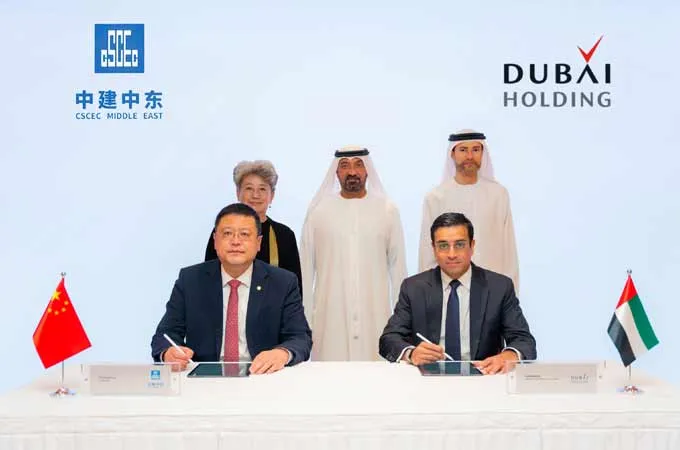
Acwa Power, in consortium with the Water Transmission Company (WTCO), has signed a technical services agreement (TSA) with the Syrian Ministry of Energy and international engineering and consultancy group Fichtner to assess Syria’s water resources and develop solutions for seawater desalination and water transmission.
The agreement marks the start of the technical studies envisaged under the Joint Development Agreement (JDA) signed between Acwa and the Syrian Ministry of Energy in February 2026.
Under the agreement, the consortium will conduct a comprehensive assessment of Syria’s existing water resources, future water demand and long-term water requirements.
The study will identify priority projects and technical solutions for seawater desalination and associated water transmission infrastructure aimed at strengthening the country’s water security.
The scope of work will include evaluating available water resources and projected demand, assessing potential desalination solutions, identifying associated water transmission requirements, and developing a prioritized roadmap for future water infrastructure investments.
The technical study will be carried out in close coordination with the relevant Syrian authorities. The resulting roadmap will rank potential projects and solutions based on impact, deliverability and speed to market, providing the Ministry of Energy with an evidence-based framework for prioritizing future water projects.
Mohamed Fata Nahhas, the CEO of Acwa Power at Saudi Arabia, said the company will now begin the detailed technical work required to define solutions addressing the challenges and objectives established under the JDA.
The agreement strengthens Acwa Power’s involvement in the development of Syria’s water infrastructure and could establish a pipeline of future desalination and water transmission projects as the country seeks to improve water security and develop a sustainable water system.
Desalination remains a core component of Acwa Power’s global water portfolio. The company currently manages 9.7 million cu m per day (cu m/day) of desalinated water capacity across 24 assets in seven countries.
Among Acwa Power’s major desalination assets are the Taweelah desalination plant in the UAE, with production capacity exceeding 909,000 m³/day, while Rabigh 3, Rabigh 4, Shuaibah 3 and Jazlah in Saudi Arabia each have desalination capacity of approximately 600,000 cu m/day.
The Syria technical services agreement is therefore expected to provide a foundation for identifying and prioritizing future desalination and water transmission investments, supporting the development of a more resilient and sustainable water infrastructure system in the country.